
115kV Substation Refurbishment and 12kV System Modernization
Island Energy | Mare Island, California
Project Overview
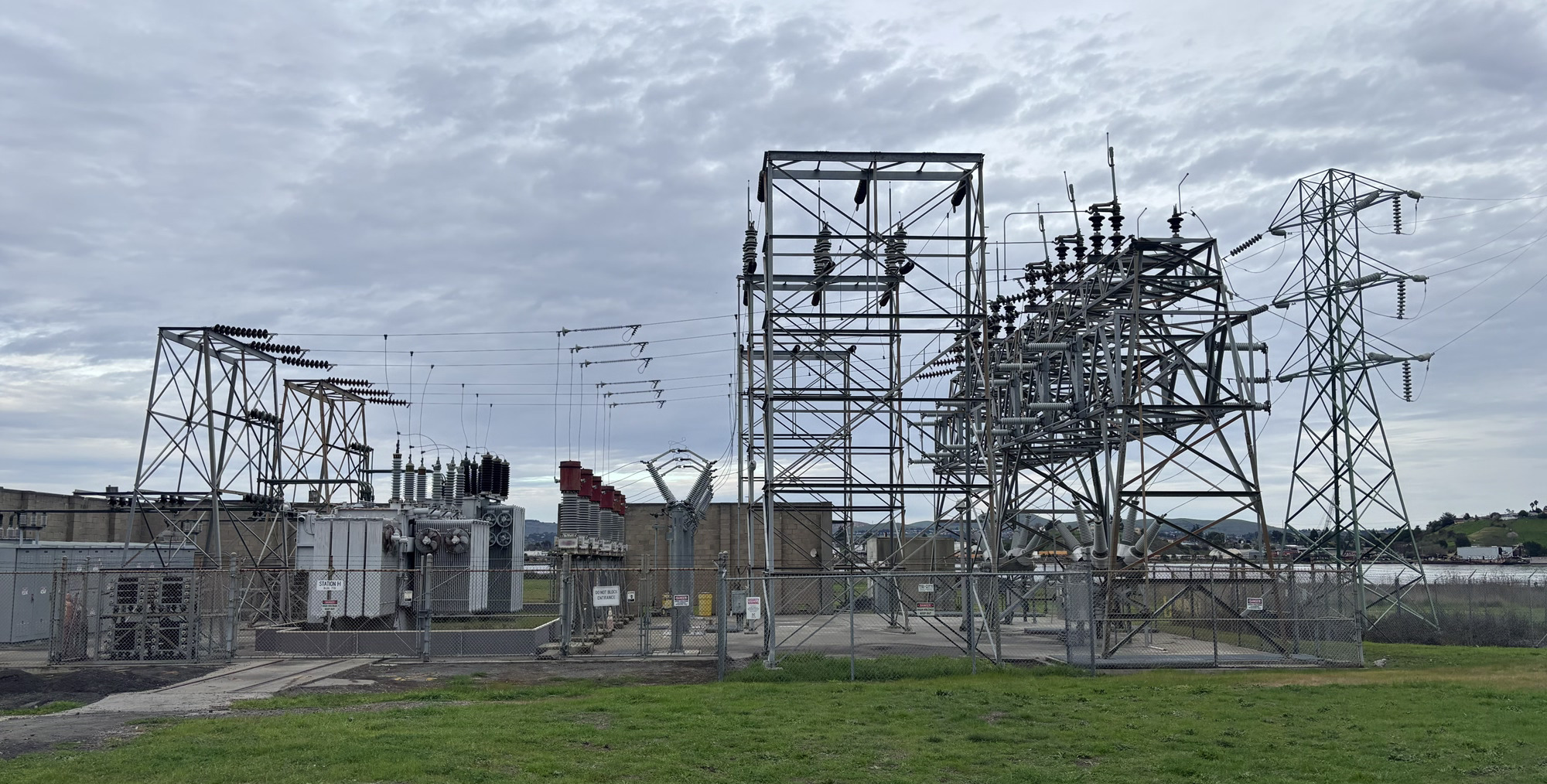
Island Energy serves a mixture of residential, commercial, and industrial customers on the site of the former Naval Base at Mare Island. Power is received from the Western Area Power Administration (WAPA) via two PG&E 115kV transmission lines at Station H Substation, where two 20 MVA transformers step down power to 12kV for distribution throughout the island. A double-ended main-tie-main 12kV metal-clad switchgear lineup feeds underground looped feeders serving the island’s load.
When EETS was retained as Island Energy’s engineer of record in 2008, the system’s condition reflected decades of deferred maintenance and the institutional disruption that followed the closure of the Naval Base. The 115kV oil circuit breakers and switches at Station H dated from the 1940s. The 12kV switchgear lineup was from the early 1960s. A large portion of the pilot wire relaying protecting the 12kV underground system was inoperative, and protective coordination from 115kV down through the distribution system was poorly configured, resulting in both nuisance trips and equipment damage from inadequate fault protection. At the time of base closure and transfer of facilities to Island Energy, most system documentation had been lost or never transferred, leaving the utility to operate infrastructure it could not fully document.
EETS has served as Island Energy’s engineer of record continuously since 2008, providing design and technical support services across a wide range of capital improvement and system reliability projects.
Project Challenge
Replacing Critical Infrastructure with No Tolerance for Island-Wide Outage
Station H is the single source of power for the entire island. There is no alternate feed, no backup transmission path, and no way to serve island loads if Station H is taken out of service. Any refurbishment strategy that required a complete station outage was not an option. The work had to be executed in a sequence that kept power flowing to island customers throughout construction, which meant every switching operation, every cutover, and every temporary configuration had to be carefully engineered before a single breaker was opened.
The 12kV distribution system added further complexity. The underground looped feeder network and the double-ended switchgear configuration provided the mechanism for load transfers, but the inoperative pilot wire relaying and poorly coordinated protection meant the system could not simply be operated in its existing state during construction without risk of a protection failure cascading into a broader outage. Every phase of the work had to account for the degraded protection environment that existed at the start of the project.
Engineering Solution
A Switching Plan Built Around Continuous Service
EETS, working closely with Island Energy operations staff, developed a detailed load transfer and switching strategy that allowed the Station H refurbishment to proceed without an island-wide outage. The double-ended main-tie-main switchgear configuration, with eleven breaker positions and provisions for a twelfth, was the key to this strategy. By rerouting and isolating 12kV feeder segments in a defined sequence, loads could be transferred to one side of the double-ended lineup through the looped underground feeders while the other side was taken out of service for replacement.
The existing 12kV air magnetic switchgear was removed and replaced one side at a time with new vacuum switchgear. This process required extensive EETS field involvement to document the existing control and protection wiring before any equipment was removed, preserving operational continuity and maintaining differential protection integrity throughout each cutover. A detailed sequence of 115kV and 12kV switching operations was developed to govern each phase of the cutover, with every step verified before execution. The work was completed within the allotted construction window with minimal outages to island customers.
115kV Equipment Replacement
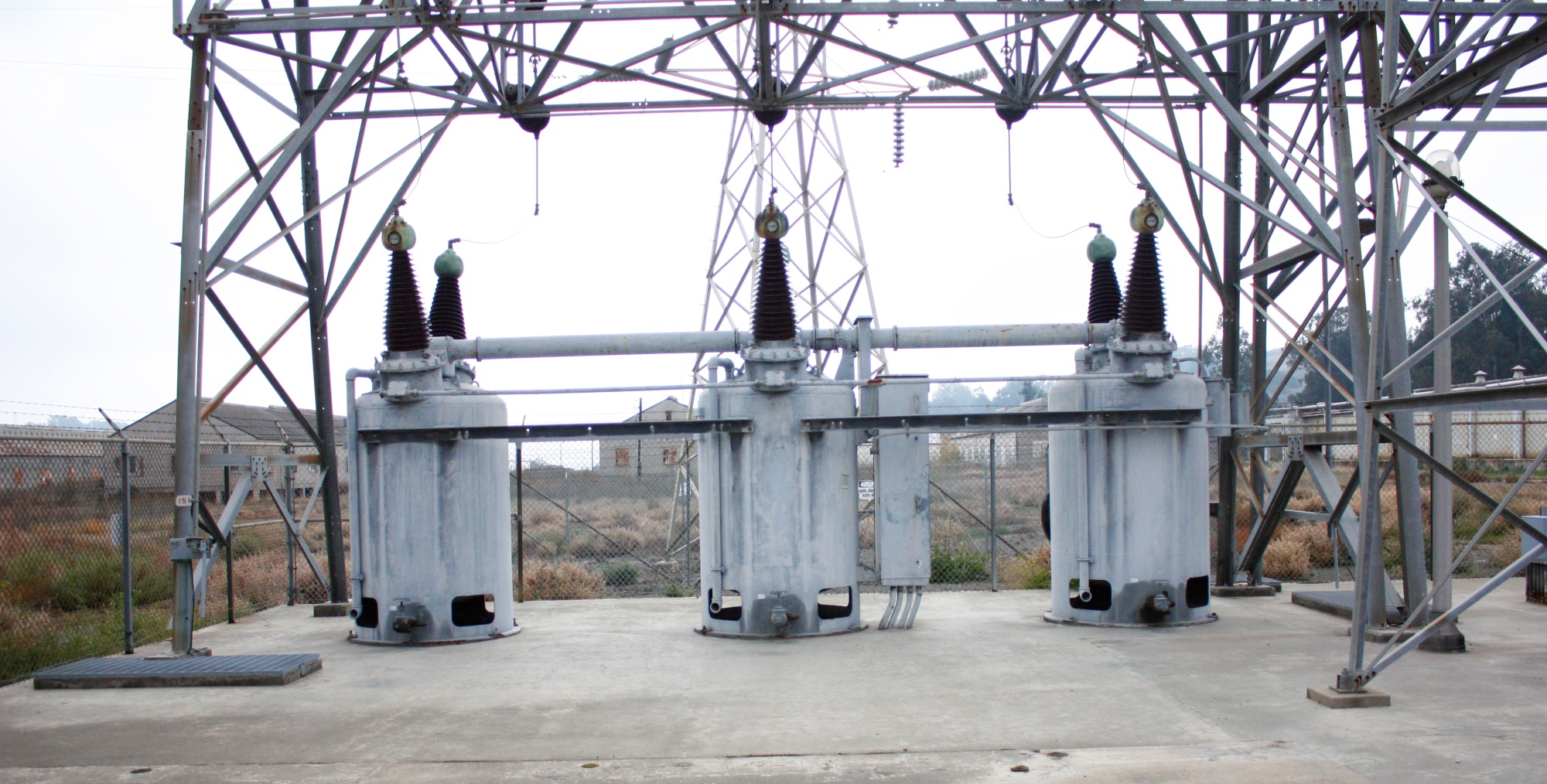
At the 115kV level, one of the aging oil circuit breakers was replaced with a modern SF6 breaker. The 115kV disconnect switches were also replaced as part of the Station H refurbishment, and additional disconnect switches were installed for improved selectivity and maintenance of the 115kV sysem. The 125VDC battery system, which provides control power for breaker operation and relay functions throughout the station, was replaced with a new system sized and specified for the modernized protection scheme.
New Protection System
A complete new protective relaying system was designed and implemented for Station H, replacing the legacy protection that had accumulated over decades of piecemeal additions and modifications. The new scheme includes:
- 115kV line protection, with one set of relays per breaker
- 115kV bus differential protection
- Transformer differential protection
- 12kV switchgear overcurrent protection
- Sync check protection
The inoperative pilot wire relaying on the 12kV underground system was abandoned rather than rehabilitated, with provisions added to support future communication-based protection to be implemented as part of a planned SCADA upgrade. This approach avoided the cost of restoring an obsolete protection technology while preserving a path to a modern scheme when the SCADA infrastructure is in place.
System-Wide Modeling and Coordination
As part of the Station H work, EETS modeled the complete Island Energy 115kV and 12kV distribution system to develop short circuit, load flow, coordination, and arc flash analyses. With most of the original system documentation lost at the time of base closure, this modeling effort required substantial field investigation to establish existing system parameters. EETS developed protective relay settings for protection devices throughout the Island Energy system and designed the new protection for Station H within the context of the complete system model, ensuring coordination from the 115kV transmission source down through the 12kV distribution network.
Client
Island Energy
Sector
Public Utility
Location
Services
Substation Engineering | Protection and Control | Short Circuit and Coordination Studies | Arc Flash Analysis | Construction Phase Services | Ongoing Engineering Support
Engagement Duration
Engineer of Record since 2008, ongoing

Drink
As part of this expansion, AWA identified an opportunity to recover energy that was previously being wasted.
Client
Island Energy
Sector
Public Utility
Location
Services
Substation Engineering | Protection and Control | Short Circuit and Coordination Studies | Arc Flash Analysis | Construction Phase Services | Ongoing Engineering Support
Engagement Duration
Engineer of Record since 2008, ongoing
Drink
As part of this expansion, AWA identified an opportunity to recover energy that was previously being wasted.
Project Overview
Island Energy serves a mixture of residential, commercial, and industrial customers on the site of the former Naval Base at Mare Island. Power is received from the Western Area Power Administration (WAPA) via two PG&E 115kV transmission lines at Station H Substation, where two 20 MVA transformers step down power to 12kV for distribution throughout the island. A double-ended main-tie-main 12kV metal-clad switchgear lineup feeds underground looped feeders serving the island’s load.
When EETS was retained as Island Energy’s engineer of record in 2008, the system’s condition reflected decades of deferred maintenance and the institutional disruption that followed the closure of the Naval Base. The 115kV oil circuit breakers and switches at Station H dated from the 1940s. The 12kV switchgear lineup was from the early 1960s. A large portion of the pilot wire relaying protecting the 12kV underground system was inoperative, and protective coordination from 115kV down through the distribution system was poorly configured, resulting in both nuisance trips and equipment damage from inadequate fault protection. At the time of base closure and transfer of facilities to Island Energy, most system documentation had been lost or never transferred, leaving the utility to operate infrastructure it could not fully document.
EETS has served as Island Energy’s engineer of record continuously since 2008, providing design and technical support services across a wide range of capital improvement and system reliability projects.
Project Challenge
Replacing Critical Infrastructure with No Tolerance for Island-Wide Outage
Station H is the single source of power for the entire island. There is no alternate feed, no backup transmission path, and no way to serve island loads if Station H is taken out of service. Any refurbishment strategy that required a complete station outage was not an option. The work had to be executed in a sequence that kept power flowing to island customers throughout construction, which meant every switching operation, every cutover, and every temporary configuration had to be carefully engineered before a single breaker was opened.
The 12kV distribution system added further complexity. The underground looped feeder network and the double-ended switchgear configuration provided the mechanism for load transfers, but the inoperative pilot wire relaying and poorly coordinated protection meant the system could not simply be operated in its existing state during construction without risk of a protection failure cascading into a broader outage. Every phase of the work had to account for the degraded protection environment that existed at the start of the project.
Engineering Solution
A Switching Plan Built Around Continuous Service
EETS, working closely with Island Energy operations staff, developed a detailed load transfer and switching strategy that allowed the Station H refurbishment to proceed without an island-wide outage. The double-ended main-tie-main switchgear configuration, with eleven breaker positions and provisions for a twelfth, was the key to this strategy. By rerouting and isolating 12kV feeder segments in a defined sequence, loads could be transferred to one side of the double-ended lineup through the looped underground feeders while the other side was taken out of service for replacement.
The existing 12kV air magnetic switchgear was removed and replaced one side at a time with new vacuum switchgear. This process required extensive EETS field involvement to document the existing control and protection wiring before any equipment was removed, preserving operational continuity and maintaining differential protection integrity throughout each cutover. A detailed sequence of 115kV and 12kV switching operations was developed to govern each phase of the cutover, with every step verified before execution. The work was completed within the allotted construction window with minimal outages to island customers.
115kV Equipment Replacement
At the 115kV level, one of the aging oil circuit breakers was replaced with a modern SF6 breaker. The 115kV disconnect switches were also replaced as part of the Station H refurbishment, and additional disconnect switches were installed for improved selectivity and maintenance of the 115kV sysem. The 125VDC battery system, which provides control power for breaker operation and relay functions throughout the station, was replaced with a new system sized and specified for the modernized protection scheme.
New Protection System
A complete new protective relaying system was designed and implemented for Station H, replacing the legacy protection that had accumulated over decades of piecemeal additions and modifications. The new scheme includes:
- 115kV line protection, with one set of relays per breaker
- 115kV bus differential protection
- Transformer differential protection
- 12kV switchgear overcurrent protection
- Sync check protection
The inoperative pilot wire relaying on the 12kV underground system was abandoned rather than rehabilitated, with provisions added to support future communication-based protection to be implemented as part of a planned SCADA upgrade. This approach avoided the cost of restoring an obsolete protection technology while preserving a path to a modern scheme when the SCADA infrastructure is in place.
System-Wide Modeling and Coordination
As part of the Station H work, EETS modeled the complete Island Energy 115kV and 12kV distribution system to develop short circuit, load flow, coordination, and arc flash analyses. With most of the original system documentation lost at the time of base closure, this modeling effort required substantial field investigation to establish existing system parameters. EETS developed protective relay settings for protection devices throughout the Island Energy system and designed the new protection for Station H within the context of the complete system model, ensuring coordination from the 115kV transmission source down through the 12kV distribution network.
Key Technical Elements
Parameter | Detail |
Station H Configuration | Two 20 MVA, 115kV to 12kV transformers; double-ended main-tie-main 12kV switchgear with 11 breaker positions |
115kV Breaker Replacement | One 1940s-vintage oil circuit breaker replaced with modern SF6 breaker |
115kV Switches | Disconnect switches replaced as part of Station H refurbishment |
12kV Switchgear | 1960s-vintage air magnetic switchgear replaced with vacuum switchgear, one side at a time with no island-wide outage |
DC System | 125VDC battery system replaced |
Transformer Protection | Differential relay |
Overcurrent Protection | Relays throughout 12kV switchgear |
115kV Protection | Line protection per breaker plus bus differential |
Legacy Pilot Wire Relaying | Abandoned; provisions added for future communication-based protection aligned with planned SCADA upgrade |
System Studies | Island-wide short circuit, load flow, coordination, and arc flash modeling of complete 115kV and 12kV system |
Project Outcome
Station H was successfully refurbished with modern switching and protection equipment while maintaining continuous power service to island customers throughout construction. Island Energy now operates a 115kV substation with modern SF6 switching, vacuum distribution switchgear, and a fully coordinated protection system in place of equipment that in some cases dated back to the 1940s. The system-wide short circuit, coordination, and arc flash modeling completed as part of this work gave Island Energy a comprehensive picture of its distribution system for the first time since base closure, providing a foundation for ongoing capital planning and system management.
Value Delivered by EETS
Island Energy presents a set of engineering challenges that are unusual even by the standards of aging utility infrastructure. A single-source substation with no backup feed, a distribution system built over decades by the Navy with documentation largely lost at transfer, and a customer base ranging from residences to industrial tenants all served from infrastructure approaching or past the end of its design life. EETS has been the engineering partner navigating that environment since 2008.
Engineering Continuity as a Strategic Asset
Long-term engagement as engineer of record means EETS carries institutional knowledge of the Island Energy system that no outside firm could quickly replicate. When documentation was lost at base closure, EETS built the system model from field investigation. When the protection system needed to be redesigned, EETS had already modeled the complete network. When the switchgear cutover required a detailed switching sequence, EETS developed it in close coordination with operations staff who had also worked with EETS for years. That continuity reduces risk on every project and accelerates decision-making at every stage.
Replacing Infrastructure Without Interrupting Service
The central engineering achievement of the Station H refurbishment was executing a complete replacement of a critical single-source substation, from 1940s oil breakers to modern vacuum and SF6 equipment, without an island-wide outage. That outcome required careful pre-engineering of every switching sequence, disciplined field documentation of existing wiring before anything was removed, and close coordination between EETS and Island Energy operations throughout construction. The work was completed within the allotted construction window.
Building a Foundation for Future Reliability
The system-wide modeling completed as part of this project gave Island Energy something it had not had since the base closed: a comprehensive, accurate picture of its own distribution system. Coordinated protection settings, arc flash analysis, and a documented system model are not just deliverables for a single project. They are the technical foundation on which every future capital decision, every outage response, and every protection setting change will be built. For a utility that inherited an undocumented system and has been working to understand and improve it ever since, that foundation represents one of the most durable pieces of value EETS has delivered.
Drink
As part of this expansion, AWA identified an opportunity to recover energy that was previously being wasted.