
12kV Distribution Station Retrofit: Stations E and F
Island Energy | Mare Island, California
Project Overview
Mare Island is a former Naval base on San Pablo Bay in the Bay Area, once one of the most critical ship ports in the United States during World War II. Today the island is served by Island Energy, a small public utility for which EETS has served as engineer of record since 2008. The island’s electrical infrastructure reflects its history: much of the distribution system was built in the 1940s through 1960s and has never been fully modernized. Equipment is aged, replacement parts are often no longer in production, working spaces are tight, clearances to energized parts are minimal, and record drawings are incomplete or entirely absent.
This environment creates a specific set of engineering challenges on every retrofit project. When existing equipment is grandfathered in place it does not need to meet the current edition of the National Electrical Code. The moment that equipment is touched as part of a retrofit, however, it becomes subject to the latest code requirements. That threshold drives significant design complexity: bringing one piece of equipment into compliance can trigger cascading requirements for clearances, grounding, arc flash labeling, and working space that the surrounding vintage infrastructure was never designed to accommodate.
Two projects that illustrate these challenges particularly well are the retrofit of Station E and Station F, both of which function as 12kV distribution substations on the island. Both stations contained 1950s and 1960s-vintage metal-clad switchgear, and both required EETS to navigate old wiring with no reliable documentation, tight physical spaces, and the need to bring replaced equipment into full code compliance while working around energized infrastructure that could not be taken out of service.
Station F: Replacing Enclosed Switchgear with Padmounted Equipment
The Challenge of Space and Legacy Equipment
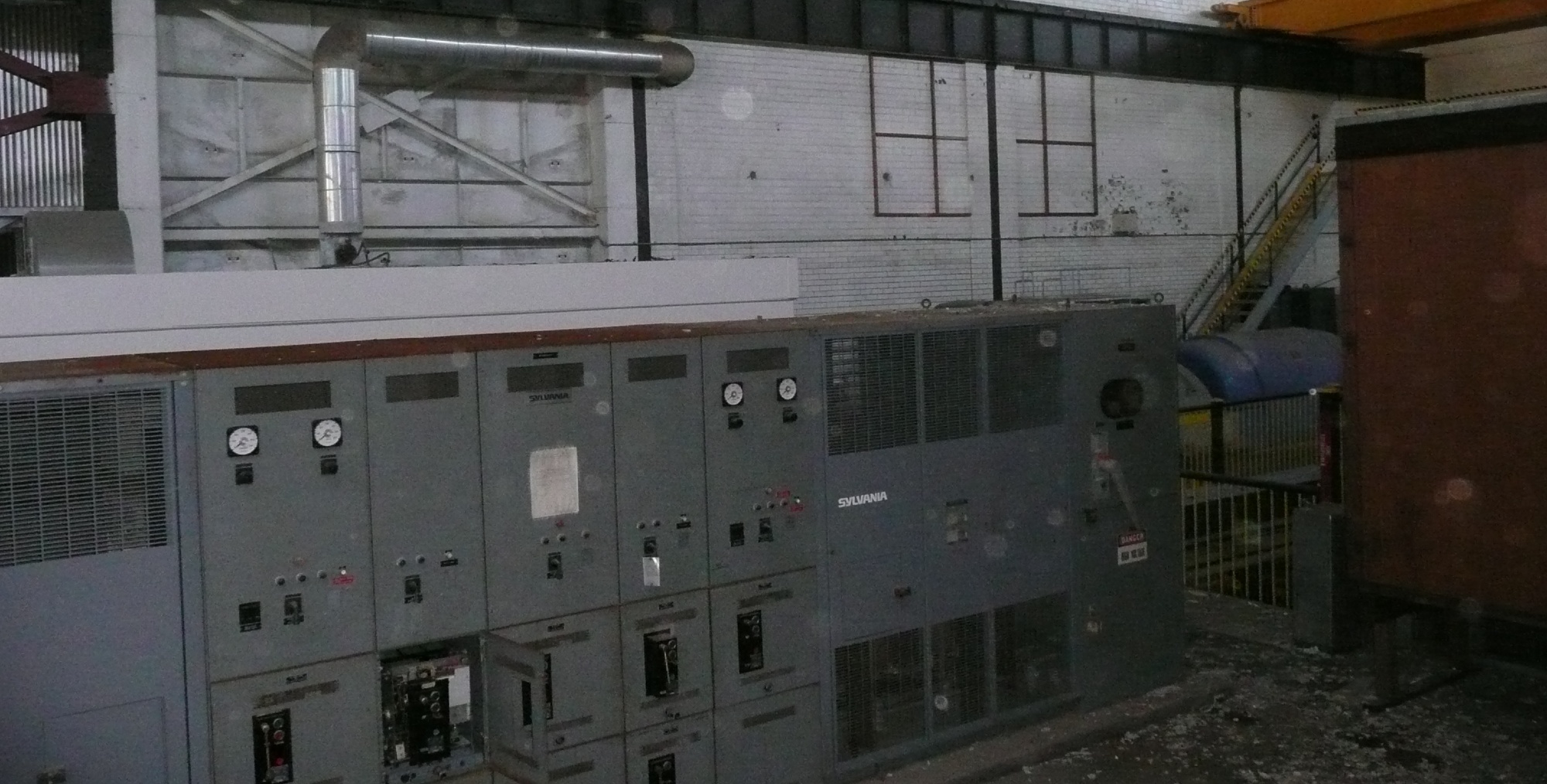
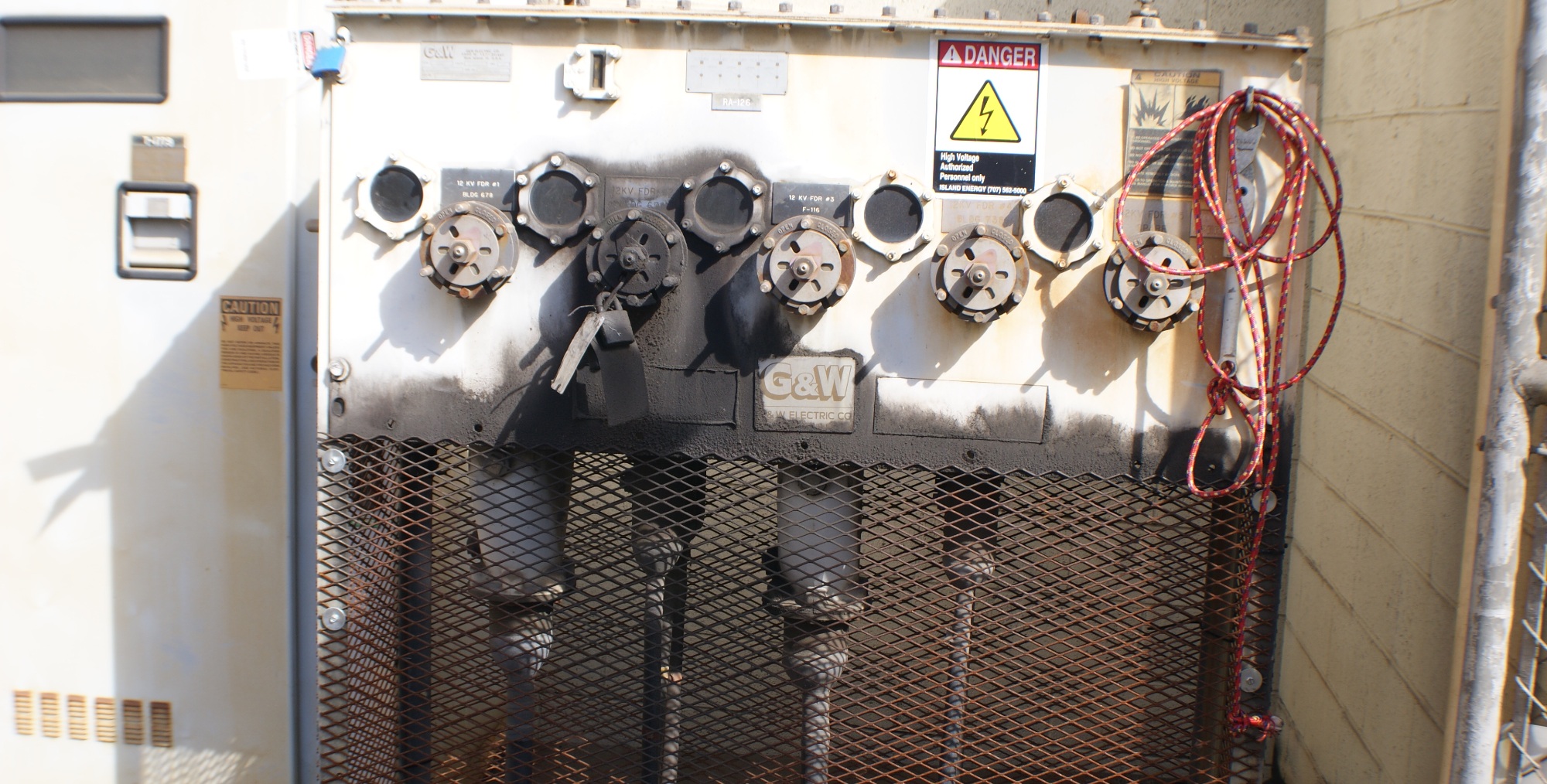
Station F’s existing equipment had reached the end of its service life. The facility contained aging 12kV metal-clad switchgear, Gulf and Western rocker arm oil switches, and 12kV pothead terminations, all of vintage equipment for which maintenance had become increasingly difficult and parts were no longer readily available. Island Energy operators expressed a clear preference for moving away from metal-clad and enclosed switchgear toward padmounted equipment, specifically Cooper VFI (Vacuum Fault Interrupter) and S&C PME (Pad Mounted Equipment) configurations. Padmounted equipment requires less maintenance, provides more flexibility for connecting future loads, and is better suited to the island’s ongoing infrastructure modernization program.
The challenge was space. The existing Station F footprint was compact, and replacing enclosed switchgear with padmounted equipment while maintaining all required NEC clearances and equipment ratings required precise field investigation before any design work could proceed.
Engineering Solution
EETS performed a detailed field inspection of Station F, documenting existing space dimensions and clearances with measurements taken throughout the facility. This field data formed the basis for a layout that replaced the existing equipment with modern padmounted alternatives sized and arranged to fit within the available footprint without compromising safety margins or equipment ratings.
The scope of equipment replacement at Station F included removal and replacement of the failing 12kV metal-clad switchgear, replacement of the Gulf and Western rocker arm oil switches, replacement of 12kV pothead terminations, design of a new padmount station transformer, and design of two Cooper VFI units and two S&C PME switchgear sections. The new padmounted configuration provided a more compact physical footprint than the legacy enclosed equipment while meeting all current NEC requirements for working clearance, grounding, and arc flash.
Because the existing wiring lacked reliable documentation, EETS closely reviewed each circuit before any terminations were disturbed, tracing conductors to confirm their function and landing points before disconnection. This prevented mislanding on the new equipment, which in a facility with no reliable record drawings would have been difficult to diagnose after the fact. New wiring was pulled where required, and physical provisions were incorporated into the design for future SCADA equipment cabinets, positioning Island Energy to add remote monitoring capability as that program moves forward across the island system.
Station E: Routing Out of an Indoor Switchgear Room
The Challenge of an Underground Exit
Station E presented a different but equally demanding set of constraints. The existing 12kV switchgear was located in an indoor switchgear room, and the project required routing new 12kV cable out of that room and into the station yard where new padmounted equipment would be installed. The path out of the building ran through a repurposed subsurface vault, and determining exactly where the cable would daylight into the yard required field investigation because no record drawings existed to show what utilities or obstructions might be present along the route.
Potholing was completed along the cable route to physically expose the subsurface conditions and confirm that the intended routing would not conflict with existing buried utilities. This step was essential given the absence of reliable underground records on the island and the consequences of striking an energized cable or other utility during construction.
Engineering Solution
With the subsurface route confirmed through field investigation, EETS designed the 12kV cable routing from the indoor switchgear room through the existing subsurface vault to the new equipment location in the station yard. As with Station F, the existing wiring inside the switchgear room was carefully reviewed and traced before any terminations were disturbed, ensuring that conductors were properly identified and correctly re-landed on the new equipment.
Physical provisions for future SCADA cabinet locations were included in the Station E design as well, consistent with the island-wide approach of building forward-looking infrastructure into every retrofit project even when it is not explicitly part of the requested scope.
Client
Island Energy
Sector
Public Utility
Location
Services
Electrical Engineering Design | Field Investigation | Equipment Specifications | Construction Documents

Drink
As part of this expansion, AWA identified an opportunity to recover energy that was previously being wasted.
Client
Island Energy
Sector
Public Utility
Location
Services
Electrical Engineering Design | Field Investigation | Equipment Specifications | Construction Documents
Drink
As part of this expansion, AWA identified an opportunity to recover energy that was previously being wasted.
Project Overview
Mare Island is a former Naval base on San Pablo Bay in the Bay Area, once one of the most critical ship ports in the United States during World War II. Today the island is served by Island Energy, a small public utility for which EETS has served as engineer of record since 2008. The island’s electrical infrastructure reflects its history: much of the distribution system was built in the 1940s through 1960s and has never been fully modernized. Equipment is aged, replacement parts are often no longer in production, working spaces are tight, clearances to energized parts are minimal, and record drawings are incomplete or entirely absent.
This environment creates a specific set of engineering challenges on every retrofit project. When existing equipment is grandfathered in place it does not need to meet the current edition of the National Electrical Code. The moment that equipment is touched as part of a retrofit, however, it becomes subject to the latest code requirements. That threshold drives significant design complexity: bringing one piece of equipment into compliance can trigger cascading requirements for clearances, grounding, arc flash labeling, and working space that the surrounding vintage infrastructure was never designed to accommodate.
Two projects that illustrate these challenges particularly well are the retrofit of Station E and Station F, both of which function as 12kV distribution substations on the island. Both stations contained 1950s and 1960s-vintage metal-clad switchgear, and both required EETS to navigate old wiring with no reliable documentation, tight physical spaces, and the need to bring replaced equipment into full code compliance while working around energized infrastructure that could not be taken out of service.
Station F: Replacing Enclosed Switchgear with Padmounted Equipment
The Challenge of Space and Legacy Equipment
Station F’s existing equipment had reached the end of its service life. The facility contained aging 12kV metal-clad switchgear, Gulf and Western rocker arm oil switches, and 12kV pothead terminations, all of vintage equipment for which maintenance had become increasingly difficult and parts were no longer readily available. Island Energy operators expressed a clear preference for moving away from metal-clad and enclosed switchgear toward padmounted equipment, specifically Cooper VFI (Vacuum Fault Interrupter) and S&C PME (Pad Mounted Equipment) configurations. Padmounted equipment requires less maintenance, provides more flexibility for connecting future loads, and is better suited to the island’s ongoing infrastructure modernization program.
The challenge was space. The existing Station F footprint was compact, and replacing enclosed switchgear with padmounted equipment while maintaining all required NEC clearances and equipment ratings required precise field investigation before any design work could proceed.
Engineering Solution
EETS performed a detailed field inspection of Station F, documenting existing space dimensions and clearances with measurements taken throughout the facility. This field data formed the basis for a layout that replaced the existing equipment with modern padmounted alternatives sized and arranged to fit within the available footprint without compromising safety margins or equipment ratings.
The scope of equipment replacement at Station F included removal and replacement of the failing 12kV metal-clad switchgear, replacement of the Gulf and Western rocker arm oil switches, replacement of 12kV pothead terminations, design of a new padmount station transformer, and design of two Cooper VFI units and two S&C PME switchgear sections. The new padmounted configuration provided a more compact physical footprint than the legacy enclosed equipment while meeting all current NEC requirements for working clearance, grounding, and arc flash.
Because the existing wiring lacked reliable documentation, EETS closely reviewed each circuit before any terminations were disturbed, tracing conductors to confirm their function and landing points before disconnection. This prevented mislanding on the new equipment, which in a facility with no reliable record drawings would have been difficult to diagnose after the fact. New wiring was pulled where required, and physical provisions were incorporated into the design for future SCADA equipment cabinets, positioning Island Energy to add remote monitoring capability as that program moves forward across the island system.
Station E: Routing Out of an Indoor Switchgear Room
The Challenge of an Underground Exit
Station E presented a different but equally demanding set of constraints. The existing 12kV switchgear was located in an indoor switchgear room, and the project required routing new 12kV cable out of that room and into the station yard where new padmounted equipment would be installed. The path out of the building ran through a repurposed subsurface vault, and determining exactly where the cable would daylight into the yard required field investigation because no record drawings existed to show what utilities or obstructions might be present along the route.
Potholing was completed along the cable route to physically expose the subsurface conditions and confirm that the intended routing would not conflict with existing buried utilities. This step was essential given the absence of reliable underground records on the island and the consequences of striking an energized cable or other utility during construction.
Engineering Solution
With the subsurface route confirmed through field investigation, EETS designed the 12kV cable routing from the indoor switchgear room through the existing subsurface vault to the new equipment location in the station yard. As with Station F, the existing wiring inside the switchgear room was carefully reviewed and traced before any terminations were disturbed, ensuring that conductors were properly identified and correctly re-landed on the new equipment.
Physical provisions for future SCADA cabinet locations were included in the Station E design as well, consistent with the island-wide approach of building forward-looking infrastructure into every retrofit project even when it is not explicitly part of the requested scope.
Key Technical Elements
Parameter | Detail |
Distribution Voltage | 12kV |
Station F Equipment Replaced | 12kV metal-clad switchgear, Gulf and Western rocker arm oil switches, 12kV pothead terminations, padmount station transformer |
Station F New Equipment | Two Cooper VFI units, two S&C PME switchgear sections, new padmount transformer |
Station E Cable Route | Indoor switchgear room through repurposed subsurface vault to station yard, 12kV |
Field Investigation | Space and clearance measurements at Station F; subsurface potholing to confirm cable route at Station E |
Code Compliance Trigger | NEC requirements for working clearance, grounding, and arc flash apply upon any equipment modification, regardless of grandfathered status of existing installation |
Record Drawing Status | Absent or unreliable at both stations; all wiring verified by field trace before disturbance |
Future Provisions | Physical locations designated for future SCADA equipment cabinets at both stations |
Project Outcome
Both Station E and Station F were successfully retrofitted and returned to service. Island Energy now operates two modernized 12kV distribution stations with padmounted equipment that is easier to maintain, better suited to future load additions, and fully compliant with the current National Electrical Code. The SCADA provisions incorporated into both designs position the island for improved remote monitoring as that capability is built out across the system.
Value Delivered by EETS
Retrofit work on infrastructure this old, in a facility with this little documentation, requires a fundamentally different approach than designing a new installation. Every assumption has to be verified in the field, every circuit has to be traced before it is touched, and every design decision has to account for the code compliance implications of disturbing equipment that has been grandfathered for decades. EETS brought that discipline to both projects.
Field Investigation as a Design Input
Neither Station E nor Station F could have been designed accurately from a desk. Space measurements at Station F were the foundation of the padmounted equipment layout. Subsurface potholing at Station E confirmed the cable route before it was committed to drawings. In both cases, going to the field first prevented design rework and protected against the kind of surprises during construction that drive change orders and schedule delays on retrofit projects.
Wiring Discipline in the Absence of Documentation
The absence of reliable record drawings at both stations meant that every existing circuit was a potential unknown. EETS treated the field tracing of existing wiring as a required design step rather than a contractor responsibility, reviewing each conductor before any termination was disturbed. That approach ensured that the new equipment was correctly wired from the first energization attempt, without the troubleshooting that results from conductors landed in the wrong place on unfamiliar vintage equipment.
Thinking Ahead for Future Engineers
Including provisions for future SCADA cabinet locations was not part of the requested scope at either station. EETS included them anyway, because retrofitting vintage facilities is expensive and disruptive, and every opportunity to simplify the work of the next engineer should be taken when the cost to do so is low. A designated cabinet location costs almost nothing to design in. Retrofitting one into a completed installation on an island with tight spaces and aged infrastructure costs considerably more.
Managing the Code Compliance Threshold
The grandfathering principle is well understood in theory, but its practical implications in a facility like this are significant. Touching any piece of equipment activates NEC requirements for clearances, grounding, and arc flash that the surrounding vintage installation was never designed to accommodate. EETS designed the Station E and F retrofits with that threshold in mind from the outset, ensuring that the new equipment installations met current code requirements and that the design did not inadvertently trigger compliance obligations that could not be satisfied within the available space.
Drink
As part of this expansion, AWA identified an opportunity to recover energy that was previously being wasted.