
ENGINEERING CASE STUDY
69kV Substation Rehabilitation for Contra Costa Canal Pumping Plants
Contra Costa Water District | Northern California
Project Overview
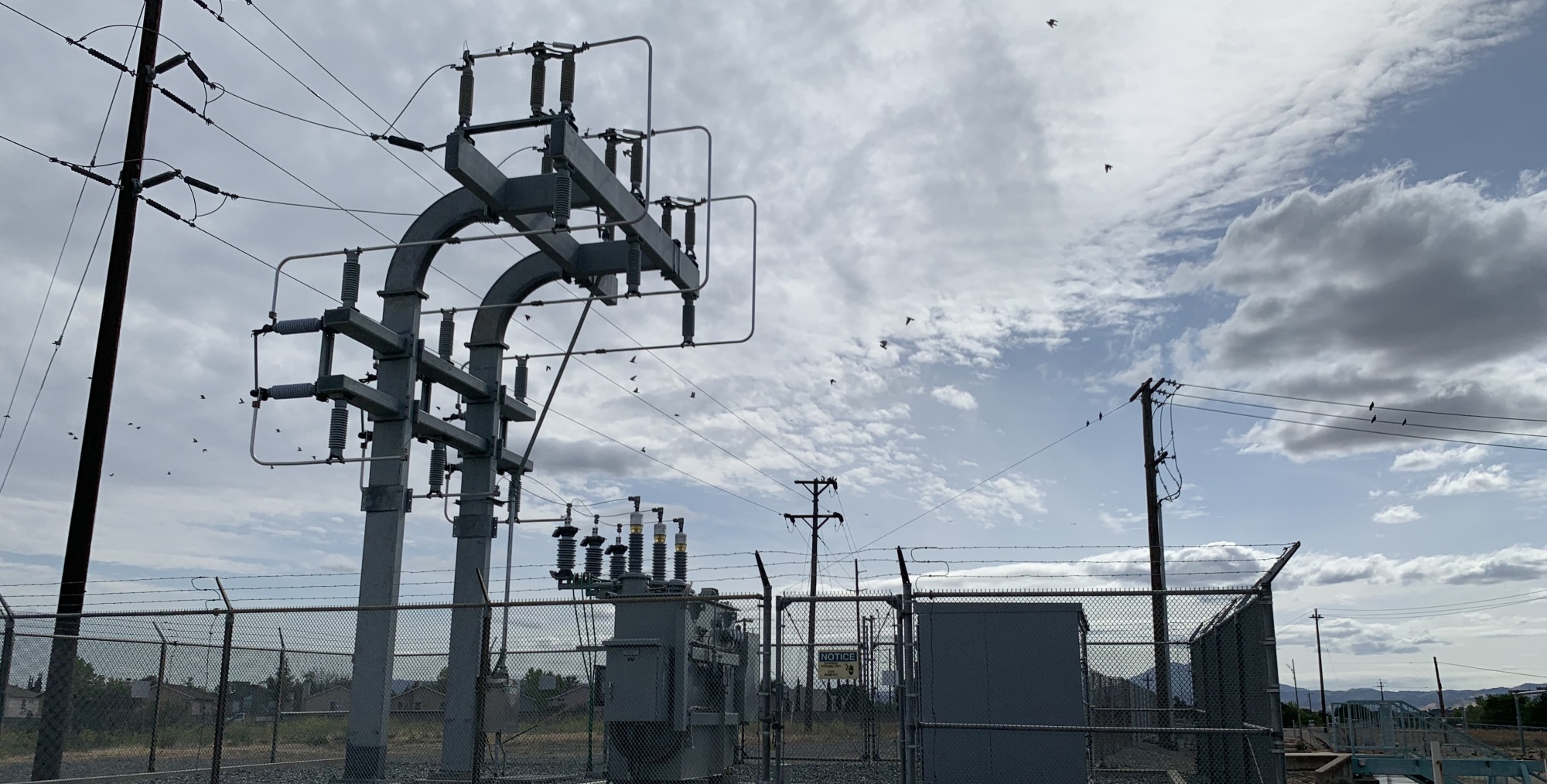
Contra Costa Water District (CCWD) operates multiple 69kV substations across its service territory. Among these, three substations along the Contra Costa Canal deliver power from the Western Area Power Administration (WAPA) to four pumping plants that form the backbone of the District’s water distribution system, moving water to industries and municipalities from Oakley to Martinez.
Pumping Plants 1, 3, and 4 each have a dedicated substation, designated Substation 1, Substation 3, and Substation 4. Pumping Plant 2 is served directly from an overhead distribution line. The four plants operate in series, with each plant lifting water to the next elevation, meaning all plants must remain online simultaneously to deliver water to customers. An outage at any single plant is effectively an outage to the entire system.
The three substations were constructed between the 1940s and 1960s and had reached the end of their useful life. Replacement parts were either obsolete or required prohibitively long procurement lead times. CCWD retained EETS to replace all three substations with modern equipment, improve site security, and bring each facility into compliance with current spill containment requirements, all without interrupting canal operations.
Project Challenge
Three Substations, Four Stakeholders, and No Room to Work
This project presented a rare combination of constraints that made a conventional replacement approach essentially impossible from the outset.
The substations were originally constructed by the United States Bureau of Reclamation (USBR) and later transferred to WAPA ownership in the 1980s, while the pumping plants remained with USBR. CCWD undertook the cost of rehabilitation in cooperation with both agencies. Every design decision required coordination and sign-off across three organizations, with EETS facilitating design workshops, submittal reviews, and ongoing coordination meetings throughout the project. WAPA and USBR each made clear that their ownership did not extend beyond the substation fence line, and that all substation work had to remain within the existing perimeter at each site.
That constraint proved immediately problematic. Two of the three substations had extremely small footprints with no available space to install new equipment while keeping existing equipment energized. Standard replacement practice, which involves constructing the new facility adjacent to the existing one before cutting over, was simply not feasible here. At the same time, taking any substation out of service would take down its associated pumping plant, and taking down any pumping plant would take down the entire canal delivery system.
Documentation across all three sites was severely limited. The facilities had been built by USBR decades earlier, transferred between agencies, and operated for generations with minimal record keeping. Archive searches through CCWD, WAPA, and USBR yielded incomplete original design drawings that did not reflect field modifications made over the years. EETS supplemented the documentary record through interviews with CCWD operations and maintenance personnel and direct field investigation at each site.
The project also encountered PCB-contaminated soil at one substation site during construction, requiring testing, removal, and proper disposal in coordination with applicable environmental requirements.
Engineering Solution
An Overlooked Line Changes Everything
The key to unlocking this project came from a field observation during site investigation. EETS engineers noted an old 2,300V overhead distribution line extending between substations. Inquiry with USBR revealed the line had originally been built to supply power to one of the pump substations before an on-site substation was constructed to serve it. The line had been out of service for an extended period and was largely forgotten.
Closer evaluation revealed that the line, sourced from Substation 3 and running to Substations 1 and 2, had sufficient capacity to support reduced pumping operations across the system. This created a meaningful operational flexibility: if the 69kV equipment feeding any one substation needed to be taken out of service for construction, that substation could be temporarily supplied through this 2,300V interconnection, allowing the associated pumping plant to continue operating at reduced capacity. By scheduling construction during winter and spring months, when reduced water demand allowed the canal system to operate at lower pumping capacity without impacting customers, the project team could work on one substation at a time in sequence rather than requiring simultaneous outages or costly temporary generation at each pumping plant.
Before substation construction could begin, EETS prepared a separate design and bid package for inspection, repair, testing, and return to service of the 2,300V overhead line. That work was completed and the line restored to service prior to bidding the substation rehabilitation project, ensuring the sequencing strategy was in place before any substation work commenced.
Equipment procurement was also separated from construction to support the tight project schedule. EETS prepared standalone purchase specifications for the substation power transformers, which CCWD bid and procured directly. This allowed transformer delivery schedules to be known before construction began, and transformer foundation and oil containment drawings to be incorporated into the final construction document set with actual equipment dimensions confirmed.
Substation Equipment Replacement
Each substation received a complete equipment replacement within its existing fence perimeter. The new installations at each site included:
- New 69kV structural steel for terminating the incoming WAPA transmission line
- 69kV, 1200A three-phase group-operated disconnect switch
- Three single-phase 69kV fused hookstick disconnects, replacing the existing fused hookstick configuration and providing WAPA with a visible open point at their line termination
- New power transformer, 69kV delta primary to 2,400V delta secondary: 1,500/1,750 kVA at Substation 1, and 3,750/4,687 kVA at Substations 3 and 4, each sized to match the existing 2,300V pumping plant distribution voltage
At the substation, the existing 2,300V switchgear was replaced with modern 5kV-class equipment, including a new 5kV, 1,200A, three-phase vacuum circuit breaker and 5kV fused disconnect switches. The upgrade to 5kV-class equipment was driven by the practical obsolescence of 2,300V-class switchgear, for which standard replacement components are no longer readily available.
The new transformer foundations, including oil containment structures required for environmental compliance, were substantially larger than the original foundations, which had no containment provisions. Working within the fixed fence perimeter required precise attention to equipment clearances and working space throughout the design, particularly because the existing 2,300V switchgear at each substation had to remain energized to serve the pumping plant while all other substation equipment was removed and replaced around it.
Resolving an Unforeseen Exterior Pump Building Clearance Conflict
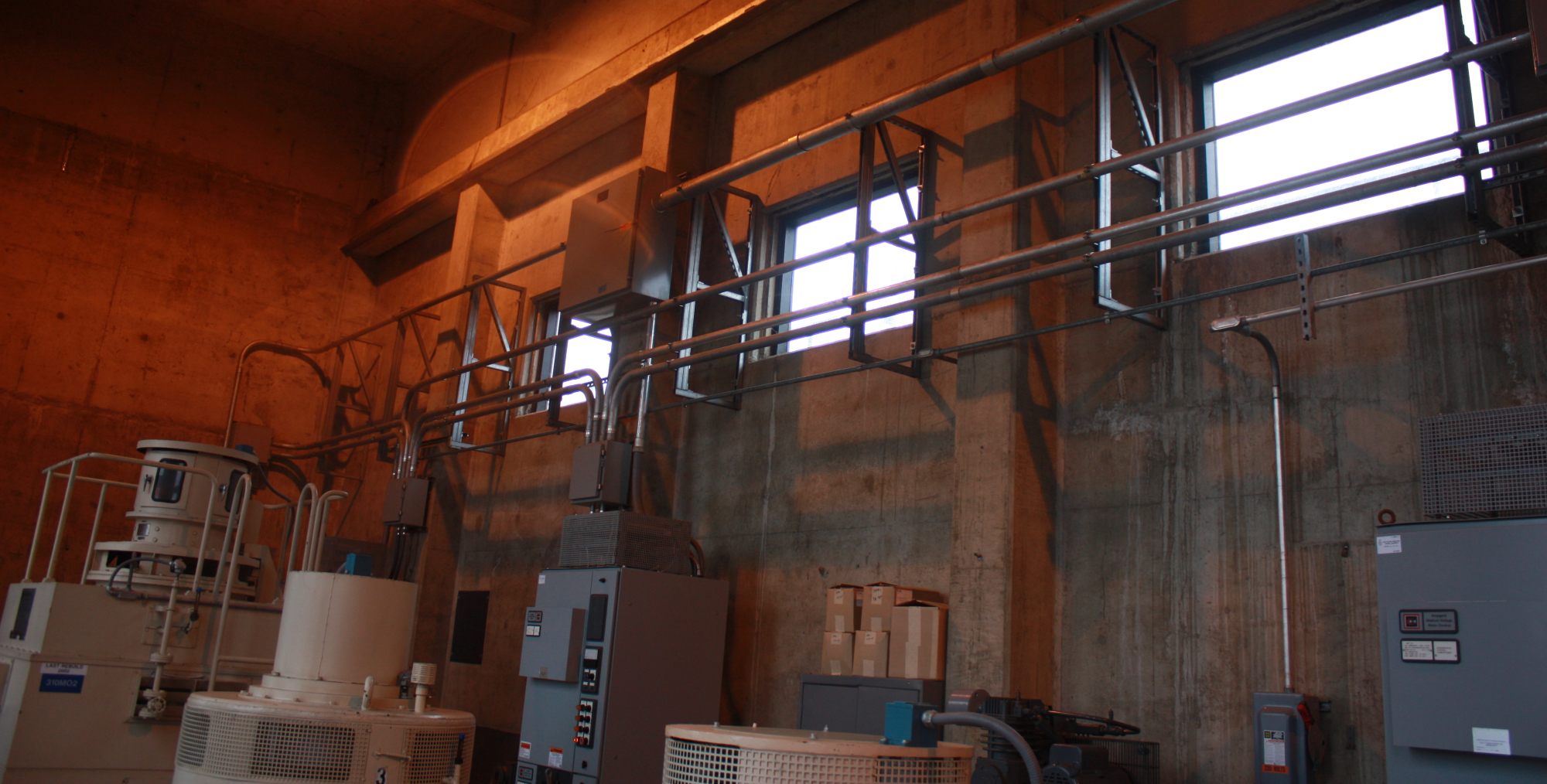
During construction, a clearance conflict emerged that had not been apparent during design. The new pump building exterior equipment, while fully code-compliant, had a different physical geometry than the original equipment it replaced. The existing access catwalk, which had been acceptable with the original equipment layout, was now positioned too close to energized components to meet National Electrical Code working clearance requirements given the new equipment configuration.
EETS engaged a structural subcontractor to design modifications to the catwalk geometry in coordination with the installed equipment. The modifications were incorporated into the project without disrupting the construction schedule, and the final installations met all applicable clearance requirements.
Client
Contra Costa Water District
Sector
Public / Municipal Water Agency
Location
Northern California
Services
Substation Engineering | Alternatives Analysis | Multi-Agency Coordination | Detailed Design | Construction Phase Support
Drink
As part of this expansion, AWA identified an opportunity to recover energy that was previously being wasted.
Client
Contra Costa Water District
Sector
Public / Municipal Water Agency
Location
Northern California
Services
Substation Engineering | Alternatives Analysis | Multi-Agency Coordination | Detailed Design | Construction Phase Support
Drink
As part of this expansion, AWA identified an opportunity to recover energy that was previously being wasted.
Project Overview
Contra Costa Water District (CCWD) operates multiple 69kV substations across its service territory. Among these, three substations along the Contra Costa Canal deliver power from the Western Area Power Administration (WAPA) to four pumping plants that form the backbone of the District’s water distribution system, moving water to industries and municipalities from Oakley to Martinez.
Pumping Plants 1, 3, and 4 each have a dedicated substation, designated Substation 1, Substation 3, and Substation 4. Pumping Plant 2 is served directly from an overhead distribution line. The four plants operate in series, with each plant lifting water to the next elevation, meaning all plants must remain online simultaneously to deliver water to customers. An outage at any single plant is effectively an outage to the entire system.
The three substations were constructed between the 1940s and 1960s and had reached the end of their useful life. Replacement parts were either obsolete or required prohibitively long procurement lead times. CCWD retained EETS to replace all three substations with modern equipment, improve site security, and bring each facility into compliance with current spill containment requirements, all without interrupting canal operations.
Project Challenge
Three Substations, Four Stakeholders, and No Room to Work
This project presented a rare combination of constraints that made a conventional replacement approach essentially impossible from the outset.
The substations were originally constructed by the United States Bureau of Reclamation (USBR) and later transferred to WAPA ownership in the 1980s, while the pumping plants remained with USBR. CCWD undertook the cost of rehabilitation in cooperation with both agencies. Every design decision required coordination and sign-off across three organizations, with EETS facilitating design workshops, submittal reviews, and ongoing coordination meetings throughout the project. WAPA and USBR each made clear that their ownership did not extend beyond the substation fence line, and that all substation work had to remain within the existing perimeter at each site.
That constraint proved immediately problematic. Two of the three substations had extremely small footprints with no available space to install new equipment while keeping existing equipment energized. Standard replacement practice, which involves constructing the new facility adjacent to the existing one before cutting over, was simply not feasible here. At the same time, taking any substation out of service would take down its associated pumping plant, and taking down any pumping plant would take down the entire canal delivery system.
Documentation across all three sites was severely limited. The facilities had been built by USBR decades earlier, transferred between agencies, and operated for generations with minimal record keeping. Archive searches through CCWD, WAPA, and USBR yielded incomplete original design drawings that did not reflect field modifications made over the years. EETS supplemented the documentary record through interviews with CCWD operations and maintenance personnel and direct field investigation at each site.
The project also encountered PCB-contaminated soil at one substation site during construction, requiring testing, removal, and proper disposal in coordination with applicable environmental requirements.
Engineering Solution
An Overlooked Line Changes Everything
The key to unlocking this project came from a field observation during site investigation. EETS engineers noted an old 2,300V overhead distribution line extending between substations. Inquiry with USBR revealed the line had originally been built to supply power to one of the pump substations before an on-site substation was constructed to serve it. The line had been out of service for an extended period and was largely forgotten.
Closer evaluation revealed that the line, sourced from Substation 3 and running to Substations 1 and 2, had sufficient capacity to support reduced pumping operations across the system. This created a meaningful operational flexibility: if the 69kV equipment feeding any one substation needed to be taken out of service for construction, that substation could be temporarily supplied through this 2,300V interconnection, allowing the associated pumping plant to continue operating at reduced capacity. By scheduling construction during winter and spring months, when reduced water demand allowed the canal system to operate at lower pumping capacity without impacting customers, the project team could work on one substation at a time in sequence rather than requiring simultaneous outages or costly temporary generation at each pumping plant.
Before substation construction could begin, EETS prepared a separate design and bid package for inspection, repair, testing, and return to service of the 2,300V overhead line. That work was completed and the line restored to service prior to bidding the substation rehabilitation project, ensuring the sequencing strategy was in place before any substation work commenced.
Equipment procurement was also separated from construction to support the tight project schedule. EETS prepared standalone purchase specifications for the substation power transformers, which CCWD bid and procured directly. This allowed transformer delivery schedules to be known before construction began, and transformer foundation and oil containment drawings to be incorporated into the final construction document set with actual equipment dimensions confirmed.
Substation Equipment Replacement
Each substation received a complete equipment replacement within its existing fence perimeter. The new installations at each site included:
- New 69kV structural steel for terminating the incoming WAPA transmission line
- 69kV, 1200A three-phase group-operated disconnect switch
- Three single-phase 69kV fused hookstick disconnects, replacing the existing fused hookstick configuration and providing WAPA with a visible open point at their line termination
- New power transformer, 69kV delta primary to 2,400V delta secondary: 1,500/1,750 kVA at Substation 1, and 3,750/4,687 kVA at Substations 3 and 4, each sized to match the existing 2,300V pumping plant distribution voltage
At the substation, the existing 2,300V switchgear was replaced with modern 5kV-class equipment, including a new 5kV, 1,200A, three-phase vacuum circuit breaker and 5kV fused disconnect switches. The upgrade to 5kV-class equipment was driven by the practical obsolescence of 2,300V-class switchgear, for which standard replacement components are no longer readily available.
The new transformer foundations, including oil containment structures required for environmental compliance, were substantially larger than the original foundations, which had no containment provisions. Working within the fixed fence perimeter required precise attention to equipment clearances and working space throughout the design, particularly because the existing 2,300V switchgear at each substation had to remain energized to serve the pumping plant while all other substation equipment was removed and replaced around it.
Resolving an Unforeseen Exterior Pump Building Clearance Conflict
During construction, a clearance conflict emerged that had not been apparent during design. The new pump building exterior equipment, while fully code-compliant, had a different physical geometry than the original equipment it replaced. The existing access catwalk, which had been acceptable with the original equipment layout, was now positioned too close to energized components to meet National Electrical Code working clearance requirements given the new equipment configuration.
EETS engaged a structural subcontractor to design modifications to the catwalk geometry in coordination with the installed equipment. The modifications were incorporated into the project without disrupting the construction schedule, and the final installations met all applicable clearance requirements.
Key Technical Elements
Parameter | Detail |
Substations Replaced | Three 69kV substations serving Pumping Plants 1, 3, and 4 along the Contra Costa Canal |
System Voltage | 69kV incoming from WAPA; 2,400V delta secondary to match existing 2,300V pumping plant distribution |
Power Transformers | 1,500/1,750 kVA at Substation 1; 3,750/4,687 kVA at Substations 3 and 4; all 69kV delta primary to 2,400V delta secondary |
69kV Switching | 1200A three-phase group-operated disconnect switch and three single-phase fused hookstick disconnects per substation |
Pump Building Switchgear | 5kV, 1200A, three-phase vacuum circuit breaker and 5kV disconnect switch, replacing obsolete 2,300V class equipment |
Construction Sequencing | One substation at a time, staged during winter and spring months to align with reduced canal pumping demand |
2,300V Interconnect Line | Dormant USBR-owned overhead distribution line, sourced from Substation 3, restored to service to provide operational flexibility during and after construction |
Stakeholders | CCWD, WAPA, and USBR; all design decisions coordinated across all three agencies |
Procurement Strategy | Transformers bid and procured separately by CCWD ahead of construction to support schedule and incorporate confirmed equipment dimensions into final drawings |
Project Outcome
All three substations were successfully replaced and returned to service. The Contra Costa Canal pumping plants continued to operate throughout construction without a single unplanned interruption to water delivery. The rehabilitated substations provide CCWD with modern, maintainable electrical infrastructure and bring all three sites into compliance with current spill containment and security requirements. The restored 2,300V overhead interconnect line remains available as a permanent operational asset for the District going forward.
Value Delivered by EETS
What made this project solvable was not any single piece of engineering. It was the combination of thorough field investigation, creative alternatives analysis, disciplined multi-agency coordination, and a willingness to separate the project into logical phases so that each piece could move forward without waiting for everything else to be resolved simultaneously.
Finding the Hidden Asset
The dormant 2,300V overhead line was the project’s critical path. Without it, the only viable options were expensive temporary generation at each pumping plant or concurrent construction at all three substations, neither of which fit the project budget or schedule. EETS identified the line during field investigation, evaluated its capacity, coordinated with USBR on its ownership and condition, and designed its restoration as a prerequisite to the broader project. That single discovery changed the entire delivery strategy.
Coordinating Across Three Agencies Without Losing Momentum
The dormant 2,300V overhead line was the project’s critical path. Without it, the only viable options were expensive temporary generation at each pumping plant or concurrent construction at all three substations, neither of which fit the project budget or schedule. EETS identified the line during field investigation, evaluated its capacity, coordinated with USBR on its ownership and condition, and designed its restoration as a prerequisite to the broader project. That single discovery changed the entire delivery strategy.
Designing Within the Fence
The requirement to keep all work within the existing substation perimeters while maintaining energized equipment throughout construction was the central engineering constraint of the project. EETS resolved it through precise equipment layout, careful attention to clearances around the retained 2,300V switchgear, and close coordination with the transformer supplier to confirm equipment dimensions before finalizing foundation and containment designs. The result was a complete substation replacement at each site without exceeding the available footprint.
Keeping the Canal Running
Throughout design and construction, the non-negotiable requirement was that water kept moving through the Contra Costa Canal. Every staging decision, every construction sequence, and every outage window was evaluated against that constraint first. The project was completed successfully with canal operations uninterrupted, which is the measure of success that mattered most to CCWD and its customers.
Drink
As part of this expansion, AWA identified an opportunity to recover energy that was previously being wasted.