
Campbell Soup Sacramento Plant Electrical Engineering
Campbell Soup Supply Company | Sacramento Manufacturing Plant | Sacramento, California
Project Overview
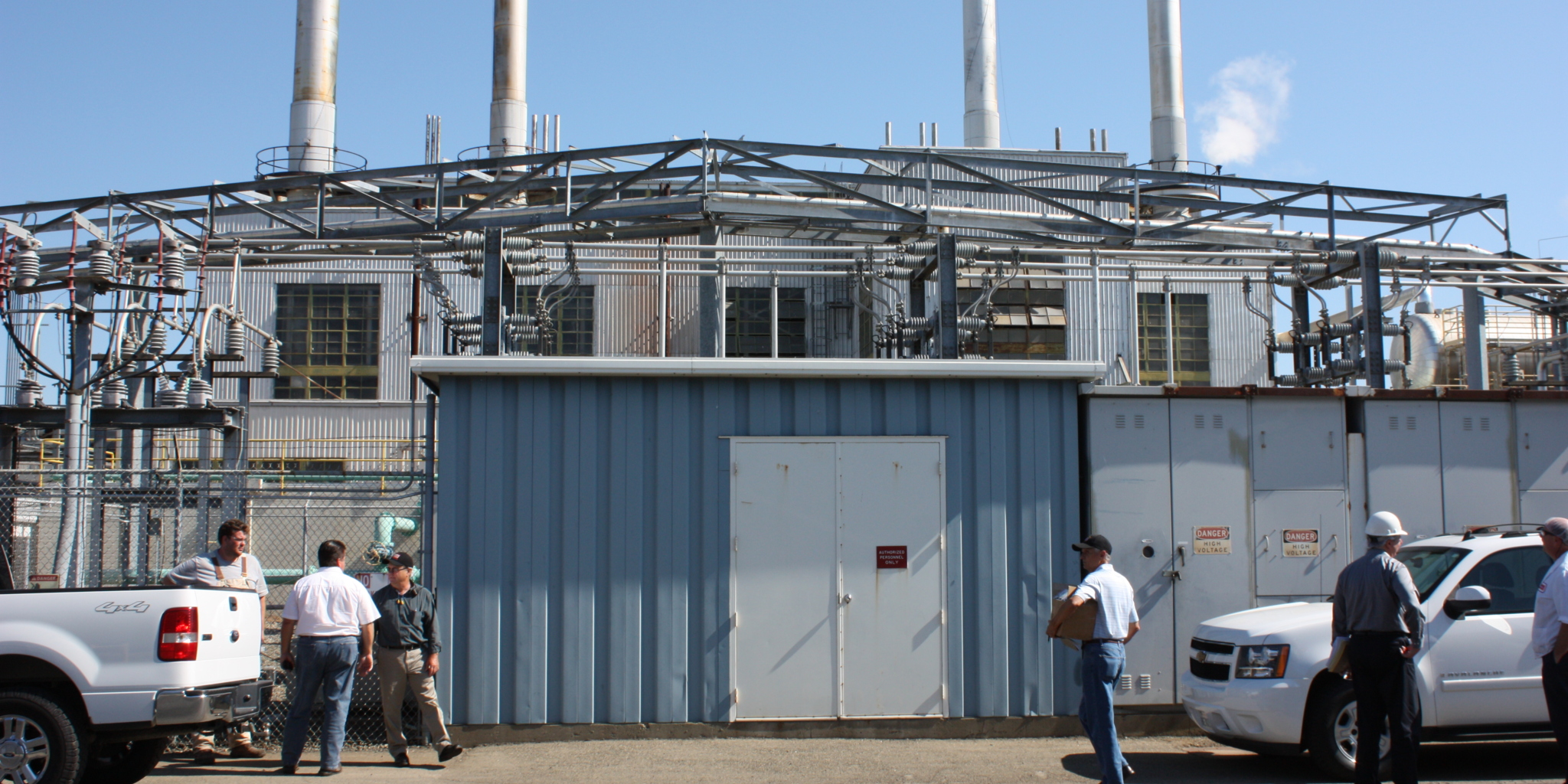
Campbell Soup Supply Company’s Sacramento manufacturing plant at 6200 Franklin Boulevard is a large food processing facility with an unusual electrical characteristic: it operates as both a major industrial power consumer and an embedded generation source connected to SMUD’s 21 kV distribution system. Following the shutdown of the Rancho Seco Nuclear Plant near Sacramento, SMUD approached Campbell Soup about replacement generation. The result was a highly efficient natural gas-fired combined cycle cogeneration plant that provides process steam to the manufacturing facility and exports 158 MW to SMUD’s grid.
EETS worked with Campbell Soup on electrical engineering at the Sacramento plant and other northern California facilities for over 25 years. The scope evolved over time from foundational infrastructure design to progressively more comprehensive engineering studies as the plant aged and regulatory requirements around worker safety and electrical hazard analysis became more demanding. The engagement included the design of the plant’s 21 kV substation infrastructure, short circuit and coordination studies, a facility-wide arc flash analysis covering 17 substations, generator protection relay work, and refurbishment of the 60 kV Dixon substation.
The Facility and Electrical Infrastructure
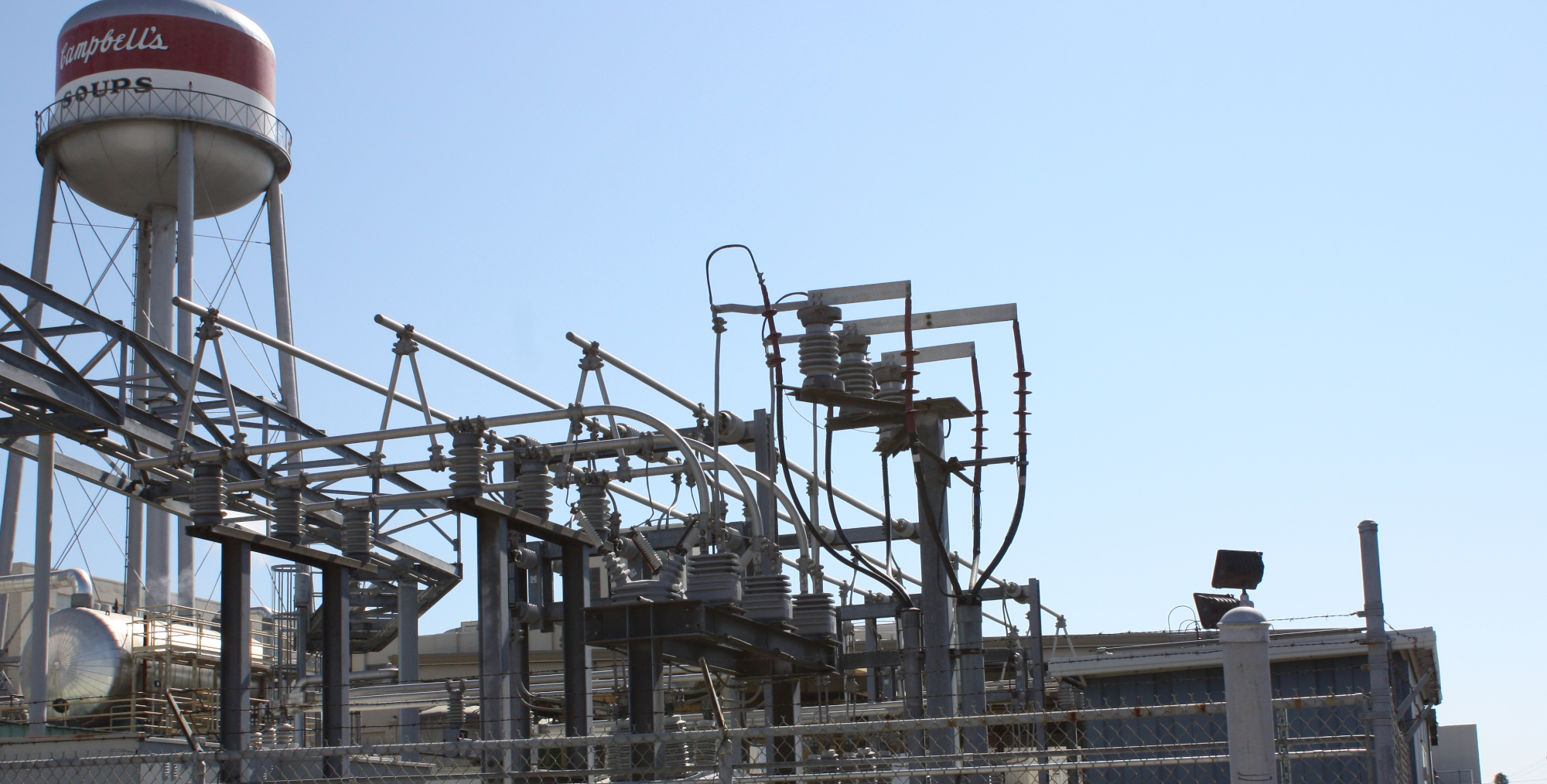
The Sacramento plant is served at 21 kV by SMUD via two feeders, which connect to the Campbell Soup 21 kV switchyard. From there, the switchyard serves a network of 21 kV to 480V double-ended unit substations distributed throughout the facility. EETS designed the new 21 kV:480V double-ended substation that serves as the core of this distribution system, including three 21 kV SF6 circuit breakers, two 21 kV revenue metering positions, eight 21 kV substation disconnects, twelve 21 kV metal-enclosed fused disconnects, and two 5 MVA 21 kV:4.16 kV transformers. EETS also designed the protective relaying, instrumentation and controls, and ground grid for the substation, and performed the supporting engineering calculations.
Over the life of the engagement, EETS also relocated existing unit substations to accommodate plant process modifications, added 287D phase and ground directional overcurrent relays and 300G multi-function generator relays for the cogeneration plant, and refurbished the 60 kV Dixon facility substation, including a new transformer, utility incoming termination and metering structure, provision for a future 115 kV circuit switcher, and fiber optic communication.
Project Challenge
A Complex Distribution System with Embedded Generation
A manufacturing plant that both consumes industrial-scale power and exports generation to the utility grid presents a more complex protection and coordination problem than a facility that simply takes power from the utility. The Campbell Soup system had to protect equipment and personnel against faults contributed by both the SMUD feeders and the on-site cogeneration plant, coordinate protective devices across multiple voltage levels from 21 kV through 480V and down to 120V, and maintain proper directional protection to distinguish between faults on the plant side and conditions on the utility side. The 21 kV ground protection coordination also presented inherent constraints: the combination of main breaker settings, downstream fuse elements, and the need for upstream coordination with SMUD could not be simultaneously optimized at every level.
Arc Flash Analysis Across 17 Substations
NFPA 70 Article 110.16 requires arc flash hazard warning labels on switchboards, panelboards, industrial control panels, and MCCs in non-residential workplaces. For a manufacturing facility with the scale and complexity of the Campbell Soup plant, satisfying this requirement meant conducting a full arc flash analysis across every substation and piece of switchgear in the facility, gathering field data where it did not exist in records, and generating individual PPE hazard labels for each location. Where protective device interrupting ratings were exceeded by available fault current, the arc flash calculations could not produce accurate results until the devices were corrected, requiring the study to identify those conditions explicitly rather than generate labels that would give workers false confidence about the required level of protection.
Client
Campbell Soup Company
Sector
Sector Private / Food and Beverage Manufacturing
Location
Sacramento, California; Dixon, California
Services
21 kV Substation Design │ Short Circuit and Coordination Studies │ Arc Flash Analysis │ Generator Protection │ Ground Grid Studies │ Substation Refurbishment │ Instrumentation and Controls

Drink
As part of this expansion, AWA identified an opportunity to recover energy that was previously being wasted.
Client
Campbell Soup Company
Sector
Sector Private / Food and Beverage Manufacturing
Location
Sacramento, California; Dixon, California
Services
21 kV Substation Design │ Short Circuit and Coordination Studies │ Arc Flash Analysis │ Generator Protection │ Ground Grid Studies │ Substation Refurbishment │ Instrumentation and Controls
Drink
As part of this expansion, AWA identified an opportunity to recover energy that was previously being wasted.
Project Overview
Campbell Soup Supply Company’s Sacramento manufacturing plant at 6200 Franklin Boulevard is a large food processing facility with an unusual electrical characteristic: it operates as both a major industrial power consumer and an embedded generation source connected to SMUD’s 21 kV distribution system. Following the shutdown of the Rancho Seco Nuclear Plant near Sacramento, SMUD approached Campbell Soup about replacement generation. The result was a highly efficient natural gas-fired combined cycle cogeneration plant that provides process steam to the manufacturing facility and exports 158 MW to SMUD’s grid.
EETS worked with Campbell Soup on electrical engineering at the Sacramento plant and other northern California facilities for over 25 years. The scope evolved over time from foundational infrastructure design to progressively more comprehensive engineering studies as the plant aged and regulatory requirements around worker safety and electrical hazard analysis became more demanding. The engagement included the design of the plant’s 21 kV substation infrastructure, short circuit and coordination studies, a facility-wide arc flash analysis covering 17 substations, generator protection relay work, and refurbishment of the 60 kV Dixon substation.
The Facility and Electrical Infrastructure
The Sacramento plant is served at 21 kV by SMUD via two feeders, which connect to the Campbell Soup 21 kV switchyard. From there, the switchyard serves a network of 21 kV to 480V double-ended unit substations distributed throughout the facility. EETS designed the new 21 kV:480V double-ended substation that serves as the core of this distribution system, including three 21 kV SF6 circuit breakers, two 21 kV revenue metering positions, eight 21 kV substation disconnects, twelve 21 kV metal-enclosed fused disconnects, and two 5 MVA 21 kV:4.16 kV transformers. EETS also designed the protective relaying, instrumentation and controls, and ground grid for the substation, and performed the supporting engineering calculations.
Over the life of the engagement, EETS also relocated existing unit substations to accommodate plant process modifications, added 287D phase and ground directional overcurrent relays and 300G multi-function generator relays for the cogeneration plant, and refurbished the 60 kV Dixon facility substation, including a new transformer, utility incoming termination and metering structure, provision for a future 115 kV circuit switcher, and fiber optic communication.
Project Challenge
A Complex Distribution System with Embedded Generation
A manufacturing plant that both consumes industrial-scale power and exports generation to the utility grid presents a more complex protection and coordination problem than a facility that simply takes power from the utility. The Campbell Soup system had to protect equipment and personnel against faults contributed by both the SMUD feeders and the on-site cogeneration plant, coordinate protective devices across multiple voltage levels from 21 kV through 480V and down to 120V, and maintain proper directional protection to distinguish between faults on the plant side and conditions on the utility side. The 21 kV ground protection coordination also presented inherent constraints: the combination of main breaker settings, downstream fuse elements, and the need for upstream coordination with SMUD could not be simultaneously optimized at every level.
Arc Flash Analysis Across 17 Substations
NFPA 70 Article 110.16 requires arc flash hazard warning labels on switchboards, panelboards, industrial control panels, and MCCs in non-residential workplaces. For a manufacturing facility with the scale and complexity of the Campbell Soup plant, satisfying this requirement meant conducting a full arc flash analysis across every substation and piece of switchgear in the facility, gathering field data where it did not exist in records, and generating individual PPE hazard labels for each location. Where protective device interrupting ratings were exceeded by available fault current, the arc flash calculations could not produce accurate results until the devices were corrected, requiring the study to identify those conditions explicitly rather than generate labels that would give workers false confidence about the required level of protection.
Engineering Solution
Short Circuit and Coordination Study
EETS performed a short circuit and protective device coordination study covering the Campbell Soup 21 kV distribution system and the 480V facilities at Substations 2, 4, and 15, updating and extending earlier studies EETS had prepared. The study calculated three-phase and single-line-to-ground fault currents at all nodes in the system from the SMUD 21 kV feeders through the 480V switchgear, and reviewed existing and proposed protective device settings against the calculated fault currents. Recommended settings were developed for the 21 kV main relays, feeder fuses, and 480V main, tie, and feeder breakers at each substation, with priority given to equipment protection over selective coordination where the two objectives conflicted.
For example, the study identified that the 21 kV main breaker ground protection could not achieve adequate coordination with the 250E fuse element at the downstream fusible disconnect switches under all fault conditions, and recommended replacing the 250E with a 125E element where loading permitted to restore proper selectivity. Substation 4 and 15 switchgear withstand ratings were flagged for verification against the calculated available fault current. The study gave Campbell Soup a complete, current picture of their system’s fault exposure and a specific, prioritized list of corrective actions.
Facility-Wide Arc Flash Analysis
EETS performed a comprehensive arc flash analysis of the Campbell Soup Sacramento plant covering 17 substations across the 21 kV, 4160V, 480V, and 120V system levels. The study produced flash protection boundaries, PPE hazard and risk categories, and NFPA 70E-compliant warning labels for all switchboards, panelboards, MCCs, and transformers at each substation. Where existing one-line diagrams were absent or incomplete, EETS updated them as part of the study to ensure the arc flash calculations were based on accurate system data.
A critical element of the study’s integrity was its treatment of equipment with unverified or exceeded interrupting ratings. Where a protective device’s interrupting rating could not be confirmed, or where available fault current exceeded a device’s rated interrupting capability, the study explicitly withheld arc flash labels for the affected equipment and flagged those locations for correction before labels could be issued. This approach ensured that no worker would receive a label recommending a level of PPE derived from an inaccurate calculation based on a protective device that might not actually clear the fault within its rated time. The study also noted NEC code violations observed during the review and required those violations to be corrected before the associated labels were finalized.
Key Technical Elements
Parameter | Detail |
Facility | Campbell Soup Supply Company, 6200 Franklin Boulevard, Sacramento, California; manufacturing plant with SMUD-connected cogeneration |
Cogeneration | Natural gas combined cycle plant providing steam to the manufacturing facility and 158 MW to SMUD following shutdown of Rancho Seco Nuclear Plant |
21 kV Substation Design | New 21 kV:480V double-ended substation; (3) 21 kV SF6 circuit breakers; (2) 21 kV revenue metering positions; (8) 21 kV substation disconnects; (12) 21 kV metal-enclosed fused disconnects; (2) 5 MVA 21 kV:4.16 kV transformers |
Engineering Studies | Short circuit and protective device coordination study covering the 21 kV distribution system and 480V facilities at Substations 2, 4, and 15; full facility arc flash analysis covering 17 substations from 21 kV through 480V and 120V |
Arc Flash Scope | Arc flash calculations and PPE hazard/risk categories for all switchboards, panelboards, MCCs, and transformers; NFPA 70E and NEC Article 110.16 compliant signage generated for each location; NEC violations noted and flagged for correction before label issuance |
Generator Protection | Addition of 287D phase and ground directional overcurrent relays and 300G multi-function generator relays |
Dixon Facility | Refurbishment of 60 kV Dixon facility substation; new transformer; new utility incoming termination and metering structure; provision for future 115 kV circuit switcher; fiber optic communication |
Other Design Work | Relocation of existing unit substations to support plant process modifications; instrumentation and controls; protective relaying; ground grid studies |
Project Outcome
Over more than 25 years, EETS provided electrical engineering across every major dimension of the Campbell Soup Sacramento plant’s electrical infrastructure: designing the 21 kV substation at the core of the distribution system, keeping the protection scheme current and accurate through successive coordination studies, conducting the full-facility arc flash analysis required to meet NFPA 70 labeling obligations, and extending the engagement to include generator protection relay upgrades and the Dixon substation refurbishment. The arc flash study gave Campbell Soup a complete, facility-wide safety analysis with reliable PPE classifications at every energized work location, and a clear list of the device and code issues that needed to be resolved before labels could be issued for the affected equipment.
Value Delivered by EETS
A 25-year engineering relationship with an industrial manufacturing client reflects something more than repeat business. It reflects a client’s confidence that one firm understands their facility well enough to be trusted with whatever comes next, from a new substation to a facility-wide safety analysis to the protection of the generation asset at the center of their utility arrangement.
Design and Study Continuity
EETS designed the Campbell Soup 21 kV substation and then performed the short circuit and coordination studies that kept the protection scheme accurate as the system evolved over subsequent years. Each successive study was explicitly supplementary to the prior EETS work, building on the existing system model rather than starting from scratch. That continuity allowed each update to be completed more efficiently and with greater confidence in the accuracy of the underlying data than would have been possible for an engineer encountering the system for the first time.
Arc Flash Analysis Done With Integrity
An arc flash study is only as reliable as the data it is based on and the honesty with which its limitations are communicated. At Campbell Soup, EETS identified multiple locations where protective device interrupting ratings were exceeded by available fault current, and explicitly withheld arc flash labels for those locations rather than issuing calculations that could not be trusted. The study also flagged NEC code violations observed during the review and tied label issuance to their correction. That approach is more demanding than simply generating labels for every location in the facility, but it is the only approach that gives maintenance personnel accurate information about the protection they actually have, rather than the protection they might assume they have.
Engineering for an Industrial Generation Owner
The cogeneration arrangement at the Campbell Soup Sacramento plant made EETS’s role more technically demanding than it would have been at a facility that simply consumed power. Designing directional generator protection, coordinating a protection scheme with fault contributions from both the utility and the on-site plant, and ensuring that the 21 kV interconnection with SMUD was protected correctly required the generator and utility protection expertise that EETS brought to the engagement. The addition of 287D directional overcurrent relays and 300G generator protection relays later in the engagement reflected the continued evolution of that work as the facility’s generation assets were updated and protection standards advanced.
Drink
As part of this expansion, AWA identified an opportunity to recover energy that was previously being wasted.