
Hewlett-Packard Roseville Campus Electrical Engineering
Hewlett-Packard Roseville Campus Electrical Engineering
Project Overview
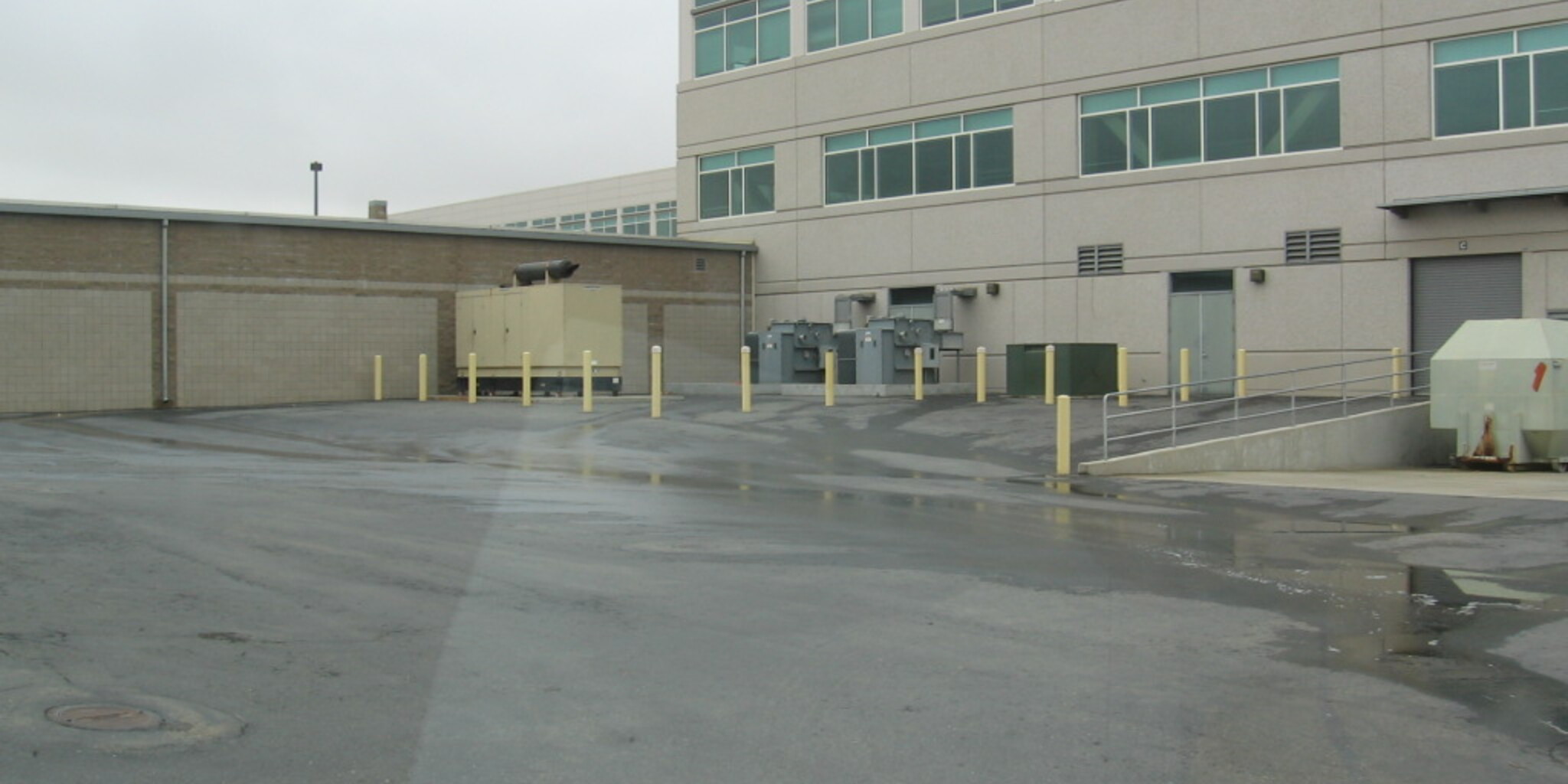
Hewlett-Packard’s Roseville campus at 8000 Foothills Boulevard was a major research, development, and manufacturing facility situated on 188 acres and zoned for up to 1.6 million square feet of light industrial development. EETS provided electrical engineering services to the campus and its satellite facilities over a period of more than 20 years, encompassing 12 kV distribution system design and studies, 480V services for individual buildings, engineering for mechanical system installations, and ultimately the electrical engineering required to separate and re-serve parcels as the campus was subdivided and sold.
Over time, the original HP master plan was amended and approximately 375 acres of the former HP property were redesignated for mixed-use, technology park, and residential development. Individual parcels were separated with their own development agreements and utility responsibilities. This evolution of the campus from a single-owner industrial site to a multi-parcel mixed-use district required ongoing electrical engineering support as the campus infrastructure that had been designed as an integrated whole was progressively separated into independent systems.
The Campus Electrical System
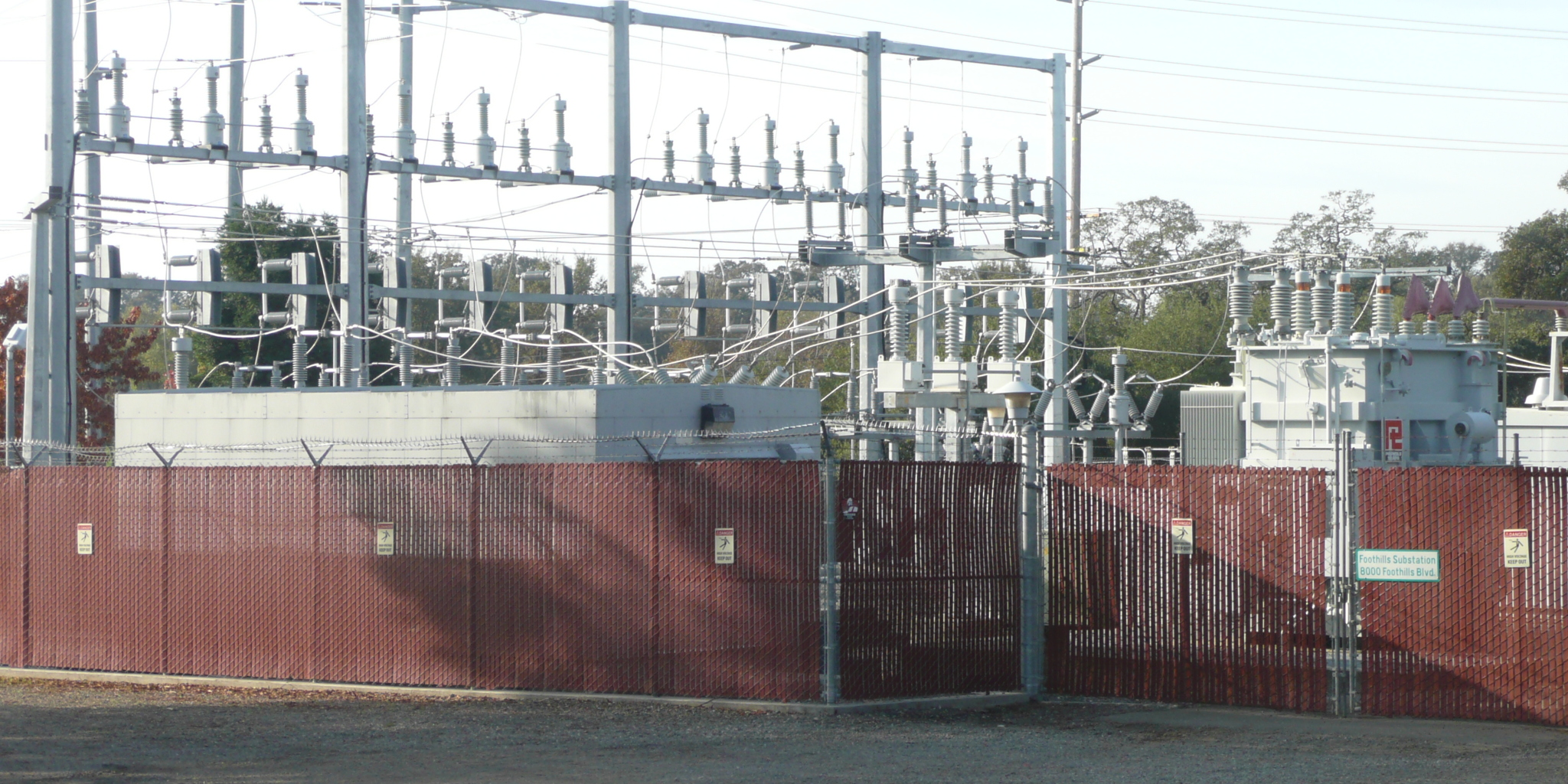
The HP Roseville campus was served at 12 kV by the City of Roseville from the Foothill Substation via two feeders, each terminating at one of the two HP 12 kV main breakers in the campus main switchgear. A normally open tie breaker allowed the entire campus load to be transferred to a single feeder in the event of a utility supply failure. From the main switchgear, four feeder breakers on each main served 12 kV underground loops that fed all campus buildings through 12 kV to 480V unit substation transformers. The 480V distribution then served individual building loads, with step-down transformers for 208V loads throughout the facility.
EETS designed the campus-wide 12 kV switchgear and loop system, and provided 480V services and distribution design for most campus buildings, including services up to 4,000A and the full electrical distribution design for a 750,000 square foot server factory. Additional design work included electrical power and control for chiller, cooling tower, and pump installations, motor starters, and emergency circuit feeds. EETS also assisted HP in reviewing City of Roseville Electric Department proposals for building separation for constructability issues, providing recommendations to minimize operational impact.
Project Challenge
Keeping Protection Current as the System Changed
A campus-scale 12 kV distribution system serving dozens of buildings and hundreds of downstream protective devices is not a static system. The City of Roseville’s modifications to their 60 kV transmission system increased the available fault current delivered to the HP campus, which meant that existing protective device settings and interrupting ratings that had been adequate under the prior system configuration required re-evaluation. A protection scheme sized and set for one level of available fault current may leave equipment inadequately protected or expose devices to fault currents exceeding their interrupting ratings when the upstream system changes.
The 12 kV loop system also created coordination challenges that are inherent to the topology. With main breakers, a tie breaker, and multiple feeder breakers all in the same current path under different operating conditions, achieving clean coordination across the full range of fault scenarios required careful setting of each device relative to the others. Ground protection coordination in particular presented constraints: the combination of ground overcurrent settings needed to protect the main bus, coordinate with the tie and feeder breakers, and also coordinate with downstream transformer primary fuses could not be fully satisfied simultaneously, requiring deliberate prioritization of protection objectives.
Separating a Campus Designed as One System
As the HP Roseville campus was subdivided and sold, individual parcels needed to be electrically separated from the HP-owned 12 kV loop system and re-served with independent utility connections. Buildings R10 and R21 were both served from the same 12 kV loop, and both needed to be separated and connected to new City of Roseville feeders as the parcels were divested. The engineering challenge was to accomplish these separations without any outage impact to the remaining HP campus, and to do so by making maximum use of the existing underground conduit infrastructure to minimize construction disruption and cost.
Client
Hewlett-Packard
Sector
Private / Technology and Manufacturing
Location
Roseville, California
Services
12 kV Switchgear and Loop Design │ Short Circuit and Coordination Studies │ Arc Flash Analysis │ 480V Distribution │ Campus Separation Engineering │ Value Engineering │ Bid Services

Drink
As part of this expansion, AWA identified an opportunity to recover energy that was previously being wasted.
Client
Douglas County Sewer Improvement District
Sector
Public / Municipal Wastewater
Location
Zephyr Cove, Nevada
Services
Electrical Engineering Design │ MCC and VFD Design │ Motor Specifications │ PLC Controls Integration │ Instrumentation │ Bid and Construction Services
Drink
As part of this expansion, AWA identified an opportunity to recover energy that was previously being wasted.
Project Overview
The Old Beach Pump Station is a wastewater facility operated by the Douglas County Sewer Improvement District (DCSID), located at Zephyr Cove on the Nevada shore of Lake Tahoe. Built in the 1960s, the station had reached a point where aging equipment made routine maintenance increasingly difficult, with many original parts no longer available. The Lake Tahoe Basin carries heightened environmental sensitivity, particularly around wastewater management: urban water runoff and stormwater must be captured and treated before reaching the lake, making reliable pump station operation a matter of both regulatory compliance and environmental stewardship.
DCSID engaged a prime contractor to deliver the refurbishment, who in turn engaged EETS to provide the full electrical engineering design. EETS’s scope covered the new 480V motor control center with integrated variable frequency drives and automatic transfer switch, three replacement 75 HP pump motors, a new PLC-based control system with ultrasonic level sensing, new conduit and cable from the MCC to all field devices, and front panel operator controls. EETS also prepared preliminary cost estimates, including options for switchboard and ATS replacement, developed the competitive bid documents, and provided RFI and submittal review services through construction.
The Motor and Drive Replacement
The existing pump motors were 900 RPM wound rotor induction motors, a technology common in older industrial installations that allowed speed control by varying external resistance in the rotor circuit. While functional when new, wound rotor motors are mechanically complex, require ongoing maintenance of brushes and slip rings, and depend on resistance controllers that are largely obsolete. The replacement design specified 900 RPM inverter duty motors driven by variable frequency drives, matching the operating speed of the original motors to preserve compatibility with the existing pump impellers while eliminating the mechanical complexity of the wound rotor design.
Inverter duty motors are designed specifically for VFD service, with insulation systems rated to withstand the voltage spikes and high-frequency switching that VFDs introduce. Standard motors operated on VFDs without this insulation rating can suffer premature winding failure. Specifying inverter duty motors was therefore both a code compliance requirement and a long-term reliability decision. The VFDs were sized to match the motor and load characteristics and to satisfy applicable code requirements for drive-motor combinations at this voltage and horsepower rating.
Project Challenge
Field Conditions That Did Not Match the Records
Preliminary design for the Old Beach Pump Station began from reported field conditions, as is standard practice before a full site investigation is completed. When actual site conditions were evaluated during the preliminary design phase, the picture was different from what had been reported. Electrical clearances were not as available as represented, and the condition of existing conduit and connecting infrastructure was poor enough that it could not be incorporated into the new design as originally assumed. Equipment that the preliminary design had planned to reuse or connect to had to be reconsidered.
Discovering this during the preliminary design phase, rather than after construction documents were finalized and a contractor was mobilized, preserved the ability to redesign without compressing the construction schedule. The preliminary cost estimates EETS had developed, which included optional line items for switchboard and ATS replacement, also meant that the owner had already been given a framework for considering scope additions if the site investigation revealed the need for them.
Designing for the Lake Tahoe Basin Environment
Zephyr Cove sits at approximately 6,300 feet elevation on the eastern shore of Lake Tahoe, an environment that imposes material requirements on outdoor and semi-outdoor electrical equipment beyond what a standard installation would face. Annual snowfall, extended freeze-thaw cycles, and sustained cold temperatures affect enclosure ratings, conduit sealing, cable jacket selection, and equipment thermal management. The MCC, ATS, and associated equipment were specified with enclosure ratings and features appropriate for this environment, including consideration for snow accumulation loads on outdoor equipment and moisture sealing requirements where conduit transitions between heated and unheated spaces.
Engineering Solution
Short Circuit, Coordination, and Arc Flash Studies
EETS performed a comprehensive short circuit and protective device coordination study for the HP Roseville campus, covering the full 12 kV distribution system and the 480V distribution in Building R3. The study calculated three-phase and single-line-to-ground fault currents at every node in the distribution system and compared them against protective device interrupting ratings, identifying equipment whose ratings were exceeded under the increased fault current levels resulting from the City of Roseville’s 60 kV system modifications. EETS recommended protective device settings throughout the system and identified specific panels and MCCs whose interrupting ratings required correction or replacement.
The coordination study addressed every level of the protection hierarchy from the City of Roseville feeder breakers through the HP main and tie breakers, 12 kV feeder breakers, transformer primary fuses, 480V main and tie breakers, feeder breakers, and downstream panels. Where coordination could not be fully achieved at all levels simultaneously, the study documented the specific coordination gaps and the prioritization rationale, giving HP a clear basis for understanding where the protection scheme had inherent limitations and what those limitations meant operationally. Arc flash analysis was performed across the campus system and training sessions were conducted for HP facilities staff.
R10 and R21 Separation Without Outage
EETS prepared the technical analysis and engineering for separating Buildings R10 and R21 from the HP 12 kV campus loop. Because both buildings were served from the same loop fed by the HP main switchgear, and because that loop could be independently switched at the main switchgear without affecting any other campus circuits, EETS determined that the full separation could be completed with no foreseeable outage impact to HP operations. Sub-switching vacuum fault interrupter switches along the loop also provided the option of sequencing the two parcels at different times if project schedules required it.
The proposed solution routed new City of Roseville feeders from existing underground infrastructure east of Foothills Boulevard, crossing under the street and connecting to new COR-owned switchgear with revenue metering at each parcel. The design made maximum use of the existing underground conduit system, limiting new trenching to a short run along the northern access road and a bore crossing under Foothills Boulevard. EETS also developed the schematic arrangement drawings that clearly delineated the ownership boundaries of new and existing facilities as each parcel transitioned to independent COR service.
Key Technical Elements
Parameter | Detail |
Facility | Hewlett-Packard Roseville Campus, 8000 Foothills Boulevard; 188 acres; research, development, and manufacturing facility; up to 1.6 million square feet of light industrial development |
12 kV System | Campus-wide 12 kV loop system served by two City of Roseville feeders; double-ended main switchgear with tie breaker; multiple 12 kV to 480V transformers serving all campus buildings |
480V Distribution | 480V services up to 4,000A for most campus buildings; 480V services and distribution for a 750,000 square foot server factory |
Engineering Studies | Short circuit, protective device coordination, and arc flash studies covering the full 12 kV campus loop and 480V distribution in Building R3; campus-wide one-line diagrams developed |
Key Study Finding | City of Roseville 60 kV system modifications increased available fault current; protection settings updated to reflect new short circuit levels across the HP 12 kV system |
Arc Flash | Arc flash analysis and training sessions for HP facilities staff |
R10/R21 Separation | Engineering and feasibility study for separating Buildings R10 and R21 from HP 12 kV campus loop; zero-outage cutover plan; new COR service connections |
Additional Design | Chiller, cooling tower, pump and piping electrical design; motor starters; emergency circuit feeds; City of Roseville building separation review |
Bid and Cost Services | Cost analysis of electrical bids and change orders; value engineering; submittal review |
Project Outcome
Over more than two decades, EETS delivered electrical engineering across the full lifecycle of the HP Roseville campus: designing the 12 kV distribution infrastructure from the ground up, maintaining and updating the protection scheme as the upstream utility system changed, and ultimately engineering the separation of individual parcels as the campus was subdivided and sold. The R10 and R21 separation was accomplished with no outage impact to HP operations, using existing underground infrastructure to minimize construction cost and disruption. The short circuit and coordination studies gave HP a current, accurate picture of their protection system and a clear set of recommendations for correcting the devices and settings that no longer matched the system’s actual fault exposure.
Value Delivered by EETS
A 20-year engineering relationship with a major technology campus does not happen by accident. It reflects a client’s judgment that one firm understands their systems well enough to be trusted with whatever comes next, whether that is a new building, a protection study, or the engineering required to undo what was originally designed as an integrated whole.
System Knowledge That Compounds Over Time
EETS designed the HP Roseville 12 kV campus loop system and then performed the short circuit and coordination studies that kept the protection scheme accurate as the system evolved and as the upstream utility made changes that affected available fault current across the campus. An engineer who designed the system understands its intent, its topology, and its original design assumptions in a way that an engineer picking it up cold does not. That continuity is what allowed the coordination study to identify not just which devices had settings problems but why, and to distinguish between gaps that were correctable and constraints that were inherent to the system’s architecture.
Engineering for a Campus in Transition
The R10 and R21 separation work required EETS to apply its knowledge of the campus 12 kV loop to a fundamentally different kind of problem: not building out the system, but safely disaggregating it. Identifying that both buildings could be switched off the HP loop without impacting any other campus load, that existing underground conduits could carry the new COR feeders with minimal new trenching, and that sub-switching points along the loop provided flexibility for sequencing the two separations independently, all depended on knowing the system in detail. The result was a separation plan that was operationally clean, cost-efficient, and completed without disrupting HP’s ongoing operations.
Honest Analysis When Full Coordination Is Not Achievable
Not every protection system can be fully coordinated at every level. At the HP Roseville campus, the combination of main breakers, a tie breaker, feeder breakers, and transformer fuses in a double-ended loop configuration created constraints where achieving optimal coordination at one level came at the cost of coordination at another. The coordination study EETS produced did not obscure these limitations; it documented them explicitly, explained the trade-offs, and gave HP clear recommendations for which settings and devices to prioritize. That kind of transparent analysis is more useful to a facility operator than a study that presents achieved coordination without acknowledging where it falls short.
Drink
As part of this expansion, AWA identified an opportunity to recover energy that was previously being wasted.