
UC Davis Health Arc Flash and Power System Analysis
UC Davis Health | Hospital Facility | Sacramento, California
Project Overview
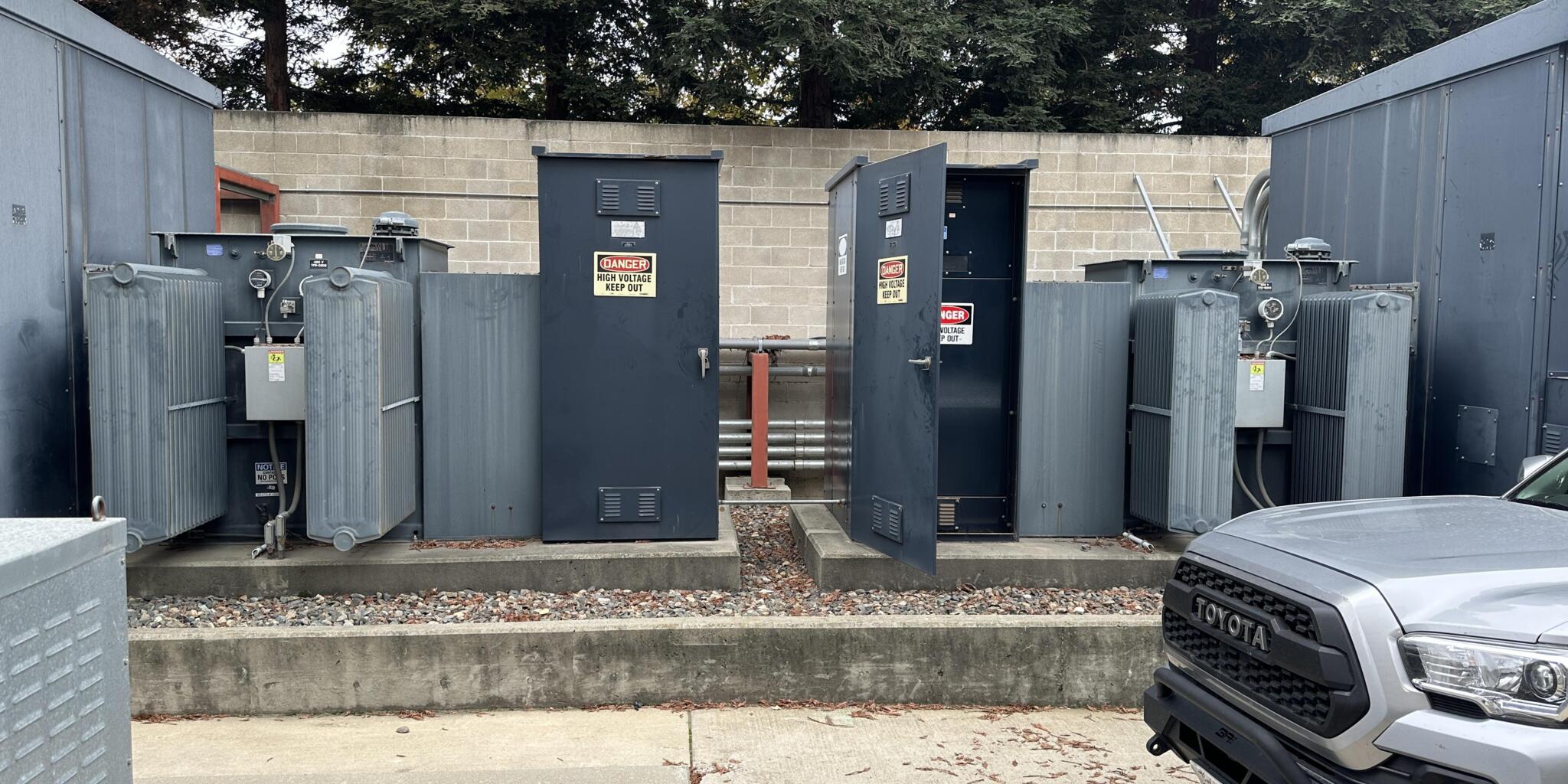
UC Davis Health is a major academic medical center in Sacramento operating a complex electrical distribution system with multiple generation sources, including utility service, a steam turbine generator, a gas turbine generator, and diesel generators. When a capital project added new process loads to existing motor control center sections within the facility, the modification triggered a mandatory re-evaluation of the affected portion of the electrical system before sign-off could proceed. UC Davis Health engaged EETS to perform a short circuit, time-current coordination, and arc flash analysis covering the system from the 12 kV utility point of interconnection through the downstream motor control centers affected by the new loads.
The work had to be completed in under ten days. As-built drawings were incomplete, the prior arc flash study for the affected equipment had not been properly performed, and the existing arc flash labels on the MCCs were based on an incorrect methodology. EETS conducted a field investigation, rebuilt the power system model from verified data, completed the analysis using SKM PowerTools against the IEEE 1584-2018 and NFPA 70E-2024 standards, and issued a study that addressed not only what was asked but what was actually needed.
The Power System
The UC Davis Health facility operates with multiple power sources that can be configured in various combinations, creating five distinct fault current scenarios depending on which sources are online and how the system is connected. At the main 480V bus where all sources can parallel, available three-phase fault current under the maximum configuration reaches over 75 kA. However, the equipment affected by the new loads is served from a radial 480V bus supplied exclusively through a single step-down transformer, with no 480V bus ties or parallel transformer feeds contributing to that bus. The available fault current at that bus is transformer-limited regardless of what is happening upstream at the main bus.
Confirming this distinction was an important part of the study’s technical foundation. A prior power system study had reported fault currents as high as 75 kA for various system configurations, which could be misread as applicable to all downstream buses in the building. EETS reviewed the facility as-built drawings and the prior study’s ETAP model to confirm that those high fault current values applied only to the paralleled-source main bus, and that the transformer-limited bus serving the affected MCCs had a maximum available fault current consistent with the transformer’s impedance-limited output, well below the values appearing in the system-wide configurations.
Project Challenge
Ten Days, Incomplete Records, and an Incorrect Prior Study
The request arrived with an urgent timeline: UC Davis Health needed the completed study in less than ten days. Compressing an arc flash analysis at a hospital-scale facility into that window required EETS to reprioritize its existing project commitments and work continuously until the study was delivered. The urgency alone would have been manageable if the data were clean. It was not.
The as-built drawings for the affected portions of the system were incomplete. The prior arc flash study covering the equipment had not been properly executed. The arc flash labels already installed on the MCCs were based on an incorrect methodology and did not reflect the actual hazard at those locations. Before any new analysis could be performed, EETS had to establish what the system actually was, which required sending engineers to the field to physically investigate each piece of equipment, open each MCC bucket, and record the make, model, and configuration of every protective device. The study was built on that field-verified foundation.
The MCC Labeling Question
The incorrect labeling on the existing MCCs raised a substantive engineering question that EETS addressed directly: should each MCC bucket section receive its own individual arc flash label calculated from the load side of its feeder breaker, or should a single label be applied to the MCC as a whole based on the main breaker? The answer has consequences for worker safety, and the temptation to label each bucket individually and call it a more granular result is, in EETS’s assessment, the wrong approach without a specific technical basis to support it.
The issue is arc propagation. The line side of any MCC bucket breaker connects to the MCC bus, which is electrically the same point as the load side of the MCC main breaker. If an arc event occurs at that point, it is the main breaker, not the bucket breaker, that must clear the fault. A label calculated from the bucket feeder breaker will show a lower incident energy than actually exists, because it assumes the wrong device is clearing the fault. Unless the MCC enclosure has been tested to demonstrate that an arc in one section cannot propagate to adjacent sections, or the manufacturer has provided written certification of compartment integrity, using individual bucket labels understates the actual hazard. Without that documentation or testing, EETS’ position was to apply a single label per MCC based on the main breaker line side, and to require written direction from UC Davis Health before deviating from that recommendation.
Client
UC Davis Health
Sector
Public / Healthcare
Location
Sacramento, California
Services
Electrical Engineering Design │ 12 kV Distribution │ UPS and VFD Systems │ Engineering Studies │ Inspector of Record │ Panelboard Accessibility Study │ Bid Services

Drink
As part of this expansion, AWA identified an opportunity to recover energy that was previously being wasted.
Client
UC Davis Health
Sector
Public / Healthcare
Location
Sacramento, California
Services
Electrical Engineering Design │ 12 kV Distribution │ UPS and VFD Systems │ Engineering Studies │ Inspector of Record │ Panelboard Accessibility Study │ Bid Services
Drink
As part of this expansion, AWA identified an opportunity to recover energy that was previously being wasted.
Project Overview
UC Davis Health is a major academic medical center in Sacramento operating a complex electrical distribution system with multiple generation sources, including utility service, a steam turbine generator, a gas turbine generator, and diesel generators. When a capital project added new process loads to existing motor control center sections within the facility, the modification triggered a mandatory re-evaluation of the affected portion of the electrical system before sign-off could proceed. UC Davis Health engaged EETS to perform a short circuit, time-current coordination, and arc flash analysis covering the system from the 12 kV utility point of interconnection through the downstream motor control centers affected by the new loads.
The work had to be completed in under ten days. As-built drawings were incomplete, the prior arc flash study for the affected equipment had not been properly performed, and the existing arc flash labels on the MCCs were based on an incorrect methodology. EETS conducted a field investigation, rebuilt the power system model from verified data, completed the analysis using SKM PowerTools against the IEEE 1584-2018 and NFPA 70E-2024 standards, and issued a study that addressed not only what was asked but what was actually needed.
The Power System
The UC Davis Health facility operates with multiple power sources that can be configured in various combinations, creating five distinct fault current scenarios depending on which sources are online and how the system is connected. At the main 480V bus where all sources can parallel, available three-phase fault current under the maximum configuration reaches over 75 kA. However, the equipment affected by the new loads is served from a radial 480V bus supplied exclusively through a single step-down transformer, with no 480V bus ties or parallel transformer feeds contributing to that bus. The available fault current at that bus is transformer-limited regardless of what is happening upstream at the main bus.
Confirming this distinction was an important part of the study’s technical foundation. A prior power system study had reported fault currents as high as 75 kA for various system configurations, which could be misread as applicable to all downstream buses in the building. EETS reviewed the facility as-built drawings and the prior study’s ETAP model to confirm that those high fault current values applied only to the paralleled-source main bus, and that the transformer-limited bus serving the affected MCCs had a maximum available fault current consistent with the transformer’s impedance-limited output, well below the values appearing in the system-wide configurations.
Project Challenge
Ten Days, Incomplete Records, and an Incorrect Prior Study
The request arrived with an urgent timeline: UC Davis Health needed the completed study in less than ten days. Compressing an arc flash analysis at a hospital-scale facility into that window required EETS to reprioritize its existing project commitments and work continuously until the study was delivered. The urgency alone would have been manageable if the data were clean. It was not.
The as-built drawings for the affected portions of the system were incomplete. The prior arc flash study covering the equipment had not been properly executed. The arc flash labels already installed on the MCCs were based on an incorrect methodology and did not reflect the actual hazard at those locations. Before any new analysis could be performed, EETS had to establish what the system actually was, which required sending engineers to the field to physically investigate each piece of equipment, open each MCC bucket, and record the make, model, and configuration of every protective device. The study was built on that field-verified foundation.
The MCC Labeling Question
The incorrect labeling on the existing MCCs raised a substantive engineering question that EETS addressed directly: should each MCC bucket section receive its own individual arc flash label calculated from the load side of its feeder breaker, or should a single label be applied to the MCC as a whole based on the main breaker? The answer has consequences for worker safety, and the temptation to label each bucket individually and call it a more granular result is, in EETS’s assessment, the wrong approach without a specific technical basis to support it.
The issue is arc propagation. The line side of any MCC bucket breaker connects to the MCC bus, which is electrically the same point as the load side of the MCC main breaker. If an arc event occurs at that point, it is the main breaker, not the bucket breaker, that must clear the fault. A label calculated from the bucket feeder breaker will show a lower incident energy than actually exists, because it assumes the wrong device is clearing the fault. Unless the MCC enclosure has been tested to demonstrate that an arc in one section cannot propagate to adjacent sections, or the manufacturer has provided written certification of compartment integrity, using individual bucket labels understates the actual hazard. Without that documentation or testing, EETS’ position was to apply a single label per MCC based on the main breaker line side, and to require written direction from UC Davis Health before deviating from that recommendation.
Engineering Solution
Field Investigation and Model Rebuild
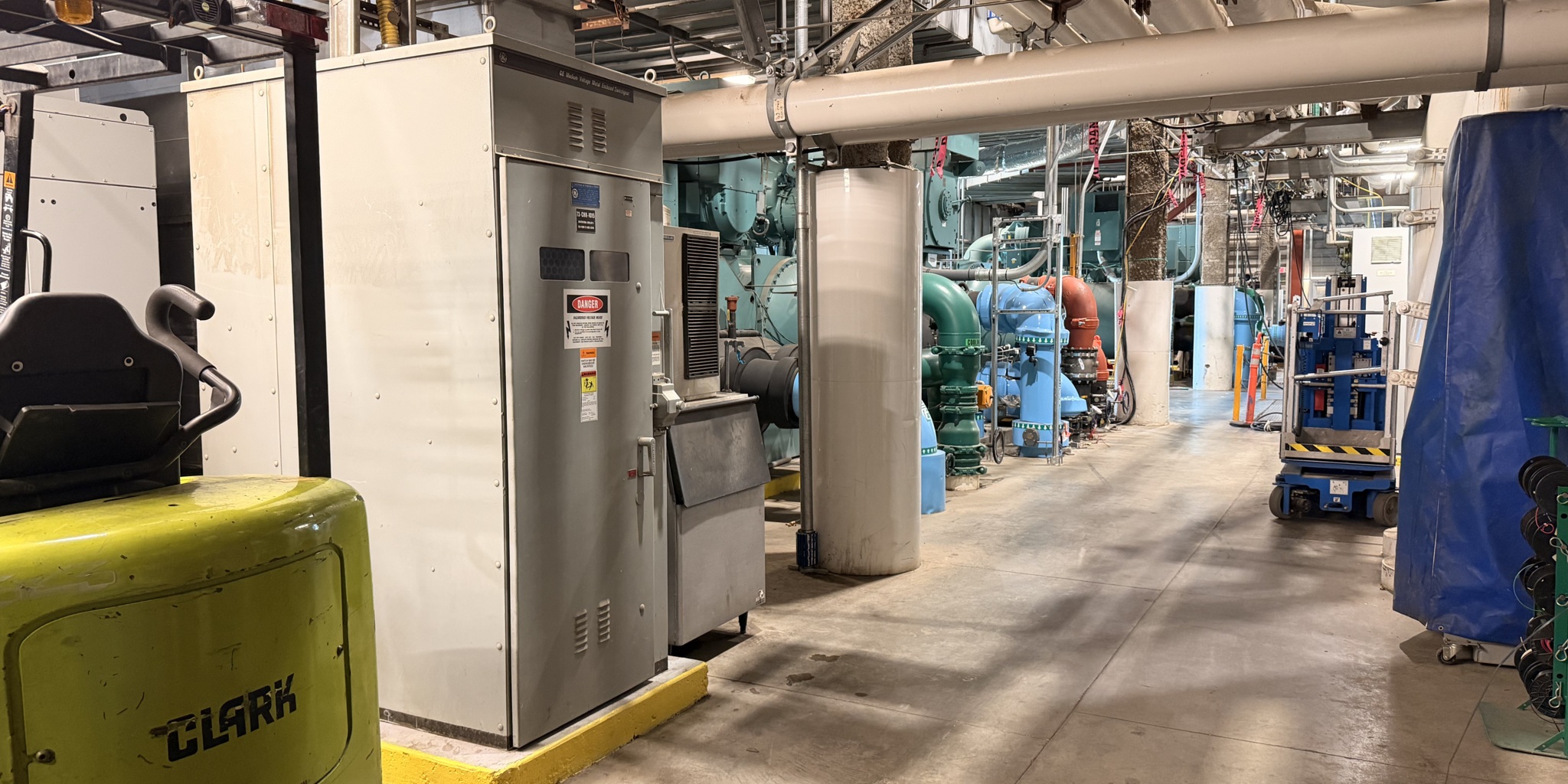
EETS conducted a site walk of the affected equipment, opening each MCC bucket to record the make and model of every installed breaker and reviewing the physical configuration of each section for accurate representation in the power system model. Where drawing information was absent or unverifiable, field measurements and observations were used. Where field measurement was not possible within the timeline, conservative engineering assumptions were documented explicitly in the study rather than left implicit. The power system model was built in SKM PowerTools from this verified baseline, spanning the 12 kV switchgear through the step-down transformer, the 480V switchgear, and the three MCCs serving the loads affected by the project.
The fault current basis for the analysis required careful treatment given the multi-source nature of the facility. EETS reviewed the prior ETAP study to confirm that the radial transformer-limited bus serving the affected MCCs was isolated from the paralleled-source buses where much higher fault currents existed, and applied the transformer-limited fault current to the study rather than the system-wide maximum values. Because minimum fault current data was not available from the prior study, EETS applied a conservative 2.0-second maximum arc duration cap in SKM where modeled devices did not clear in less time, avoiding underestimation of incident energy under uncertainty.
The study also identified a feeder conductor protection deficiency: the installed MCC main breakers were rated above the allowable ampacity of the feeder conductors supplying those MCCs, a condition requiring corrective action under the NEC. This finding went beyond the scope of the arc flash calculation itself but was identified during the field review and documented as a priority item requiring resolution.
Key Technical Elements
Parameter | Detail |
Facility | UC Davis Health, Building 73, Sacramento, California; hospital-scale facility with utility, steam turbine generator, gas turbine generator, and diesel generator sources |
Project Driver | New loads added to MCC sections as part of a Urea Conversion Project; power system re-evaluation required before electrical sign-off |
Study Scope | Short circuit, time-current coordination, and arc flash analysis from 12 kV utility point of interconnection through 12 kV:480V transformer, 480V switchgear, and three MCCs |
Software | SKM PowerTools v10.0.0.4; IEEE 1584-2018 arc flash calculation method; NFPA 70E-2024 PPE requirements |
Fault Current Complexity | Five source configurations modeled (SMUD, steam turbine, gas turbine, diesel generators in various combinations); transformer-limited 480V bus correctly distinguished from paralleled-source buses with up to 75 kA available |
Key Technical Finding | 1200A MCC main breakers feeding conductors with 1050A allowable ampacity; corrective action required for NEC-compliant conductor protection |
MCC Labeling Determination | Single label per MCC based on main breaker line side; individual bucket labeling not recommended without manufacturer arc-containment certification or ANSI/IEEE C37.20.7 testing |
Field Work | Site walk and investigation of each MCC, including opening each bucket to record breaker make and model; equipment configuration reviewed and verified for accurate software modeling |
Schedule | Study completed in under 10 days; EETS reprioritized existing workload to meet UC Davis Health’s urgent requirement |
Project Outcome
EETS completed the short circuit, coordination, and arc flash study within the ten-day window required by UC Davis Health. The study replaced an incorrect prior analysis with one built on field-verified equipment data, accurately resolved the fault current basis for the transformer-limited 480V bus, applied a defensible and correctly reasoned MCC labeling methodology, and identified a feeder conductor protection deficiency requiring correction. The existing incorrect arc flash labels were directed to be removed and replaced with labels reflecting the actual hazard. UC Davis Health received a study they could rely on for sign-off and for ongoing maintenance safety at the affected equipment.
Value Delivered by EETS
The NEC engagement was not a single project but a sustained relationship with a technically demanding client operating a facility where electrical failures had direct production consequences. What EETS brought to it was breadth, rigor, and independence.
Speed Without Shortcuts
Completing a field-verified arc flash study at a hospital facility in under ten days required EETS to reorganize its workload and work continuously to meet the deadline. The field investigation could not be skipped; without it, the study would have been built on the same incomplete and incorrect information that had produced the wrong labels in the first place. Wherever field verification was not possible within the window, EETS used documented conservative assumptions rather than undocumented guesses. The speed was real; so was the rigor.
Holding the Line on MCC Labeling
The question of whether to label each MCC bucket individually or apply a single label at the main breaker level is not merely procedural. A bucket-level label calculated from the feeder breaker understates the actual incident energy at the MCC bus, because the feeder breaker is not the device that would clear an arc fault originating at the bus. If a worker relies on that label while performing energized work, they may be wearing less PPE than the actual hazard requires. EETS explained this to UC Davis Health clearly, documented the technical basis in the study, and required written direction before it would deviate from its recommendation. That is what a responsible engineer does when a client asks for something the engineer believes is unsafe.
Reading the Fault Current Correctly
The UC Davis Health facility’s prior power system study reported fault current values that, taken out of context, could suggest that every 480V bus in the building faces fault exposure well above 60 kA. EETS reviewed the prior model carefully enough to understand that those values applied only to the main bus where multiple sources parallel, and that the radial transformer-limited bus serving the affected MCCs was isolated from those conditions by transformer impedance. Getting the fault current basis right matters: an overstated fault current produces overstated PPE requirements that burden maintenance workers unnecessarily; an understated one leaves them unprotected. EETS used the value that accurately reflected the physical reality at the bus in question.
Drink
As part of this expansion, AWA identified an opportunity to recover energy that was previously being wasted.