
Generator Step-Up Transformer Rating Study for a Turbine Uprate
Sacramento Cogeneration Authority (SCA) | GSU Rating Impact Study for a Gas Turbine Upgrade | Sacramento, California
Project Overview
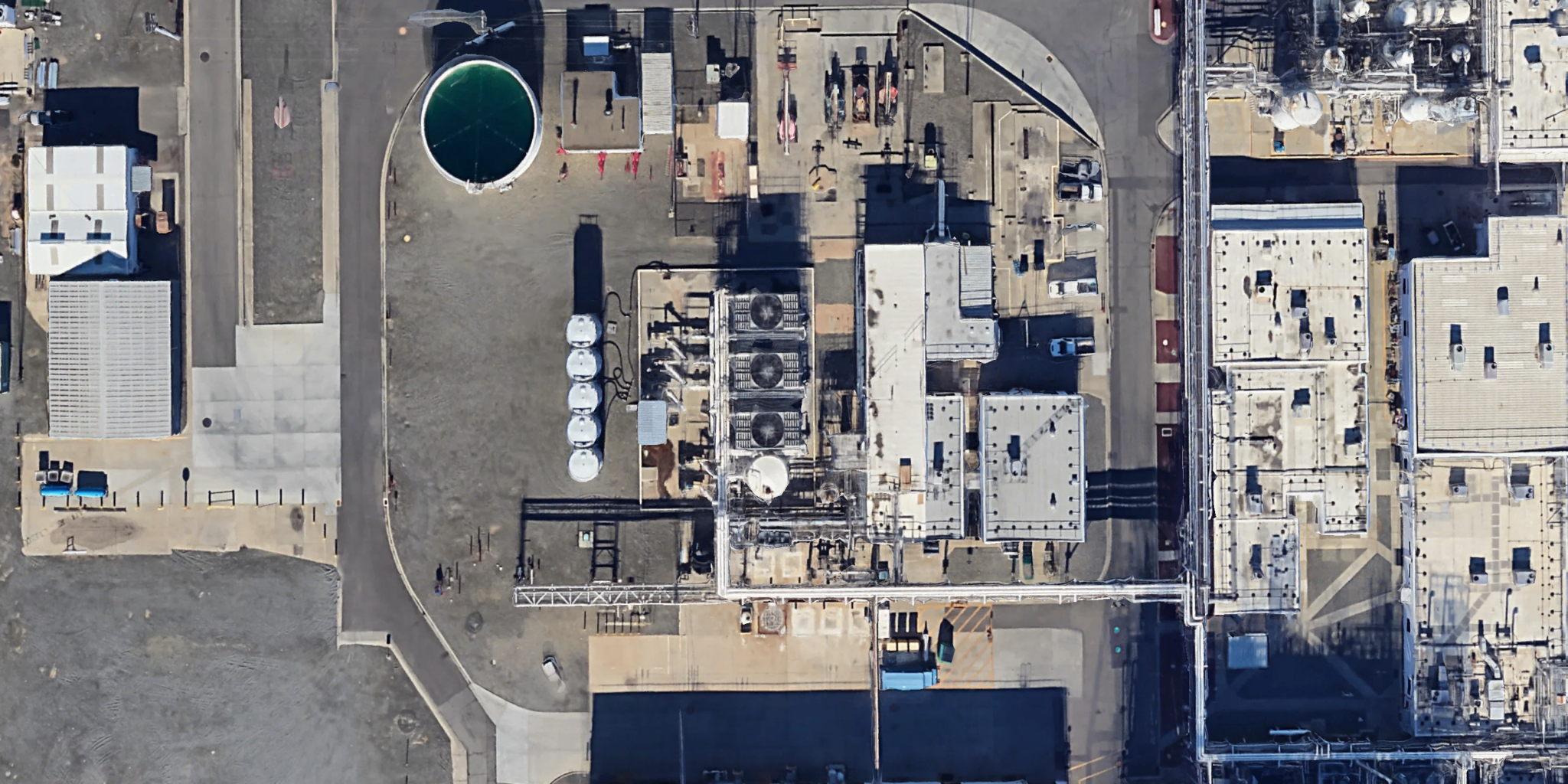
The Sacramento Cogeneration Authority (SCA) plant at the Procter & Gamble facility in Sacramento planned a capacity uprate of its three combustion turbines (CTG-1A, 1B, and 1C) and steam turbine (STG-1). The combustion turbines, rated 42 MW each, would rise to about 49.78 MW at 0.9 power factor – close to the existing generators’ 55.38 MVA (49.84 MW) capability – and the steam turbine’s output would increase by 1.4 MW. Before committing to the uprate, SCA needed to know whether the existing electrical equipment, from the turbines up through the generator step-up transformers, could carry the higher output.
EETS was engaged to make that determination. Working from a site inspection of the 13.8 kV switchgear and a generator step-up transformer, and from generator, transformer, and one-line nameplate and reference data, EETS evaluated the generators, the 13.8 kV / 3,000 A switchgear and bus duct, and the plant’s two three-winding generator step-up transformers (GSU1 and GSU2) against the uprated output, applying the ANSI/IEEE and IEC transformer loading and loss-of-life standards.
The result was nuanced: everything upstream of the transformers has headroom, but the GSUs’ 13.8 kV windings become the binding constraint under worst-case conditions – and the real question became not whether the uprate fits, but how much transformer life it costs and how to manage it.
The Machines and Their Step-Up Transformers
The plant is arranged in two groups. CTG-1A and STG-1 together form Combined Cycle Unit #1; each feeds a separate 13.8 kV, 3,000 A switchgear lineup, and each lineup connects to a separate 13.8 kV delta winding of GSU2, whose 230 kV wye winding ties to the switchyard’s 230 kV ring bus. CTG-1B and CTG-1C are arranged the same way onto GSU1. Station-service (parasitic) load for each group is drawn from one of its 13.8 kV lineups.
Both GSUs are three-winding, oil-immersed transformers with oil-air and two stages of fan cooling (OA/FA/FA). At their fully-fanned, 65 °C-rise rating, the 230 kV winding is rated 112 MVA and each 13.8 kV winding 56 MVA, with a maximum 13.8 kV winding current of 2,343 A. Critically – as is typical for generator step-up transformers – neither GSU has a load tap changer, so voltage matching to the 230 kV transmission system is done by the generators’ voltage regulators.
Project Challenge
The Transformer, Not the Generator, Is the Limit
Traced through the system, the uprated output is comfortable almost everywhere. The existing generators are adequate for their new ratings; the uprated 49.78 MW draws about 2,314 A at 13.8 kV, well within the 3,000 A switchgear and bus duct; and the 230 kV windings sit within their 112 MVA rating (about 91% on GSU2). The pinch point is the 13.8 kV winding. Because the GSUs have no load tap changer, the generator voltage regulator must swing the machine terminal voltage down to roughly 13.1 kV (0.95 of nominal) to match the transmission system – and at that lower voltage, the same MVA means more current. That drives the heaviest-loaded 13.8 kV winding to 98.2% of its maximum ampere rating on GSU2 and about 101.2% on GSU1: an MVA-only check would have missed a constraint that only appears once voltage regulation is taken into account.
A Rating Basis the Local Climate Exceeds
The transformers’ 56 MVA winding rating assumes the ANSI ambient basis – cooling air no hotter than 40 °C, and no more than 30 °C averaged over 24 hours. Sacramento exceeds both on hot days, so at peak temperatures the GSUs are effectively de-rated, and any operation beyond the rating consumes insulation life. The challenge was therefore to quantify, not just flag, the overload: how far over, for how long, and at what cost in transformer life – while recognizing that at high ambient the turbines themselves de-rate, partially offsetting the transformer de-rating.
Client
Sacramento Cogeneration Authority (SCA) – cogeneration plant at the Procter & Gamble facility
Sector
Power Generation / Cogeneration
Location
Sacramento, California
Services
GSU Transformer Rating Analysis │ Load and Ampacity Study │ Transformer Loss-of-Life Analysis │ Ambient De-rating │ Options and Recommendations

Drink
As part of this expansion, AWA identified an opportunity to recover energy that was previously being wasted.
Client
Sacramento Cogeneration Authority (SCA) – cogeneration plant at the Procter & Gamble facility
Sector
Power Generation / Cogeneration
Location
Sacramento, California
Services
GSU Transformer Rating Analysis │ Load and Ampacity Study │ Transformer Loss-of-Life Analysis │ Ambient De-rating │ Options and Recommendations
Drink
As part of this expansion, AWA identified an opportunity to recover energy that was previously being wasted.
Project Overview
The Sacramento Cogeneration Authority (SCA) plant at the Procter & Gamble facility in Sacramento planned a capacity uprate of its three combustion turbines (CTG-1A, 1B, and 1C) and steam turbine (STG-1). The combustion turbines, rated 42 MW each, would rise to about 49.78 MW at 0.9 power factor – close to the existing generators’ 55.38 MVA (49.84 MW) capability – and the steam turbine’s output would increase by 1.4 MW. Before committing to the uprate, SCA needed to know whether the existing electrical equipment, from the turbines up through the generator step-up transformers, could carry the higher output.
EETS was engaged to make that determination. Working from a site inspection of the 13.8 kV switchgear and a generator step-up transformer, and from generator, transformer, and one-line nameplate and reference data, EETS evaluated the generators, the 13.8 kV / 3,000 A switchgear and bus duct, and the plant’s two three-winding generator step-up transformers (GSU1 and GSU2) against the uprated output, applying the ANSI/IEEE and IEC transformer loading and loss-of-life standards.
The result was nuanced: everything upstream of the transformers has headroom, but the GSUs’ 13.8 kV windings become the binding constraint under worst-case conditions – and the real question became not whether the uprate fits, but how much transformer life it costs and how to manage it.
The Machines and Their Step-Up Transformers
The plant is arranged in two groups. CTG-1A and STG-1 together form Combined Cycle Unit #1; each feeds a separate 13.8 kV, 3,000 A switchgear lineup, and each lineup connects to a separate 13.8 kV delta winding of GSU2, whose 230 kV wye winding ties to the switchyard’s 230 kV ring bus. CTG-1B and CTG-1C are arranged the same way onto GSU1. Station-service (parasitic) load for each group is drawn from one of its 13.8 kV lineups.
Both GSUs are three-winding, oil-immersed transformers with oil-air and two stages of fan cooling (OA/FA/FA). At their fully-fanned, 65 °C-rise rating, the 230 kV winding is rated 112 MVA and each 13.8 kV winding 56 MVA, with a maximum 13.8 kV winding current of 2,343 A. Critically – as is typical for generator step-up transformers – neither GSU has a load tap changer, so voltage matching to the 230 kV transmission system is done by the generators’ voltage regulators.
Project Challenge
The Transformer, Not the Generator, Is the Limit
Traced through the system, the uprated output is comfortable almost everywhere. The existing generators are adequate for their new ratings; the uprated 49.78 MW draws about 2,314 A at 13.8 kV, well within the 3,000 A switchgear and bus duct; and the 230 kV windings sit within their 112 MVA rating (about 91% on GSU2). The pinch point is the 13.8 kV winding. Because the GSUs have no load tap changer, the generator voltage regulator must swing the machine terminal voltage down to roughly 13.1 kV (0.95 of nominal) to match the transmission system – and at that lower voltage, the same MVA means more current. That drives the heaviest-loaded 13.8 kV winding to 98.2% of its maximum ampere rating on GSU2 and about 101.2% on GSU1: an MVA-only check would have missed a constraint that only appears once voltage regulation is taken into account.
A Rating Basis the Local Climate Exceeds
The transformers’ 56 MVA winding rating assumes the ANSI ambient basis – cooling air no hotter than 40 °C, and no more than 30 °C averaged over 24 hours. Sacramento exceeds both on hot days, so at peak temperatures the GSUs are effectively de-rated, and any operation beyond the rating consumes insulation life. The challenge was therefore to quantify, not just flag, the overload: how far over, for how long, and at what cost in transformer life – while recognizing that at high ambient the turbines themselves de-rate, partially offsetting the transformer de-rating.
Engineering Solution
Tracing the Load and Finding the Worst Case
EETS worked the uprated output through each component in the path and identified the 13.8 kV GSU winding as the single limiting element. The worst case combines three effects at once: maximum post-uprate output, the low end of the generator’s voltage-regulation range (13.11 kV), and high ambient temperature. Netting the station-service parasitic load and crediting the turbine’s own high-ambient de-rating (about 1.3 MW at 46 °C), EETS calculated the worst-case winding current at 2,300 A on GSU2 (98.2% of the 2,343 A limit) and 2,372 A on GSU1 (101.2%). The 230 kV windings and the transformer bushings – the lowest-rated external component at 2,500 A – were confirmed adequate, isolating the 13.8 kV winding current as the true constraint.
Quantifying the Loss of Life
Rather than treat a marginal overload as a stop sign, EETS quantified its cost using ANSI/IEEE C57.91 and the C57.92 Table 3(m) loading guide. The loading tables show that at 46 °C ambient, after a 50% preload, the winding can run at worst-case output for roughly 6⅓ hours with no loss of transformer life, and that even a 24-hour worst-case event costs less than 0.25% of life. Carrying the calculation to a continuous full-output, high-ambient condition – a 113 °C hottest-spot temperature giving an aging-acceleration factor of about 1.36 – works out to roughly 0.0217% of life per day, or about 7.9% per year, equivalent to a total insulation life on the order of 12.6 years against the standard’s 150,000-hour reference. In other words, the exceedance is real but bounded, and only accrues during the specific hot, low-voltage, full-output hours when all the worst conditions coincide.
Options to Manage It
Because the constraint is a marginal, condition-dependent current overload rather than a hard capacity shortfall, EETS recommended managing it operationally. The primary recommendation is a current-level alarm in the plant SCADA system to alert the operator when a GSU’s 13.8 kV winding reaches its maximum current, so the plant can knowingly accept small, bounded amounts of loss of life during the rare coincident worst-case hours. Where the operating limitation is to be removed entirely, EETS identified adding a forced-oil-circulating pump for additional cooling margin – there is no room for more radiator fans – to be evaluated with the transformer manufacturer. High-side de-energized tap changing was also noted as a way to reduce the voltage swing the generator must provide, at the cost of taking the transformer offline to change taps.
Key Technical Elements
Parameter | Detail |
Plant Configuration | CTG-1A + STG-1 → GSU2 (Combined Cycle Unit #1); CTG-1B + CTG-1C → GSU1; each turbine on its own 13.8 kV, 3,000 A switchgear |
Turbine Uprate | Combustion turbines 42 MW → ≈ 49.78 MW at 0.9 PF (55.31 MVA); STG-1 output +1.4 MW to 43.4 MW |
Generators | Existing CTG/STG generators rated 55.38 MVA at 0.9 PF (49.84 MW) – adequate for the uprated output |
GSU Transformers | Two three-winding, oil-immersed OA/FA/FA units: 230 kV wye winding + two 13.8 kV delta windings; no load tap changer |
GSU Ratings (65 °C, fanned) | 230 kV winding 112 MVA; each 13.8 kV winding 56 MVA / 2,343 A maximum |
Switchgear / Bus Duct | 13.8 kV, 3,000 A – uprated output ≈ 2,314 A, well within rating |
Binding Constraint | 13.8 kV winding current at the low end of generator voltage (≈ 13.1 kV, no LTC): GSU2 at 98.2%, GSU1 at 101.2% of maximum |
Ambient De-rating | Sacramento exceeds the ANSI 40 °C-peak / 30 °C-average basis; turbine de-rating (≈ 1.3 MW at 46 °C) partly offsets it |
Loss-of-Life (ANSI/IEEE C57.91, C57.92) | ≈ 6⅓-hour worst-case event after 50% preload = no life loss; 24-hour worst-case event < 0.25%; continuous worst case ≈ 12.6-year equivalent life |
External Components | Transformer bushings (2,500 A) are the lowest-rated, but adequate for the added loading |
Recommendation | SCADA current-overload alarm to manage bounded loss of life; option to add a forced-oil-circulating pump for cooling margin |
Project Outcome
EETS confirmed that the turbine uprate could proceed on the existing electrical equipment without replacing the generator step-up transformers. The generators, the 13.8 kV switchgear and bus duct, the 230 kV windings, and the transformer bushings all carry the increased output; the GSUs can serve it while running near full rating on GSU2 (98.2%) and slightly over on GSU1 (101.2%) at the worst-case combination of low generator voltage and high ambient temperature. EETS quantified the resulting insulation loss of life and showed it to be bounded – no life lost in a roughly 6⅓-hour worst-case event, under a quarter percent in a 24-hour event, and about a 12.6-year equivalent life only under sustained worst-case conditions. To manage the marginal, weather-driven exceedances, EETS recommended a SCADA current-overload alarm, with the option to add forced-oil cooling to remove the limitation entirely. SCA gained a clear basis to proceed with the uprate, an exact picture of where the limit sits, and a practical way to operate within it.
Value Delivered by EETS
EETS found the real constraint, quantified the risk instead of red-flagging it, and gave the plant a way to uprate without replacing a transformer.
Finding the Constraint an MVA Check Would Miss
The obvious question – can the transformer carry the MVA? – has a comfortable answer, and it is the wrong question. EETS recognized that because the GSUs have no load tap changer, the generators must regulate their voltage down to match the transmission system, and that at the low end of that range the 13.8 kV winding current, not its MVA, becomes the limit. That insight moved the analysis to where the actual margin was thin and kept the plant from proceeding on a false sense of headroom.
Quantifying Risk, Not Just Flagging It
A winding running a percent or two over its ampere rating on hot afternoons could have been reported as a simple overload and a call to replace the transformer. Instead, EETS computed the actual cost in transformer life to recognized ANSI/IEEE standards, showing that short worst-case events cost no life at all and that even sustained worst-case operation ages the unit gradually and predictably. Turning “the transformer is overloaded” into “here is exactly how much life it costs, and only under these conditions” is what made a measured decision possible.
An Uprate Without a Transformer Replacement
By pinpointing a narrow, condition-dependent limit and quantifying its consequence, EETS opened a path to capture the turbine uprate without the cost and outage of replacing a generator step-up transformer. A SCADA current alarm lets the plant manage the rare coincident worst-case hours knowingly, and a forced-oil-cooling option stands ready if the limitation is to be removed outright – a proportionate response matched to a proportionate problem.
Drink
As part of this expansion, AWA identified an opportunity to recover energy that was previously being wasted.