
Emergency Generator and Switchgear Replacement
San Juan Water District | Bacon Pump Station | Granite Bay, California
Project Overview
San Juan Water District (SJWD) operates the Bacon Pump Station in Granite Bay, California, along with the Sierra and ARC-North Pump Stations, all housed within the same building. The facility’s emergency generation systems had reached end of life and no longer met current air quality standards. SJWD engaged EETS to replace two aging generators, rated at 400 kW and 600 kW respectively, along with their associated automatic transfer switches, select motor starters, and switchgear, while maintaining continuous pump station operation throughout construction.
EETS performed an initial investigation of the facility to understand the existing power system configuration before beginning design. The investigation revealed a facility near the limits of its electrical capacity, with limited physical space, congested conduit runs, and equipment arranged in a way that left little margin for the replacement work. The findings shaped the design approach and informed the construction sequencing strategy from the outset.
EETS designed the complete electrical, instrumentation, and control scope for the replacement, including the new generator systems, ATS units, nine switchgear and motor starter sections, power and control cabling, and integration of generator monitoring and alarm signals into the existing control panels.
The Generator Selection
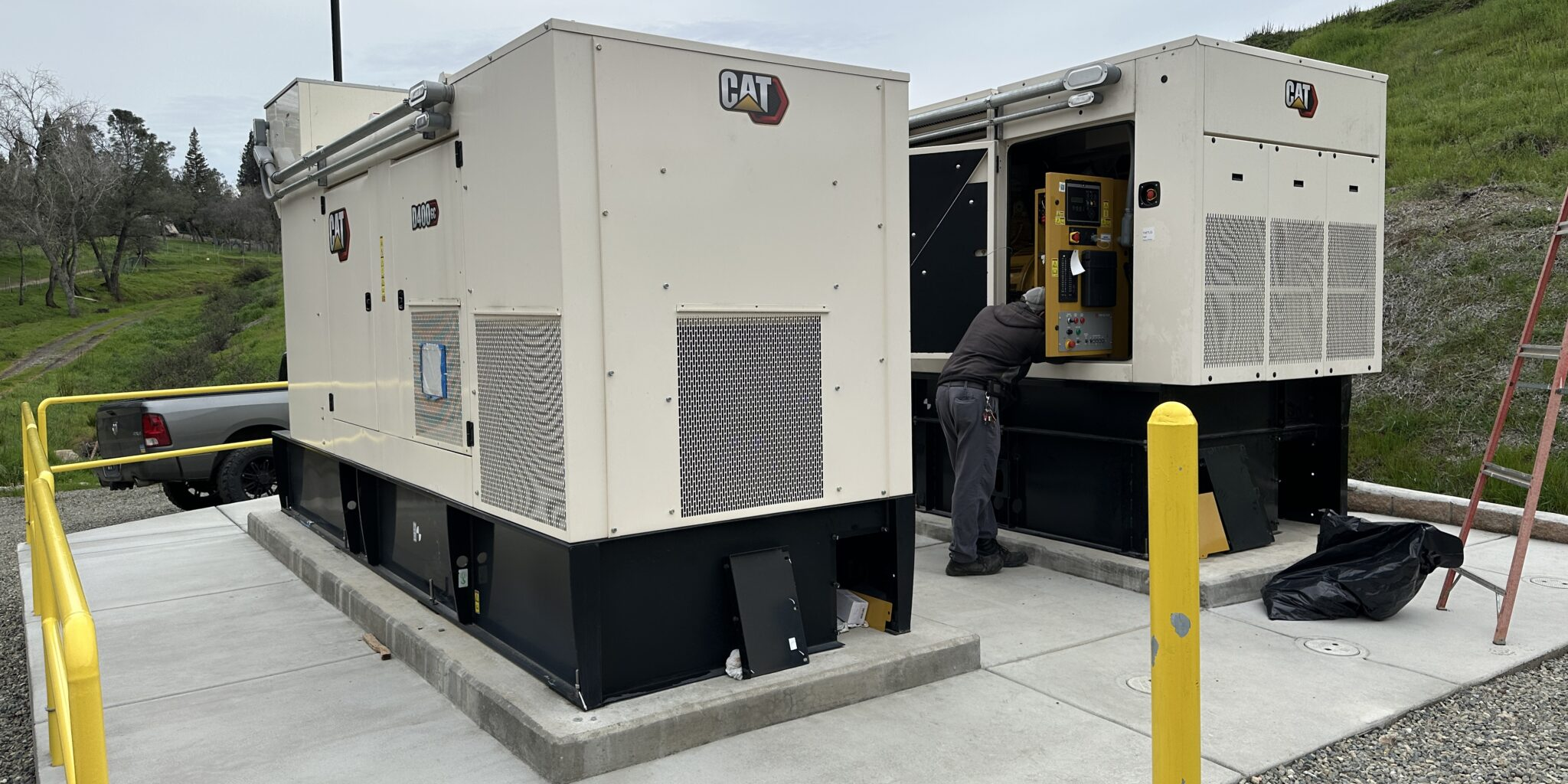
One generator serves the Bacon Pump Station and one serves the Sierra and ARC-North Pump Stations. Both are diesel units. The selection involved evaluating diesel against natural gas and assessing whether consolidating two generators into a single larger unit was preferable to replacing them on a like-for-like basis.
Air quality compliance was a key factor in generator sizing. The local air quality district requires Tier 4 emission control hardware, including a diesel particulate filter, selective catalytic reduction system, and urea injection tank, for generators rated above 1 MW. Keeping each unit below that threshold avoided those requirements and the significant space, maintenance, and cost implications they carry. The two-generator configuration was retained, with the replacement units sized and specified to meet current air quality standards without triggering the Tier 4 equipment mandate.
Project Challenge
Nine Sections in 136 Inches
The switchgear wall at the Bacon facility presented a hard physical constraint. With the existing five sections removed, 136 inches of wall space was available for the replacement equipment. The new design required nine sections: two new enclosures to house the existing 200 HP reduced voltage autotransformer starters, one new 200 HP variable frequency drive, a 400A breaker feeding two RVATs, an 800A breaker feeding the new VFD, a 1200A breaker feeding the new 1200A ATS, a 1200A ATS, a transition section, and auxiliary breakers for the outdoor generators. Fitting all nine sections into the available space left five inches of clearance when installation was complete.
Connecting the indoor switchgear to the outdoor generators required routing power, auxiliary, and control circuits through the building envelope. An outdoor floor-mounted junction box was positioned to align precisely with the indoor transition section, with circuits passing through core drills in the building wall. Those circuits carried generator power connections from the ATS units, 240V auxiliary power for generator battery charging and ancillary loads, and status and alarm control signals. The alignment between the outdoor box and the indoor transition section had to be exact, as there was no room to accommodate misalignment in the finished installation.
Keeping the Water Flowing
The pump stations could not be taken offline together at any point during construction, and each individual station was limited to 24-hour outage windows for the final generator cutover. With the Bacon and ARC-North stations serving different parts of the distribution system, any lapse in emergency power coverage at either facility carried real consequences. COVID-19 supply chain disruptions compounded the scheduling complexity by extending lead times for generators, switchgear, and MCC sections, requiring the construction sequence to be structured around equipment availability rather than purely logical work order.
Client
San Juan Water District
Sector
Public / Municipal Water District
Location
Granite Bay, California
Services
Electrical Engineering Design │ Emergency Power Systems │ Switchgear and MCC Design │ Construction Sequencing │ Instrumentation and Controls

Drink
As part of this expansion, AWA identified an opportunity to recover energy that was previously being wasted.
Client
San Juan Water District
Sector
Public / Municipal Water District
Location
Granite Bay, California
Services
Electrical Engineering Design │ Emergency Power Systems │ Switchgear and MCC Design │ Construction Sequencing │ Instrumentation and Controls
Drink
As part of this expansion, AWA identified an opportunity to recover energy that was previously being wasted.
Project Overview
San Juan Water District (SJWD) operates the Bacon Pump Station in Granite Bay, California, along with the Sierra and ARC-North Pump Stations, all housed within the same building. The facility’s emergency generation systems had reached end of life and no longer met current air quality standards. SJWD engaged EETS to replace two aging generators, rated at 400 kW and 600 kW respectively, along with their associated automatic transfer switches, select motor starters, and switchgear, while maintaining continuous pump station operation throughout construction.
EETS performed an initial investigation of the facility to understand the existing power system configuration before beginning design. The investigation revealed a facility near the limits of its electrical capacity, with limited physical space, congested conduit runs, and equipment arranged in a way that left little margin for the replacement work. The findings shaped the design approach and informed the construction sequencing strategy from the outset.
EETS designed the complete electrical, instrumentation, and control scope for the replacement, including the new generator systems, ATS units, nine switchgear and motor starter sections, power and control cabling, and integration of generator monitoring and alarm signals into the existing control panels.
The Generator Selection
One generator serves the Bacon Pump Station and one serves the Sierra and ARC-North Pump Stations. Both are diesel units. The selection involved evaluating diesel against natural gas and assessing whether consolidating two generators into a single larger unit was preferable to replacing them on a like-for-like basis.
Air quality compliance was a key factor in generator sizing. The local air quality district requires Tier 4 emission control hardware, including a diesel particulate filter, selective catalytic reduction system, and urea injection tank, for generators rated above 1 MW. Keeping each unit below that threshold avoided those requirements and the significant space, maintenance, and cost implications they carry. The two-generator configuration was retained, with the replacement units sized and specified to meet current air quality standards without triggering the Tier 4 equipment mandate.
Project Challenge
Nine Sections in 136 Inches
The switchgear wall at the Bacon facility presented a hard physical constraint. With the existing five sections removed, 136 inches of wall space was available for the replacement equipment. The new design required nine sections: two new enclosures to house the existing 200 HP reduced voltage autotransformer starters, one new 200 HP variable frequency drive, a 400A breaker feeding two RVATs, an 800A breaker feeding the new VFD, a 1200A breaker feeding the new 1200A ATS, a 1200A ATS, a transition section, and auxiliary breakers for the outdoor generators. Fitting all nine sections into the available space left five inches of clearance when installation was complete.
Connecting the indoor switchgear to the outdoor generators required routing power, auxiliary, and control circuits through the building envelope. An outdoor floor-mounted junction box was positioned to align precisely with the indoor transition section, with circuits passing through core drills in the building wall. Those circuits carried generator power connections from the ATS units, 240V auxiliary power for generator battery charging and ancillary loads, and status and alarm control signals. The alignment between the outdoor box and the indoor transition section had to be exact, as there was no room to accommodate misalignment in the finished installation.
Keeping the Water Flowing
The pump stations could not be taken offline together at any point during construction, and each individual station was limited to 24-hour outage windows for the final generator cutover. With the Bacon and ARC-North stations serving different parts of the distribution system, any lapse in emergency power coverage at either facility carried real consequences. COVID-19 supply chain disruptions compounded the scheduling complexity by extending lead times for generators, switchgear, and MCC sections, requiring the construction sequence to be structured around equipment availability rather than purely logical work order.
Engineering Solution
A Three-Step Construction Sequence
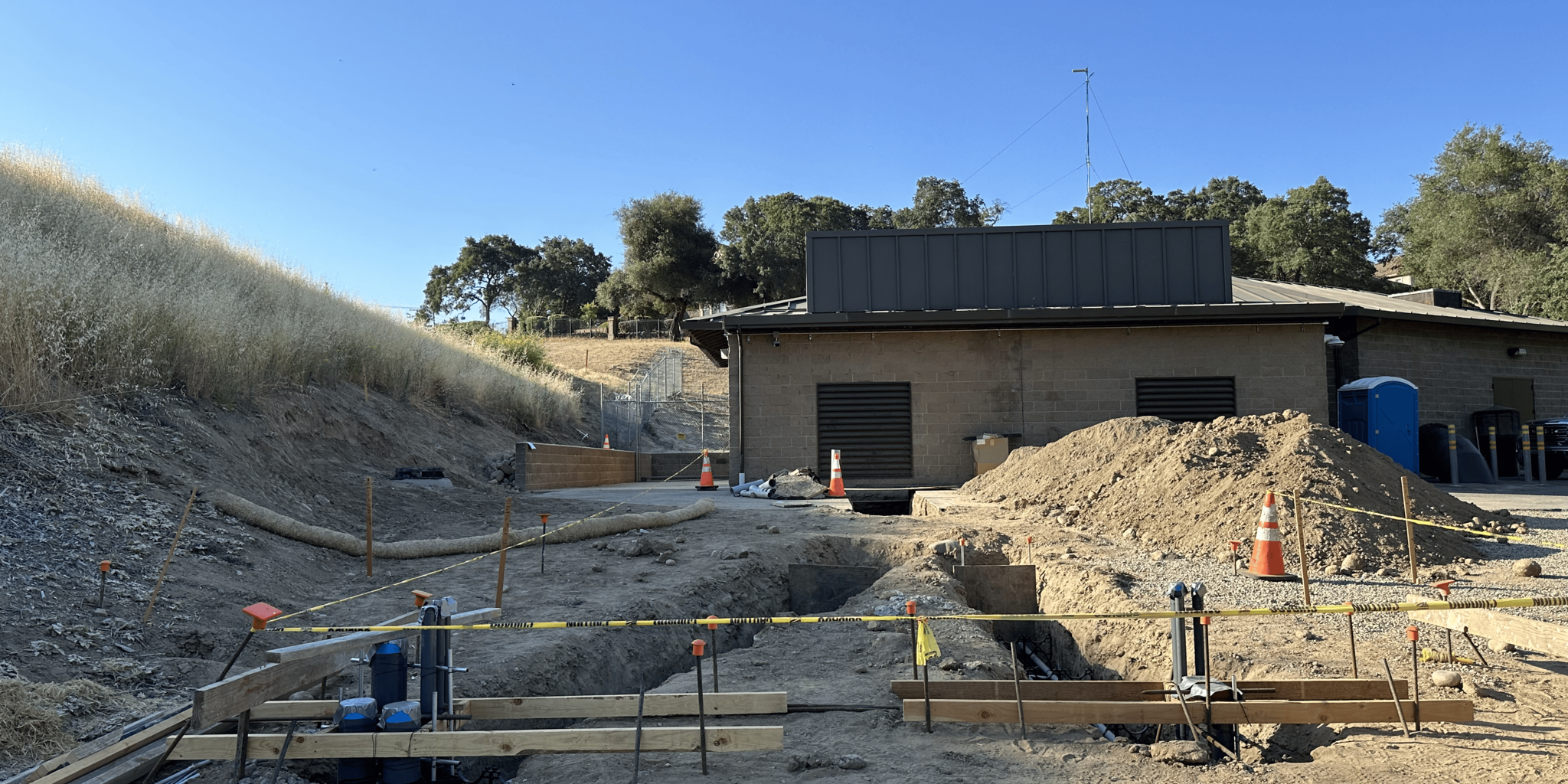
EETS developed a detailed multi-step phasing plan that structured construction around two imperatives: keeping both pump stations in service and making productive use of the time before the long lead time generators arrived. The plan specified that all civil, structural, and electrical preparatory work that did not require a shutdown proceed first, advancing the project as far as possible without taking any station offline.
Step 1 addressed the ARC-North Pump Station during a limited two-day shutdown window. The contractor replaced the existing ATS with a new 800A unit and reconnected it to the existing ARC-North generator, restoring a fully functional emergency power system before the window closed. This established ARC-North as a known-good system before any work began at Bacon.
Step 2 addressed the Bacon Pump Station during a longer shutdown window. During this period, the contractor installed the new 1600A distribution switchboard and the new 1600A ATS, reconnected the 200 HP pump starters, and installed the emergency switchboard with all supporting infrastructure, reconnecting the existing Bacon generator through new conductors to the new 1600A ATS.
Step 3 executed once both new generators were on site. Each station was taken down individually for a 24-hour cutover window, with the two cutovers performed sequentially rather than simultaneously. The existing generators were removed and the new units connected to the newly configured power systems. All civil and structural work in the generator yard was completed in advance so that the 24-hour window could be devoted entirely to the electrical cutover.
Key Technical Elements
Parameter | Detail |
Facility | Bacon Pump Station; Sierra and ARC-North Pump Stations (all within the same building) |
Scope | Two emergency generators (400 kW and 600 kW); two ATS replacements; nine switchgear, MCC, and motor starter sections |
Generator Selection | Diesel gensets selected; Tier 4 emission controls not required below the 1 MW threshold set by the local air quality district |
Switchgear Replacement | Five existing sections removed and replaced with nine new sections within 136 inches of available wall space; 5 inches remaining after installation |
New Switchgear Scope | (2) enclosures for existing 200 HP RVATs; (1) 200 HP VFD; 400A, 800A, and 1200A breakers; 1200A ATS; transition section; auxiliary breakers |
Building Interface | Outdoor floor-mounted junction box aligned with indoor transition section; core drills through building wall for generator power, auxiliary power, and control signal circuits |
Downtime Constraint | Each pump station limited to 24-hour outages for final generator cutover; Bacon and ARC-North could not be offline simultaneously |
Construction Sequencing | Three-step phased plan: ARC-North ATS replacement first; Bacon switchboard and ATS installation second; generator cutover third once both units on site |
COVID-19 Impact | Supply chain disruptions extended lead times for generators, switchgear, and MCC sections; construction timeline adjusted accordingly |
Project Outcome
Construction is complete. Both pump stations are operating with new emergency generation systems that meet current air quality standards. The phased construction approach kept the Bacon and ARC-North stations in service throughout the project with no simultaneous outages, and each final generator cutover was completed within its 24-hour window. The nine new switchgear and motor starter sections are installed and operational within the original wall space, with the outdoor generator connections routed cleanly through the building envelope via the aligned junction box and transition section.
Value Delivered by EETS
This project required solving a space problem, an operational constraint, and a supply chain disruption simultaneously, with water service continuity as the non-negotiable priority throughout.
Design Within Fixed Physical Constraints
The wall space available for the switchgear replacement was fixed by the building footprint and could not be expanded. Getting nine sections into 136 inches required designing every section to exact dimensional tolerances and specifying custom bussing and cabling arrangements to fit the available space. The outdoor junction box alignment with the indoor transition section was similarly non-negotiable: the core drills were a one-time operation, and the circuits passing through them had to land correctly. EETS designed those interfaces precisely enough that the contractor could execute them in the field without adjustment.
Generator Sizing for Regulatory Compliance
The decision to retain two separate generators rather than consolidate into a single larger unit was not simply a matter of preference. The local air quality district’s Tier 4 threshold at 1 MW meant that a consolidated generator would have required a diesel particulate filter, selective catalytic reduction system, and urea injection infrastructure, adding cost, space, and long-term maintenance obligations. Understanding where that threshold fell, and designing to stay below it, was the engineering decision that kept the project scope manageable and the compliance path straightforward.
Sequencing Under Supply Chain Pressure
The COVID-19 supply chain disruptions that extended lead times for generators and switchgear were outside anyone’s control. What was within EETS’s control was structuring the construction sequence so that the project continued making progress during the wait. By specifying that all preparatory civil, structural, and electrical work proceed before any shutdowns, and by staging the ATS and switchgear installations in separate windows ahead of generator delivery, EETS ensured that when the generators finally arrived, the facility was ready for a straight cutover rather than a protracted installation. The three-step sequence also protected the District from the scenario it could not afford: both stations down at the same time.
Drink
As part of this expansion, AWA identified an opportunity to recover energy that was previously being wasted.