
Geysers Geothermal Complex Protection Modernization and Substation Upgrades
Calpine Corporation | The Geysers Geothermal Complex | Middletown, California
Project Overview
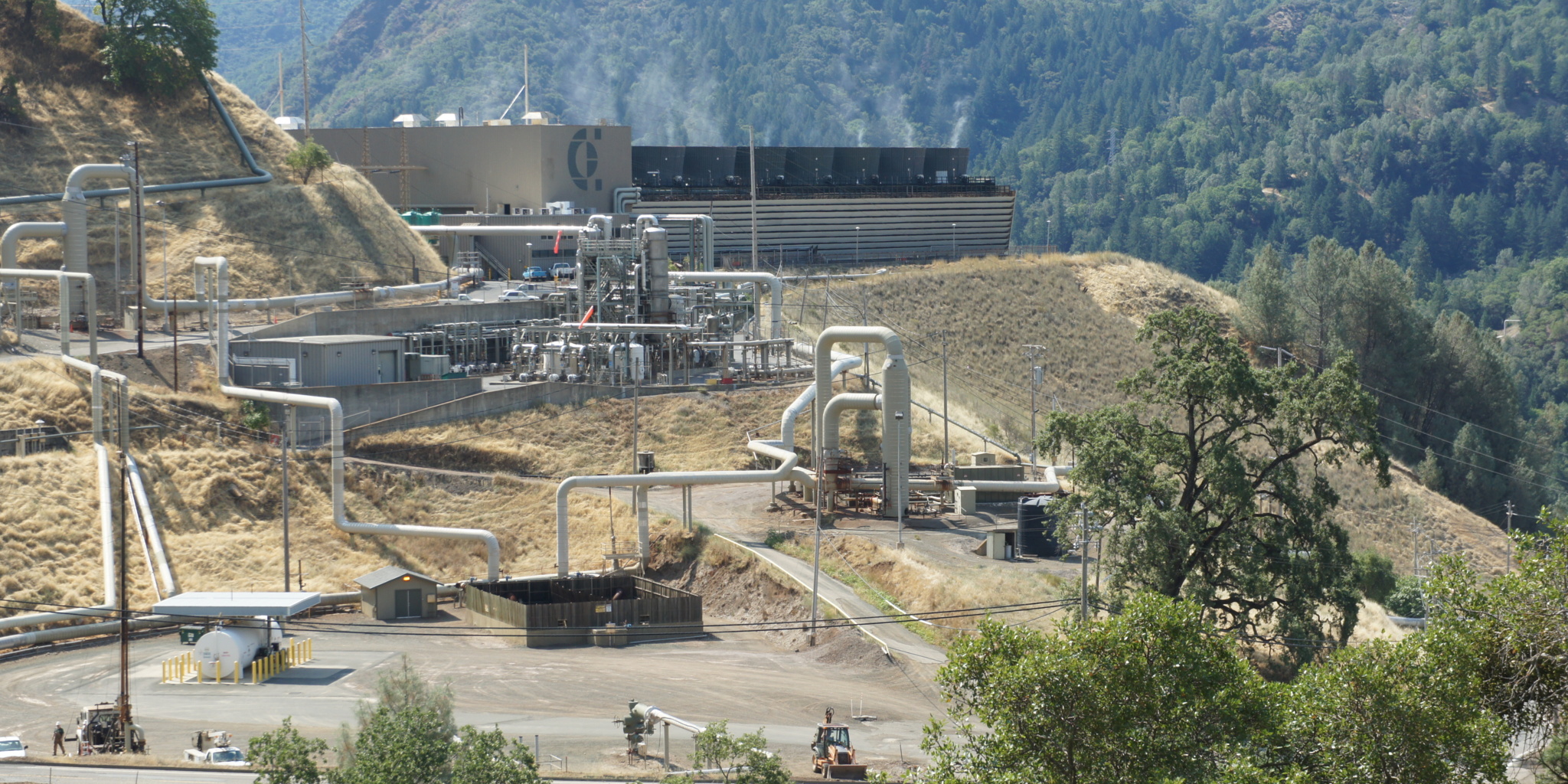
Calpine Corporation’s Geysers Geothermal Complex in Middletown, California, is the largest complex of geothermal power plants in the world, with a net generating capacity of 725 MW spread across 15 power plants. Over the past decade, the Geysers have generated nearly 24 percent of California’s renewable electric generation. Calpine’s steam fields cover approximately 45 square miles, served by more than 80 miles of steam lines. The facility also operates a wastewater injection program that provides an environmentally sound discharge solution for neighboring cities while extending the long-term productivity of the Geysers steam resource.
EETS has provided electrical engineering services to Calpine at the Geysers since 2012, in an ongoing relationship that has grown to span five of the complex’s 15 power plants. The initial scope centered on modernizing protective relaying at Units 1, 13, 14, 15, 18, and 19, plants that together represent over 300 MW of generating capacity. In 2013, EETS also designed the replacement of a 230 kV circuit breaker at one of the complex’s substations, demolishing an aging oil circuit breaker and installing a modern SF6 unit along with new capacitance-coupled voltage transformers.
The Relay Modernization Program
Calpine Corporation’s Geysers Geothermal Complex in Middletown, California, is the largest complex of geothermal power plants in the world, with a net generating capacity of 725 MW spread across 15 power plants. Over the past decade, the Geysers have generated nearly 24 percent of California’s renewable electric generation. Calpine’s steam fields cover approximately 45 square miles, served by more than 80 miles of steam lines. The facility also operates a wastewater injection program that provides an environmentally sound discharge solution for neighboring cities while extending the long-term productivity of the Geysers steam resource.
EETS has provided electrical engineering services to Calpine at the Geysers since 2012, in an ongoing relationship that has grown to span five of the complex’s 15 power plants. The initial scope centered on modernizing protective relaying at Units 1, 13, 14, 15, 18, and 19, plants that together represent over 300 MW of generating capacity. In 2013, EETS also designed the replacement of a 230 kV circuit breaker at one of the complex’s substations, demolishing an aging oil circuit breaker and installing a modern SF6 unit along with new capacitance-coupled voltage transformers.
The 230 kV Breaker Replacement
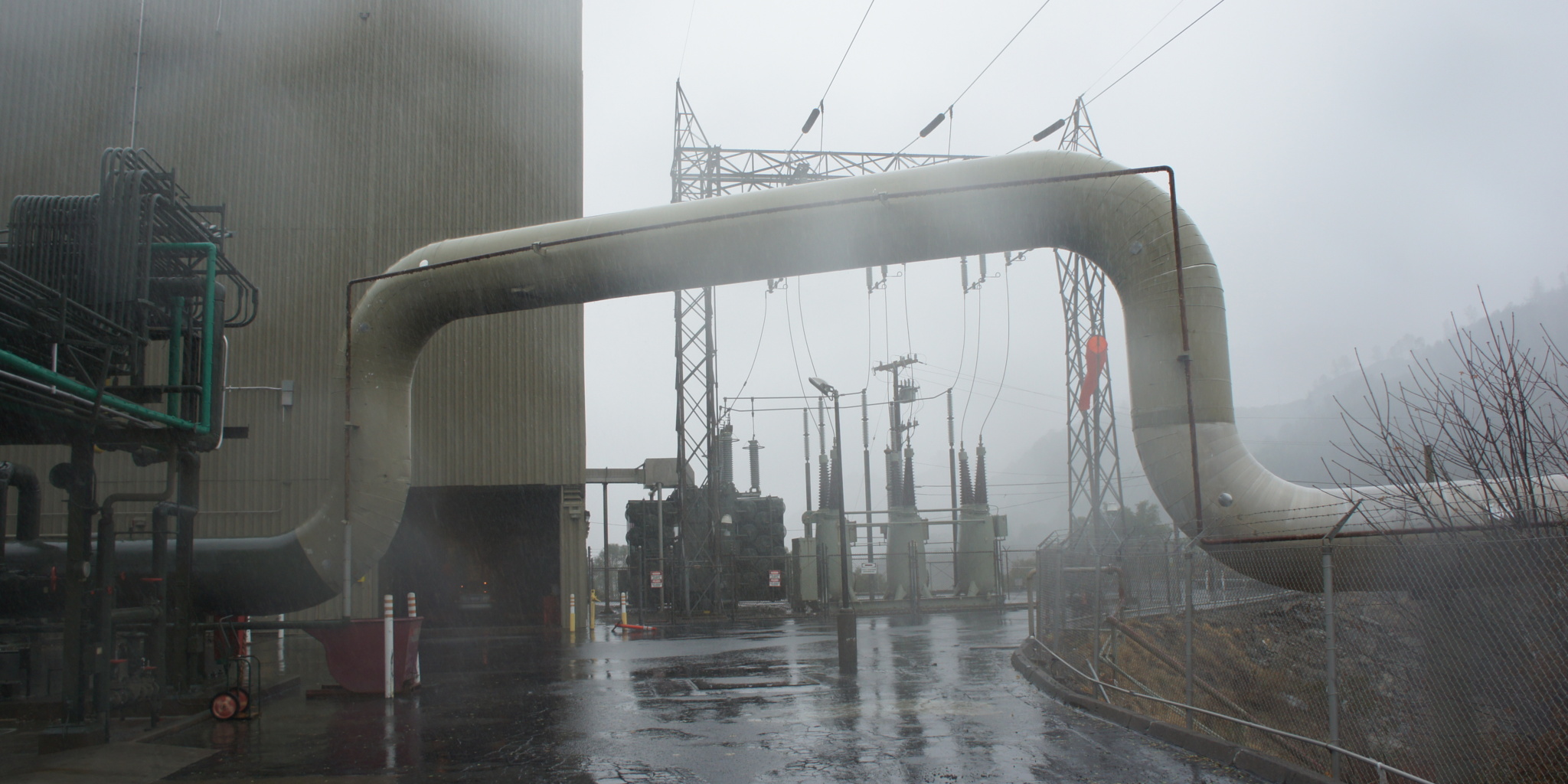
Separately from the relay modernization program, Calpine sought to replace an aging 230 kV oil circuit breaker with a sulfur hexafluoride (SF6) breaker. SF6 breakers were the standard replacement technology for oil circuit breakers at the time, offering improved protective reliability along with reduced electrical clearance requirements, ample overload margin, and a smaller physical footprint, owing to the high dielectric strength of SF6 gas. EETS designed the replacement and prepared the procurement specification for the new breaker and four 133 kV capacitance-coupled voltage transformers (CCVTs) installed as part of the same scope.
The design work required investigating and modifying the existing site drawings to reflect the new installation, including one-line, three-line, and elementary diagrams, grounding drawings, conduit plans, circuit schedules, conduit schedules, and a bill of materials. EETS also prepared the new installation drawings accompanying the specification, including electrical plan and elevation drawings, wiring interconnect diagrams, electrical detail drawings, and breaker elementary drawings, and reviewed the breaker and CCVT submittals during procurement.
Project Challenge
Consistency Across Five Distinct Plants
The Geysers complex is not a single power plant but a collection of 15 individually built generating units, developed and modified over different periods of the complex’s long operating history. Five of those units, spanning over 300 MW of capacity, needed protective relay modernization, but each plant had its own equipment configuration, documentation quality, and physical constraints. A relay design approach that worked cleanly at one unit could not simply be copied to the next; each plant required its own investigation and tailored design, even as the underlying relay technology and design standards remained consistent across the program.
Unit 19 illustrated this most clearly. Its scope went well beyond a relay panel swap, ultimately requiring new structures, equipment relocations, control room modifications, and a new pole line, all of which depended on first understanding what existing documentation could and could not be trusted to reflect actual field conditions.
Replacing a 230 kV Breaker at a Working Steam Field
The 230 kV breaker being replaced sat at a transmission interconnection point serving generation drawn from across the steam field. Demolishing an oil circuit breaker and commissioning its SF6 replacement required the existing site drawings to accurately reflect field conditions before any new design work could proceed, since the new breaker and CCVTs had to integrate cleanly with existing protection, metering, and grounding systems already in service.
Client
Calpine Corporation
Sector
Private / Geothermal Power Generation
Location
Middletown, California
Services
Protective Relay Engineering │ Generator Protection │ Substation Design │ Circuit Breaker Replacement │ Phasing Studies │ Instrumentation and Controls

Drink
As part of this expansion, AWA identified an opportunity to recover energy that was previously being wasted.
Client
Calpine Corporation
Sector
Private / Geothermal Power Generation
Location
Middletown, California
Services
Protective Relay Engineering │ Generator Protection │ Substation Design │ Circuit Breaker Replacement │ Phasing Studies │ Instrumentation and Controls
Drink
As part of this expansion, AWA identified an opportunity to recover energy that was previously being wasted.
Project Overview
Calpine Corporation’s Geysers Geothermal Complex in Middletown, California, is the largest complex of geothermal power plants in the world, with a net generating capacity of 725 MW spread across 15 power plants. Over the past decade, the Geysers have generated nearly 24 percent of California’s renewable electric generation. Calpine’s steam fields cover approximately 45 square miles, served by more than 80 miles of steam lines. The facility also operates a wastewater injection program that provides an environmentally sound discharge solution for neighboring cities while extending the long-term productivity of the Geysers steam resource.
EETS has provided electrical engineering services to Calpine at the Geysers since 2012, in an ongoing relationship that has grown to span five of the complex’s 15 power plants. The initial scope centered on modernizing protective relaying at Units 1, 13, 14, 15, 18, and 19, plants that together represent over 300 MW of generating capacity. In 2013, EETS also designed the replacement of a 230 kV circuit breaker at one of the complex’s substations, demolishing an aging oil circuit breaker and installing a modern SF6 unit along with new capacitance-coupled voltage transformers.
The Relay Modernization Program
Calpine Corporation’s Geysers Geothermal Complex in Middletown, California, is the largest complex of geothermal power plants in the world, with a net generating capacity of 725 MW spread across 15 power plants. Over the past decade, the Geysers have generated nearly 24 percent of California’s renewable electric generation. Calpine’s steam fields cover approximately 45 square miles, served by more than 80 miles of steam lines. The facility also operates a wastewater injection program that provides an environmentally sound discharge solution for neighboring cities while extending the long-term productivity of the Geysers steam resource.
EETS has provided electrical engineering services to Calpine at the Geysers since 2012, in an ongoing relationship that has grown to span five of the complex’s 15 power plants. The initial scope centered on modernizing protective relaying at Units 1, 13, 14, 15, 18, and 19, plants that together represent over 300 MW of generating capacity. In 2013, EETS also designed the replacement of a 230 kV circuit breaker at one of the complex’s substations, demolishing an aging oil circuit breaker and installing a modern SF6 unit along with new capacitance-coupled voltage transformers.
The 230 kV Breaker Replacement
Separately from the relay modernization program, Calpine sought to replace an aging 230 kV oil circuit breaker with a sulfur hexafluoride (SF6) breaker. SF6 breakers were the standard replacement technology for oil circuit breakers at the time, offering improved protective reliability along with reduced electrical clearance requirements, ample overload margin, and a smaller physical footprint, owing to the high dielectric strength of SF6 gas. EETS designed the replacement and prepared the procurement specification for the new breaker and four 133 kV capacitance-coupled voltage transformers (CCVTs) installed as part of the same scope.
The design work required investigating and modifying the existing site drawings to reflect the new installation, including one-line, three-line, and elementary diagrams, grounding drawings, conduit plans, circuit schedules, conduit schedules, and a bill of materials. EETS also prepared the new installation drawings accompanying the specification, including electrical plan and elevation drawings, wiring interconnect diagrams, electrical detail drawings, and breaker elementary drawings, and reviewed the breaker and CCVT submittals during procurement.
Project Challenge
Consistency Across Five Distinct Plants
The Geysers complex is not a single power plant but a collection of 15 individually built generating units, developed and modified over different periods of the complex’s long operating history. Five of those units, spanning over 300 MW of capacity, needed protective relay modernization, but each plant had its own equipment configuration, documentation quality, and physical constraints. A relay design approach that worked cleanly at one unit could not simply be copied to the next; each plant required its own investigation and tailored design, even as the underlying relay technology and design standards remained consistent across the program.
Unit 19 illustrated this most clearly. Its scope went well beyond a relay panel swap, ultimately requiring new structures, equipment relocations, control room modifications, and a new pole line, all of which depended on first understanding what existing documentation could and could not be trusted to reflect actual field conditions.
Replacing a 230 kV Breaker at a Working Steam Field
The 230 kV breaker being replaced sat at a transmission interconnection point serving generation drawn from across the steam field. Demolishing an oil circuit breaker and commissioning its SF6 replacement required the existing site drawings to accurately reflect field conditions before any new design work could proceed, since the new breaker and CCVTs had to integrate cleanly with existing protection, metering, and grounding systems already in service.
Engineering Solution
A Repeatable Design Standard, Applied Plant by Plant
EETS established a consistent microprocessor relay design standard for the generator protection scope and applied it across each of the five units, while treating the investigation and integration work at each plant as its own design effort. At Units 1, 13, 14, 15, and 18, this meant new relays, test switches, cutouts, auxiliary relays, and DC fusing at each generator relay panel, with one-line, three-line, DC schematic, and panel wiring documentation produced for each installation. Phasing surveys confirmed that the as-built electrical configuration matched design assumptions before energization.
At Unit 19, EETS began with a documentation investigation before any design work proceeded, establishing what could be relied on and what needed to be field-verified. From that foundation, EETS developed the complete scope: new 21 kV structures and slabs, equipment relocation designs, electrical calculations covering relays, CTs, PTs, ground grid, conductors, and bus clearances, control and relaying schematics, metering and control room modifications, new metering facilities, and a new 21 kV pole line. EETS supported the bidding process and reviewed submittals through construction.
Like-for-Kind Modernization of the 230 kV Breaker
EETS investigated and modified the existing site drawings to establish an accurate baseline before designing the new breaker installation. The completed design package included the full set of drawings required to demolish the existing oil breaker and commission its replacement: one-line, three-line, and elementary diagrams, grounding drawings, conduit and circuit schedules, electrical plan and elevation drawings, wiring interconnect diagrams, and breaker elementary drawings. EETS reviewed the breaker and CCVT submittals to confirm the procured equipment matched the design intent before installation proceeded.
Key Technical Elements
Parameter | Detail |
Facility | The Geysers Geothermal Complex; 725 MW net generating capacity across 15 power plants; largest geothermal generating complex in the world |
EETS Project Scope | Five power plants (Units 1, 13, 14, 15, 18, and 19), representing over 300 MW of capacity |
Relay Modernization | Microprocessor protective relay upgrades for 230 kV substation and unit generator protection; new relays, test switches, cutouts, auxiliary relays, and DC fusing at each generator relay panel |
Unit 19 Scope | New 21 kV structures and slabs; equipment relocations including fire suppression lines; electrical calculations for relays, CTs, PTs, ground grid, conductors, and bus clearances; new metering facilities; new 21 kV pole line |
Switchyard Work | Switchyard rehabilitation at Unit 14; phasing surveys and studies across project units |
Breaker Replacement | Demolition of existing 230 kV oil circuit breaker; installation and commissioning of new 230 kV SF6 breaker |
Voltage Transformers | Four 133 kV capacitance-coupled voltage transformers (CCVTs) installed alongside the new breaker |
Drawing Package | One-line, three-line, elementary, DC schematic, grounding, conduit, and circuit schedule drawings; electrical plan, elevation, wiring interconnect, and breaker elementary drawings |
Client Relationship | Ongoing engagement since 2012, spanning relay modernization (2012–ongoing) and breaker replacement (2013) |
Project Outcome
Five power plants at the Geysers complex, representing over 300 MW of capacity, now operate with modernized protective relaying, replacing aging electromechanical equipment with current microprocessor-based protection. Unit 19 additionally received new 21 kV infrastructure, control room modernization, and a new pole line supporting its electrical distribution. The 230 kV breaker replacement project successfully commissioned a modern SF6 breaker and four new CCVTs in place of the original oil circuit breaker, improving protective reliability at a key transmission interconnection point. EETS’s relationship with Calpine at the Geysers has continued since the program began in 2012.
Value Delivered by EETS
Sustaining an engineering relationship across multiple plants and multiple years requires more than competent individual designs. It requires a design standard the client can trust to be applied consistently, and a partner willing to do the investigative work each new plant demands.
A Standard That Scales Across a Complex Portfolio
Modernizing protection at one power plant is a contained engineering task. Doing it consistently across five plants, each with its own history and existing conditions, while maintaining a coherent design standard the client can rely on, is a different kind of challenge. EETS delivered relay modernization that was both consistent in its technical approach and responsive to each plant’s specific conditions, an approach that let Calpine treat protection modernization as a program rather than a series of unrelated projects.
Investigation Before Design at Unit 19
Unit 19’s expanded scope, new structures, equipment relocations, control room modifications, and a new pole line, depended on EETS first establishing what the existing documentation could be trusted to show. Beginning with that investigation rather than designing against unverified drawings is what allowed the subsequent design work, electrical calculations, relay and metering design, and structural layout, to proceed on a reliable foundation rather than one built on assumptions about field conditions that may no longer have held true.
Continuity as a Trusted Electrical Engineer
EETS’s work at the Geysers did not end with the relay modernization program. When Calpine needed to replace a 230 kV breaker at a transmission interconnection point serving the broader steam field, EETS was the engineer entrusted with that work as well. That continuity reflects the kind of relationship that develops when a client can rely on consistent, accurate engineering across distinct scopes of work and over an extended period of time.
Drink
As part of this expansion, AWA identified an opportunity to recover energy that was previously being wasted.