
Macho Springs Wind Farm Substation and Switchyard Design
Element Power | Macho Springs Wind Farm | Deming, New Mexico
Project Overview
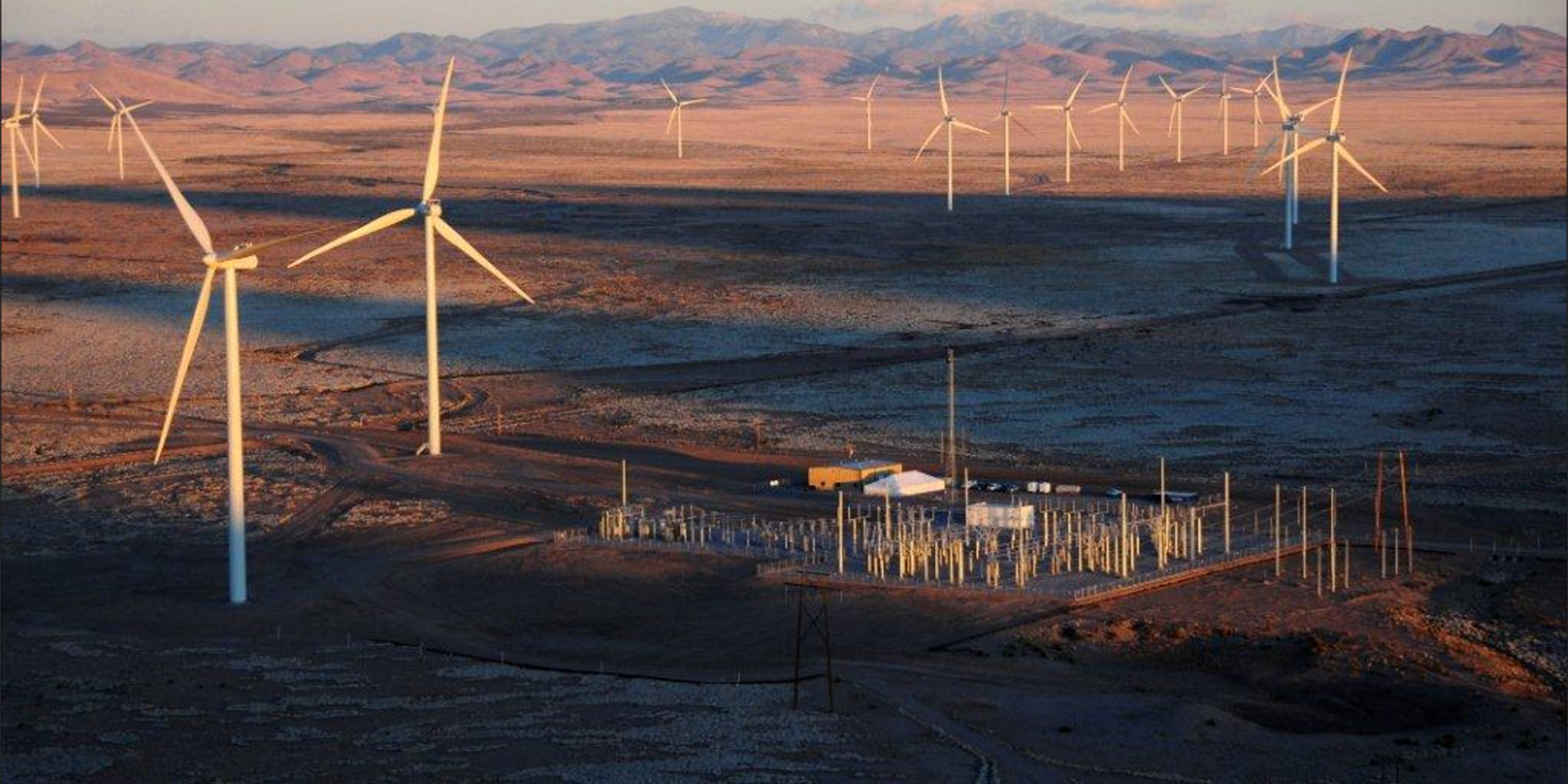
The Macho Springs Wind Farm is a 50 MW facility located on approximately 2,000 acres of private ranchland near Deming, New Mexico. The project was developed by Element Power, now part of General Electric, and consists of 28 Vestas V100 turbines rated at 1.8 MW each. All generated electricity is sold to Tucson Electric Power under a power purchase agreement that crosses state lines. The project was delivered on an aggressive fast-track schedule.
EETS was engaged by the EPC contractor to provide the full electrical engineering design for the wind farm’s substation, switchyard, collection system, and SCADA infrastructure. The scope included design of the new 345 kV ring bus switching station and the 345 kV:34.5 kV step-down substation, the 34.5 kV underground collection system connecting the turbines, protective relay selection and settings, non-revenue metering, and specification of the microwave communication system for substation telemetry. EETS also performed the electrical engineering studies required to support the design and utility interconnections.
The Facility
The electrical infrastructure at Macho Springs operates across two voltage levels. At 34.5 kV, the collection system gathers generation from the 28 turbines and delivers it to the substation. At 345 kV, the substation steps that power up for delivery to the transmission grid via the ring bus switching station. The ring bus configuration provides operational flexibility and redundancy at the transmission interconnection point, allowing switching operations without interrupting generation.
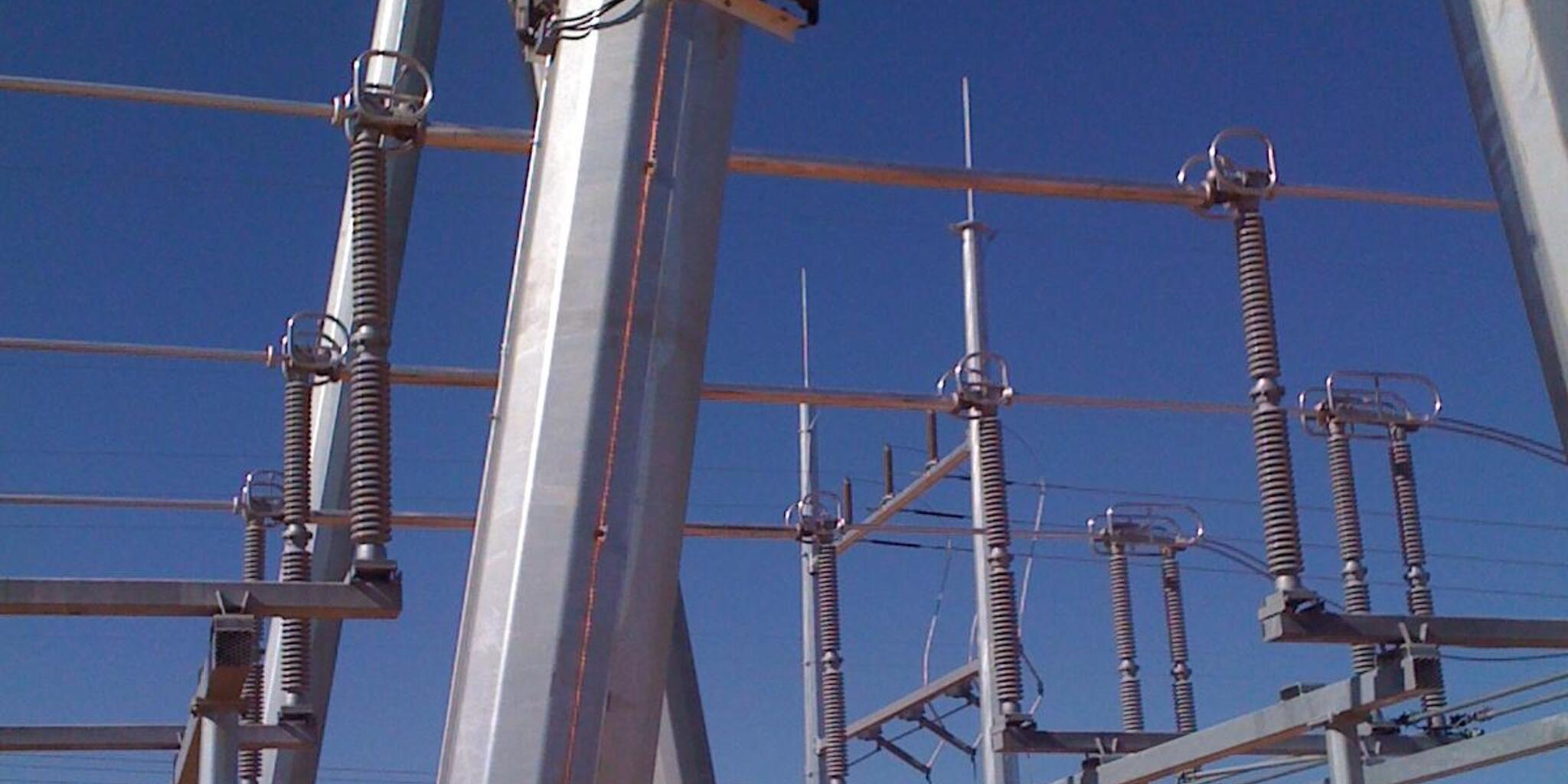
EETS designed the complete protection scheme for the 345 kV switchyard, specifying and generating settings for SEL-351 overcurrent and directional relays, SEL-352 breaker failure relays, and SEL-387 transformer differential relays. The protective relaying drawings included complete control and relay elementary diagrams and relay rack layouts. Non-revenue metering was designed alongside the protection scheme, with technical specifications prepared for all equipment. EETS also developed the site and switching station layout drawings, elevation views, one-lines, three-lines, and bills of materials covering the full substation scope.
Project Challenge
Three Utility Interconnections on One Schedule
Utility interconnection is one of the most time-consuming and least controllable elements of any generation project. Each interconnecting utility conducts its own studies, applies its own technical standards, and moves on its own timeline. The process for a single interconnection can stretch over many months, consume significant engineering resources, and require multiple rounds of review and revision before approval is granted. At Macho Springs, the project required completing three separate utility interconnection processes, across three different states, within the same compressed project schedule.
Each of the three interconnections had to be managed in parallel with the others and with the ongoing design work. A delay in any one of them had the potential to stall the project as a whole, since the 345 kV interconnection and the power sale arrangement both depended on regulatory and technical approvals that EETS could shepherd but not unilaterally control. Getting all three across the line within a fast-track timeline required sustained, coordinated engagement with each utility from early in the project through final approval.
345 kV Design at Fast-Track Pace
The 345 kV substation and switching station design involved a level of technical complexity that does not compress easily. Protection scheme design at transmission voltage requires careful coordination of relay settings across the entire interconnected system, with each relay’s behavior dependent on the others. Errors in protective relay settings at 345 kV can result in failure to clear faults, or in nuisance trips that unnecessarily interrupt generation. Getting the settings right requires methodical analysis, and that analysis takes the time it takes regardless of the project schedule.
Client
Element Power (now General Electric)
Sector
Private / Renewable Energy Development
Location
Deming, New Mexico
Services
Substation and Switchyard Design │ 345 kV Protection and Control │ Engineering Studies │ Collection System Design │ SCADA and Communication Systems │ Utility Coordination

Drink
As part of this expansion, AWA identified an opportunity to recover energy that was previously being wasted.
Client
Element Power (now General Electric)
Sector
Private / Renewable Energy Development
Location
Deming, New Mexico
Services
Substation and Switchyard Design │ 345 kV Protection and Control │ Engineering Studies │ Collection System Design │ SCADA and Communication Systems │ Utility Coordination
Drink
As part of this expansion, AWA identified an opportunity to recover energy that was previously being wasted.
Project Overview
The Macho Springs Wind Farm is a 50 MW facility located on approximately 2,000 acres of private ranchland near Deming, New Mexico. The project was developed by Element Power, now part of General Electric, and consists of 28 Vestas V100 turbines rated at 1.8 MW each. All generated electricity is sold to Tucson Electric Power under a power purchase agreement that crosses state lines. The project was delivered on an aggressive fast-track schedule.
EETS was engaged by the EPC contractor to provide the full electrical engineering design for the wind farm’s substation, switchyard, collection system, and SCADA infrastructure. The scope included design of the new 345 kV ring bus switching station and the 345 kV:34.5 kV step-down substation, the 34.5 kV underground collection system connecting the turbines, protective relay selection and settings, non-revenue metering, and specification of the microwave communication system for substation telemetry. EETS also performed the electrical engineering studies required to support the design and utility interconnections.
The Facility
The electrical infrastructure at Macho Springs operates across two voltage levels. At 34.5 kV, the collection system gathers generation from the 28 turbines and delivers it to the substation. At 345 kV, the substation steps that power up for delivery to the transmission grid via the ring bus switching station. The ring bus configuration provides operational flexibility and redundancy at the transmission interconnection point, allowing switching operations without interrupting generation.
EETS designed the complete protection scheme for the 345 kV switchyard, specifying and generating settings for SEL-351 overcurrent and directional relays, SEL-352 breaker failure relays, and SEL-387 transformer differential relays. The protective relaying drawings included complete control and relay elementary diagrams and relay rack layouts. Non-revenue metering was designed alongside the protection scheme, with technical specifications prepared for all equipment. EETS also developed the site and switching station layout drawings, elevation views, one-lines, three-lines, and bills of materials covering the full substation scope.
Project Challenge
Three Utility Interconnections on One Schedule
Utility interconnection is one of the most time-consuming and least controllable elements of any generation project. Each interconnecting utility conducts its own studies, applies its own technical standards, and moves on its own timeline. The process for a single interconnection can stretch over many months, consume significant engineering resources, and require multiple rounds of review and revision before approval is granted. At Macho Springs, the project required completing three separate utility interconnection processes, across three different states, within the same compressed project schedule.
Each of the three interconnections had to be managed in parallel with the others and with the ongoing design work. A delay in any one of them had the potential to stall the project as a whole, since the 345 kV interconnection and the power sale arrangement both depended on regulatory and technical approvals that EETS could shepherd but not unilaterally control. Getting all three across the line within a fast-track timeline required sustained, coordinated engagement with each utility from early in the project through final approval.
345 kV Design at Fast-Track Pace
The 345 kV substation and switching station design involved a level of technical complexity that does not compress easily. Protection scheme design at transmission voltage requires careful coordination of relay settings across the entire interconnected system, with each relay’s behavior dependent on the others. Errors in protective relay settings at 345 kV can result in failure to clear faults, or in nuisance trips that unnecessarily interrupt generation. Getting the settings right requires methodical analysis, and that analysis takes the time it takes regardless of the project schedule.
Engineering Solution
Parallel Design and Interconnection Management
EETS ran the utility coordination work in parallel with the substation design rather than sequentially, initiating and advancing each of the three interconnection processes while the engineering deliverables were being produced. This required maintaining active communication with multiple utilities simultaneously, responding promptly to technical questions and data requests from each, and ensuring that design decisions made for one interconnection did not create conflicts with the requirements of another. The power flow, short circuit, and arc flash studies EETS performed were directly tied to the interconnection submittals, with study results used to satisfy each utility’s technical review requirements.
The protective relay settings development for the SEL-351, SEL-352, and SEL-387 relays was completed as part of the same workflow, with settings derived from the study results and validated against the interconnection requirements of the transmission utility. The microwave communication system, which provides the telemetry path for SCADA data between the substation and the grid operator, was specified in coordination with the interconnection requirements to ensure the communication architecture met each utility’s operational needs.
The full drawing package EETS produced covered the site layout, switching station elevations, one-line and three-line diagrams, protection drawings, control and relay elementary diagrams, relay rack layouts, and technical specifications for all equipment. The collection system design addressed the 34.5 kV circuits connecting the 28 turbines, with the electrical design coordinated against the SCADA system architecture to ensure monitoring and control coverage across the full generating fleet.
Key Technical Elements
Parameter | Detail |
Project Location | Deming, New Mexico; approximately 2,000 acres of private ranchland |
Installed Capacity | 50 MW; 28 Vestas V100 turbines at 1.8 MW each |
Offtake | All generation sold to Tucson Electric Power across state lines |
Substation Configuration | 345 kV ring bus switching station; 345 kV:34.5 kV step-down substation |
Collection System Voltage | 34.5 kV wind farm electrical collection system |
Protective Relaying | SEL-351 overcurrent and directional relays; SEL-352 breaker failure relays; SEL-387 transformer differential relays; settings generated by EETS |
Metering and Control | 345 kV protective relaying and non-revenue metering; C&R elementaries; relay rack layouts and technical specifications |
Engineering Studies | Power flow, short circuit, and arc flash analysis; electrical design calculations; insulation coordination |
Communication System | Microwave communication system specification for substation SCADA and telemetry |
Utility Coordination | Three separate utility interconnection processes across three states completed within a single fast-track project schedule |
Project Outcome
The Macho Springs Wind Farm was completed on its fast-track schedule and is operating at full capacity. All three utility interconnections were achieved within the project timeline. The 50 MW facility delivers electricity to Tucson Electric Power under the cross-state power purchase agreement and is projected to generate over million in tax revenue for Luna County over its 20-year project life. The 345 kV substation and ring bus switching station, designed and specified by EETS, serve as the backbone of the facility’s grid connection.
Value Delivered by EETS
The defining challenge of this project was not any single technical problem but the combination of transmission-voltage design complexity, multi-state regulatory coordination, and an aggressive schedule that compressed all of it into a single delivery window.
Managing Three Interconnections Simultaneously
Utility interconnection coordination is a process that rewards persistence and penalizes gaps. Each utility has its own review queue, its own technical requirements, and its own timeline, none of which are controlled by the project team. Managing one interconnection well requires sustained attention; managing three simultaneously, across three states, while design work is proceeding in parallel, requires a level of organizational discipline that is easy to underestimate. EETS maintained active engagement with all three interconnection processes throughout the project, ensuring that no utility review stalled for lack of a timely response and that each process reached approval before it could become a constraint on construction or energization.
Transmission-Voltage Protection Engineering
Designing protection schemes at 345 kV is work that cannot be rushed without introducing risk. The relay settings EETS developed for the Macho Springs switchyard had to be coordinated across the full protection system, verified against the power flow and short circuit study results, and validated against the interconnecting utility’s requirements before the facility could be energized. EETS completed that work within the fast-track schedule without compromising the rigor that transmission-voltage protection requires. Getting relay settings right the first time is what allows a project to energize on schedule rather than spending weeks in post-energization troubleshooting.
Full-Scope Wind Farm Electrical Engineering
EETS delivered the complete electrical engineering scope for Macho Springs: substation and switchyard design, collection system, protection and control, engineering studies, SCADA communication specification, and utility coordination. Working across that range of disciplines within a single engagement meant that design decisions in one area could be made with direct knowledge of their implications in others. Collection system routing informed protection zone boundaries. Study results fed directly into relay settings and interconnection submittals. Communication system requirements were specified with the telemetry needs of all three utilities in mind. That integration is harder to achieve when the scope is divided among multiple engineering firms working from separate briefs.
Drink
As part of this expansion, AWA identified an opportunity to recover energy that was previously being wasted.