
Old Beach Pump Station Electrical Refurbishment
Douglas County Sewer Improvement District | Old Beach Pump Station | Zephyr Cove, Nevada
Project Overview
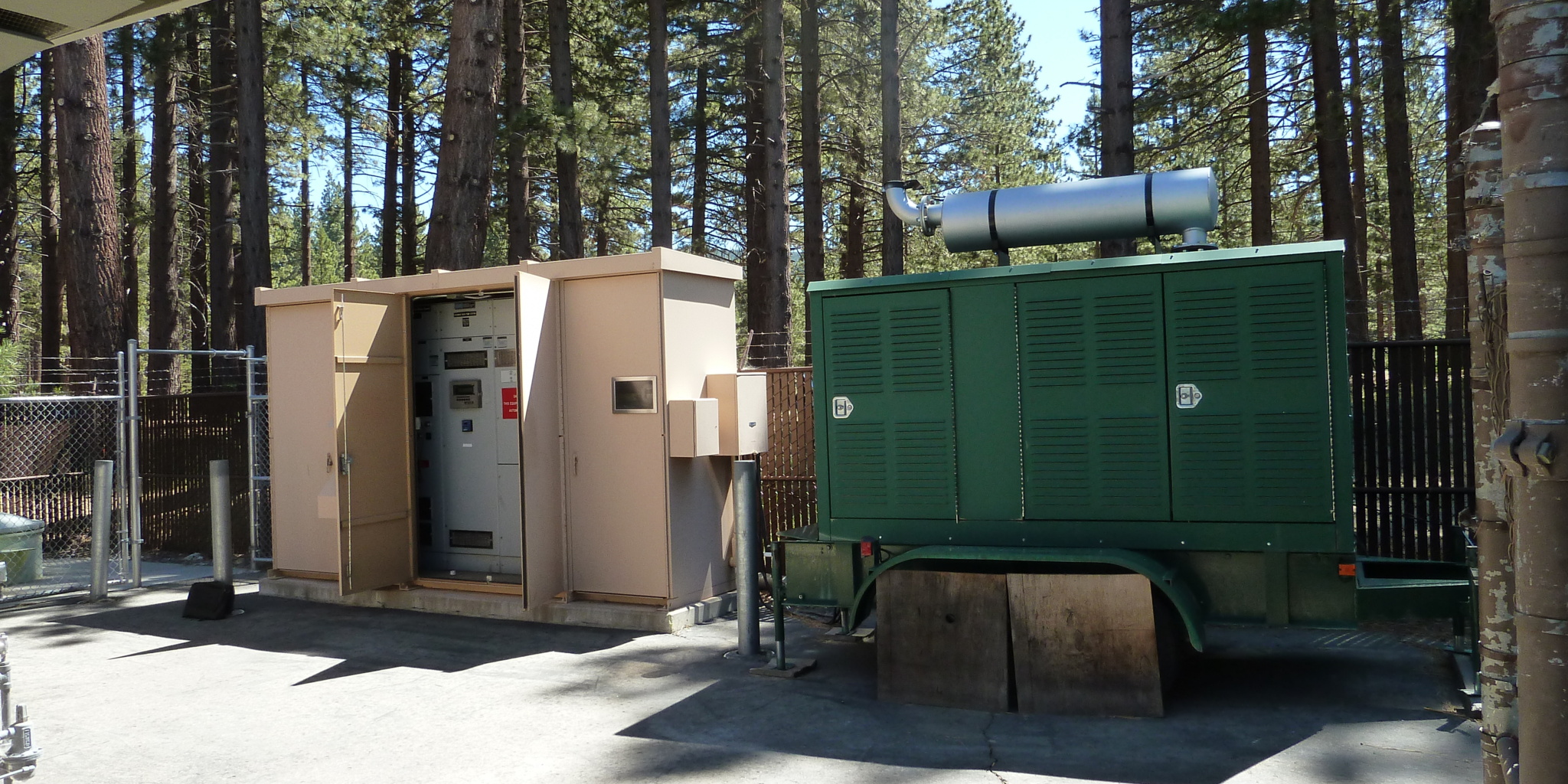
The Old Beach Pump Station is a wastewater facility operated by the Douglas County Sewer Improvement District (DCSID), located at Zephyr Cove on the Nevada shore of Lake Tahoe. Built in the 1960s, the station had reached a point where aging equipment made routine maintenance increasingly difficult, with many original parts no longer available. The Lake Tahoe Basin carries heightened environmental sensitivity, particularly around wastewater management: urban water runoff and stormwater must be captured and treated before reaching the lake, making reliable pump station operation a matter of both regulatory compliance and environmental stewardship.
DCSID engaged a prime contractor to deliver the refurbishment, who in turn engaged EETS to provide the full electrical engineering design. EETS’s scope covered the new 480V motor control center with integrated variable frequency drives and automatic transfer switch, three replacement 75 HP pump motors, a new PLC-based control system with ultrasonic level sensing, new conduit and cable from the MCC to all field devices, and front panel operator controls. EETS also prepared preliminary cost estimates, including options for switchboard and ATS replacement, developed the competitive bid documents, and provided RFI and submittal review services through construction.
The Motor and Drive Replacement
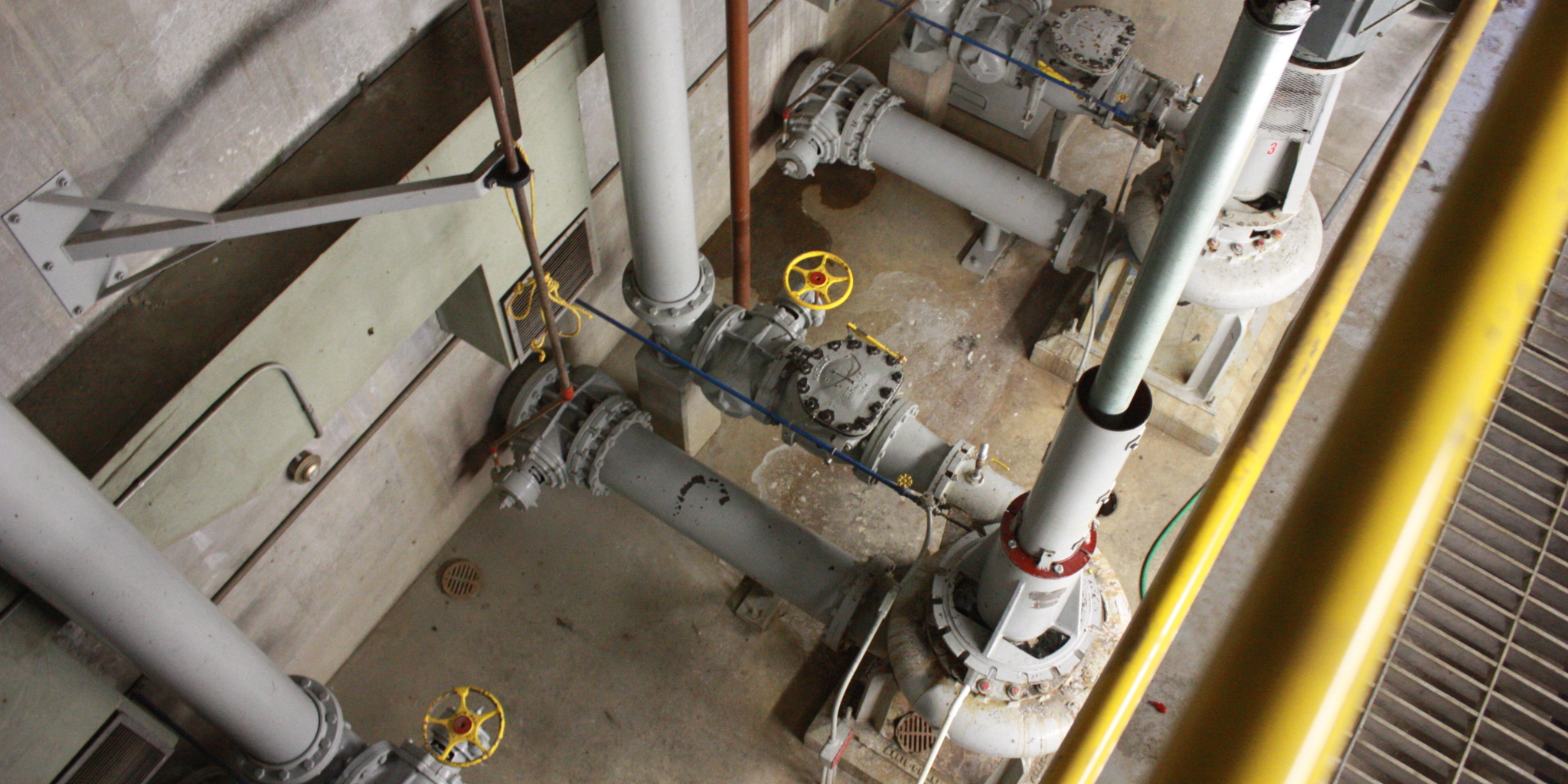
The existing pump motors were 900 RPM wound rotor induction motors, a technology common in older industrial installations that allowed speed control by varying external resistance in the rotor circuit. While functional when new, wound rotor motors are mechanically complex, require ongoing maintenance of brushes and slip rings, and depend on resistance controllers that are largely obsolete. The replacement design specified 900 RPM inverter duty motors driven by variable frequency drives, matching the operating speed of the original motors to preserve compatibility with the existing pump impellers while eliminating the mechanical complexity of the wound rotor design.
Inverter duty motors are designed specifically for VFD service, with insulation systems rated to withstand the voltage spikes and high-frequency switching that VFDs introduce. Standard motors operated on VFDs without this insulation rating can suffer premature winding failure. Specifying inverter duty motors was therefore both a code compliance requirement and a long-term reliability decision. The VFDs were sized to match the motor and load characteristics and to satisfy applicable code requirements for drive-motor combinations at this voltage and horsepower rating.
Project Challenge
Field Conditions That Did Not Match the Records
Preliminary design for the Old Beach Pump Station began from reported field conditions, as is standard practice before a full site investigation is completed. When actual site conditions were evaluated during the preliminary design phase, the picture was different from what had been reported. Electrical clearances were not as available as represented, and the condition of existing conduit and connecting infrastructure was poor enough that it could not be incorporated into the new design as originally assumed. Equipment that the preliminary design had planned to reuse or connect to had to be reconsidered.
Discovering this during the preliminary design phase, rather than after construction documents were finalized and a contractor was mobilized, preserved the ability to redesign without compressing the construction schedule. The preliminary cost estimates EETS had developed, which included optional line items for switchboard and ATS replacement, also meant that the owner had already been given a framework for considering scope additions if the site investigation revealed the need for them.
Designing for the Lake Tahoe Basin Environment
Zephyr Cove sits at approximately 6,300 feet elevation on the eastern shore of Lake Tahoe, an environment that imposes material requirements on outdoor and semi-outdoor electrical equipment beyond what a standard installation would face. Annual snowfall, extended freeze-thaw cycles, and sustained cold temperatures affect enclosure ratings, conduit sealing, cable jacket selection, and equipment thermal management. The MCC, ATS, and associated equipment were specified with enclosure ratings and features appropriate for this environment, including consideration for snow accumulation loads on outdoor equipment and moisture sealing requirements where conduit transitions between heated and unheated spaces.
Client
Douglas County Sewer Improvement District
Sector
Public / Municipal Wastewater
Location
Zephyr Cove, Nevada
Services
Electrical Engineering Design │ MCC and VFD Design │ Motor Specifications │ PLC Controls Integration │ Instrumentation │ Bid and Construction Services

Drink
As part of this expansion, AWA identified an opportunity to recover energy that was previously being wasted.
Client
Douglas County Sewer Improvement District
Sector
Public / Municipal Wastewater
Location
Zephyr Cove, Nevada
Services
Electrical Engineering Design │ MCC and VFD Design │ Motor Specifications │ PLC Controls Integration │ Instrumentation │ Bid and Construction Services
Drink
As part of this expansion, AWA identified an opportunity to recover energy that was previously being wasted.
Project Overview
The Old Beach Pump Station is a wastewater facility operated by the Douglas County Sewer Improvement District (DCSID), located at Zephyr Cove on the Nevada shore of Lake Tahoe. Built in the 1960s, the station had reached a point where aging equipment made routine maintenance increasingly difficult, with many original parts no longer available. The Lake Tahoe Basin carries heightened environmental sensitivity, particularly around wastewater management: urban water runoff and stormwater must be captured and treated before reaching the lake, making reliable pump station operation a matter of both regulatory compliance and environmental stewardship.
DCSID engaged a prime contractor to deliver the refurbishment, who in turn engaged EETS to provide the full electrical engineering design. EETS’s scope covered the new 480V motor control center with integrated variable frequency drives and automatic transfer switch, three replacement 75 HP pump motors, a new PLC-based control system with ultrasonic level sensing, new conduit and cable from the MCC to all field devices, and front panel operator controls. EETS also prepared preliminary cost estimates, including options for switchboard and ATS replacement, developed the competitive bid documents, and provided RFI and submittal review services through construction.
The Motor and Drive Replacement
The existing pump motors were 900 RPM wound rotor induction motors, a technology common in older industrial installations that allowed speed control by varying external resistance in the rotor circuit. While functional when new, wound rotor motors are mechanically complex, require ongoing maintenance of brushes and slip rings, and depend on resistance controllers that are largely obsolete. The replacement design specified 900 RPM inverter duty motors driven by variable frequency drives, matching the operating speed of the original motors to preserve compatibility with the existing pump impellers while eliminating the mechanical complexity of the wound rotor design.
Inverter duty motors are designed specifically for VFD service, with insulation systems rated to withstand the voltage spikes and high-frequency switching that VFDs introduce. Standard motors operated on VFDs without this insulation rating can suffer premature winding failure. Specifying inverter duty motors was therefore both a code compliance requirement and a long-term reliability decision. The VFDs were sized to match the motor and load characteristics and to satisfy applicable code requirements for drive-motor combinations at this voltage and horsepower rating.
Project Challenge
Field Conditions That Did Not Match the Records
Preliminary design for the Old Beach Pump Station began from reported field conditions, as is standard practice before a full site investigation is completed. When actual site conditions were evaluated during the preliminary design phase, the picture was different from what had been reported. Electrical clearances were not as available as represented, and the condition of existing conduit and connecting infrastructure was poor enough that it could not be incorporated into the new design as originally assumed. Equipment that the preliminary design had planned to reuse or connect to had to be reconsidered.
Discovering this during the preliminary design phase, rather than after construction documents were finalized and a contractor was mobilized, preserved the ability to redesign without compressing the construction schedule. The preliminary cost estimates EETS had developed, which included optional line items for switchboard and ATS replacement, also meant that the owner had already been given a framework for considering scope additions if the site investigation revealed the need for them.
Designing for the Lake Tahoe Basin Environment
Zephyr Cove sits at approximately 6,300 feet elevation on the eastern shore of Lake Tahoe, an environment that imposes material requirements on outdoor and semi-outdoor electrical equipment beyond what a standard installation would face. Annual snowfall, extended freeze-thaw cycles, and sustained cold temperatures affect enclosure ratings, conduit sealing, cable jacket selection, and equipment thermal management. The MCC, ATS, and associated equipment were specified with enclosure ratings and features appropriate for this environment, including consideration for snow accumulation loads on outdoor equipment and moisture sealing requirements where conduit transitions between heated and unheated spaces.
Engineering Solution
Redesign from Verified Conditions
Once the gap between reported and actual field conditions was established, EETS revised the preliminary design to reflect what was actually there. The revised approach treated the existing conduit infrastructure as unreliable and specified new conduit and cable routes from the MCC to all field devices rather than reusing conduit runs whose condition could not be confirmed. The electrical clearance constraints were incorporated into the MCC layout and equipment placement, ensuring the final construction documents reflected conditions the contractor would actually encounter rather than conditions that had been assumed.
The completed design package covered the 480V MCC with VFDs and ATS, motor and drive specifications for the three 75 HP pump motors, PLC controller interface and ultrasonic level control system, front panel operator controls, and the full conduit and cable design from the MCC to field devices. Electrical drawings and specifications were prepared for competitive bidding, and EETS supported construction through RFI responses and submittal review.
Key Technical Elements
Parameter | Detail |
Facility | Old Beach Pump Station, Zephyr Cove, Nevada; built 1960s; wastewater pump station serving the Lake Tahoe Basin |
Motor Replacement | Three 75 HP wound rotor induction motors replaced with 900 RPM inverter duty motors |
Drive Technology | Three variable frequency drives sized for inverter duty service and code compliance |
MCC and ATS | New 480V motor control center with integrated VFDs and automatic transfer switch |
Controls and Instrumentation | New PLC controller interface; ultrasonic level control system; front panel operator controls |
Conduit and Cabling | New conduit and cable from new MCC to all field devices |
Environmental Context | Lake Tahoe Basin; equipment and enclosures designed to withstand cold weather, snow loading, and freeze-thaw conditions |
Field Condition Challenge | Reported clearances and conduit infrastructure did not match actual field conditions; preliminary design revised prior to construction documents |
Project Delivery | Preliminary cost estimates including switchboard and ATS replacement options; competitive bid documents; RFI and submittal review during construction |
Project Outcome
The Old Beach Pump Station was successfully refurbished with a modern electrical system suited to the environmental demands of the Lake Tahoe Basin. The three wound rotor induction motors were replaced with inverter duty units driven by properly sized VFDs, the aging MCC and control infrastructure was replaced in full, and the station now operates with a PLC-based control system and ultrasonic level sensing in place of the original electromechanical controls. The redesign completed during the preliminary phase ensured that construction documents reflected actual field conditions, avoiding the cost and schedule impact of discovering the infrastructure deficiencies after mobilization.
Value Delivered by EETS
A 1960s pump station in a high-elevation mountain environment, with field conditions that did not match what had been reported, required an engineering approach that was grounded, methodical, and responsive to what the site actually revealed.
Catching the Discrepancy Early
The gap between reported and actual site conditions at Old Beach was caught during the preliminary design phase, not during construction. That timing matters. A contractor discovering that existing clearances are unavailable or that conduit infrastructure is unusable after mobilization faces a compressed window to resolve the problem, with change order costs and schedule delays as the likely outcome. EETS’ preliminary design process, and the preliminary cost estimate structure that already included options for additional scope, meant the owner was informed and the design was revised before any of that pressure existed.
Specifying the Right Motor Technology
Replacing a wound rotor motor with a VFD-driven motor is not simply a matter of swapping one unit for another. The replacement motor must be rated for inverter duty service, the VFD must be properly sized for the motor and load, and both must be specified and coordinated to satisfy applicable code requirements. EETS matched the 900 RPM operating speed of the original motors to maintain pump hydraulic compatibility, specified inverter duty insulation to protect against the winding stress that VFDs introduce, and sized the drives to code. The result is a drive system that is more reliable and more maintainable than what it replaced, with commercially available parts and no dependency on obsolete wound rotor control technology.
Environmental Design at Elevation
The Lake Tahoe Basin imposes environmental conditions on electrical installations that a standard specification would not address. EETS incorporated the cold weather, snow loading, and freeze-thaw requirements appropriate for a facility at over 6,000 feet elevation into the MCC, enclosure, conduit, and cabling specifications. A pump station that fails in winter due to inadequately specified equipment is a more serious problem in this environment than in most, both because of the difficulty of accessing and repairing equipment under winter conditions and because of the consequences of a wastewater failure in a lake basin with no tolerance for environmental discharge.
Drink
As part of this expansion, AWA identified an opportunity to recover energy that was previously being wasted.