
Pump-as-Turbine Hydroelectric Facility Design and Commissioning
Amador Water Agency | Tanner Water Treatment Plant | Northern California
Project Overview
Amador Water Agency (AWA) owns and operates the Tanner Water Treatment Plant (WTP), Tanner Reservoir, and the Amador Transmission Pipeline, among other facilities. The Tanner WTP currently treats water through six treatment trains, each combining an up-flow clarifier with a gravity flow filter, for a total treatment capacity of 4,800 gallons per minute. AWA is expanding the plant with two additional treatment trains to bring total capacity to 6,400 gallons per minute.
Project Challenge
A Commissioning Failure Under Pressure
The electrical design and equipment procurement phases were completed successfully, and the facility was built and ready for startup. What followed was a commissioning process that exposed a fundamental programming error in the PLC control system, one that had gone undetected through the entire system integration process.
The generators would not start reliably. When they did start, they would run briefly before tripping offline. With all project stakeholders on site expecting a successful parallel and commissioning already weeks behind schedule, EETS was called in to diagnose and resolve the problem.
The source of the failure was not in the electrical equipment, the protection relays, or the hardware. It was in the control logic written by the system integrator to govern generator startup and shutdown sequences.
The Generating Units
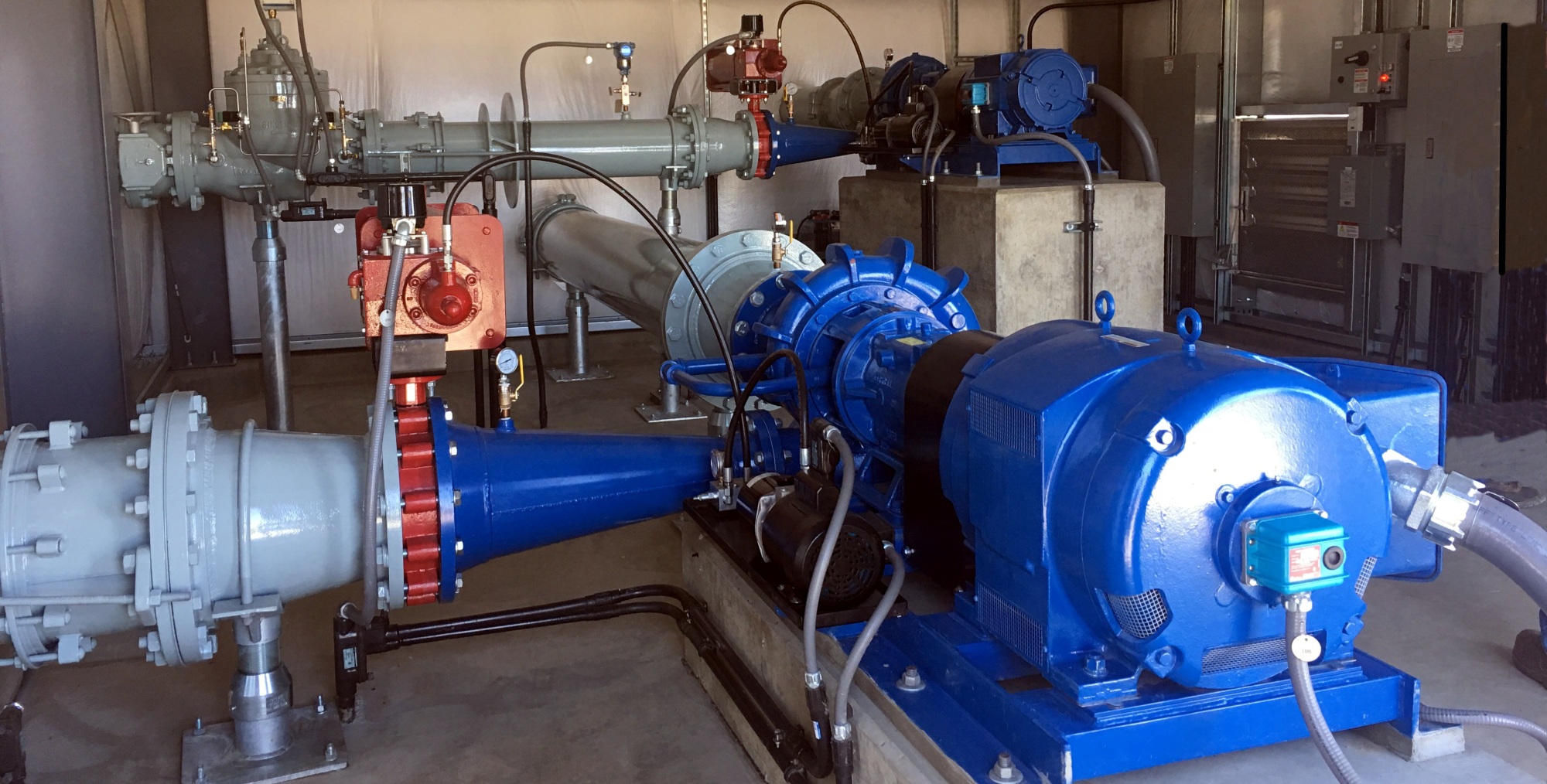
The facility uses two induction generators driven by pump-as-turbine units. Pump-as-turbines are standard centrifugal pumps operated in reverse: rather than consuming electricity to move water, they receive pressurized water flow and generate electricity as the water passes through. This approach provides a cost-effective alternative to purpose-built hydraulic turbines while achieving comparable energy recovery performance.
The two generating units are rated as follows:
- Unit 1: 120 kW, 480V three-phase, 0.845 power factor induction generator
- Unit 2: 57 kW, 480V three-phase, 0.83 power factor induction generator
Both units interconnect with PG&E at 480V three-phase under a net energy metering arrangement, with generation metered directly at the facility service voltage.
Client
Amador Water Agency
Sector
Public / Municipal Water Agency
Location
Northern California
Services
Electrical Engineering Design | Protection and Control | PLC Controls and SCADA | Utility Interconnection | Commissioning and Startup
Client
Amador Water Agency
Sector
Public / Municipal Water Agency
Location
Northern California
Services
Electrical Engineering Design | Protection and Control | PLC Controls and SCADA | Utility Interconnection | Commissioning and Startup
Project Overview
Amador Water Agency (AWA) owns and operates the Tanner Water Treatment Plant (WTP), Tanner Reservoir, and the Amador Transmission Pipeline, among other facilities. The Tanner WTP currently treats water through six treatment trains, each combining an up-flow clarifier with a gravity flow filter, for a total treatment capacity of 4,800 gallons per minute. AWA is expanding the plant with two additional treatment trains to bring total capacity to 6,400 gallons per minute.
Project Challenge
A Commissioning Failure Under Pressure
The electrical design and equipment procurement phases were completed successfully, and the facility was built and ready for startup. What followed was a commissioning process that exposed a fundamental programming error in the PLC control system, one that had gone undetected through the entire system integration process.
The generators would not start reliably. When they did start, they would run briefly before tripping offline. With all project stakeholders on site expecting a successful parallel and commissioning already weeks behind schedule, EETS was called in to diagnose and resolve the problem.
The source of the failure was not in the electrical equipment, the protection relays, or the hardware. It was in the control logic written by the system integrator to govern generator startup and shutdown sequences.
The Generating Units
The facility uses two induction generators driven by pump-as-turbine units. Pump-as-turbines are standard centrifugal pumps operated in reverse: rather than consuming electricity to move water, they receive pressurized water flow and generate electricity as the water passes through. This approach provides a cost-effective alternative to purpose-built hydraulic turbines while achieving comparable energy recovery performance.
The two generating units are rated as follows:
- Unit 1: 120 kW, 480V three-phase, 0.845 power factor induction generator
- Unit 2: 57 kW, 480V three-phase, 0.83 power factor induction generator
Both units interconnect with PG&E at 480V three-phase under a net energy metering arrangement, with generation metered directly at the facility service voltage.
The Logic Was Written Backwards
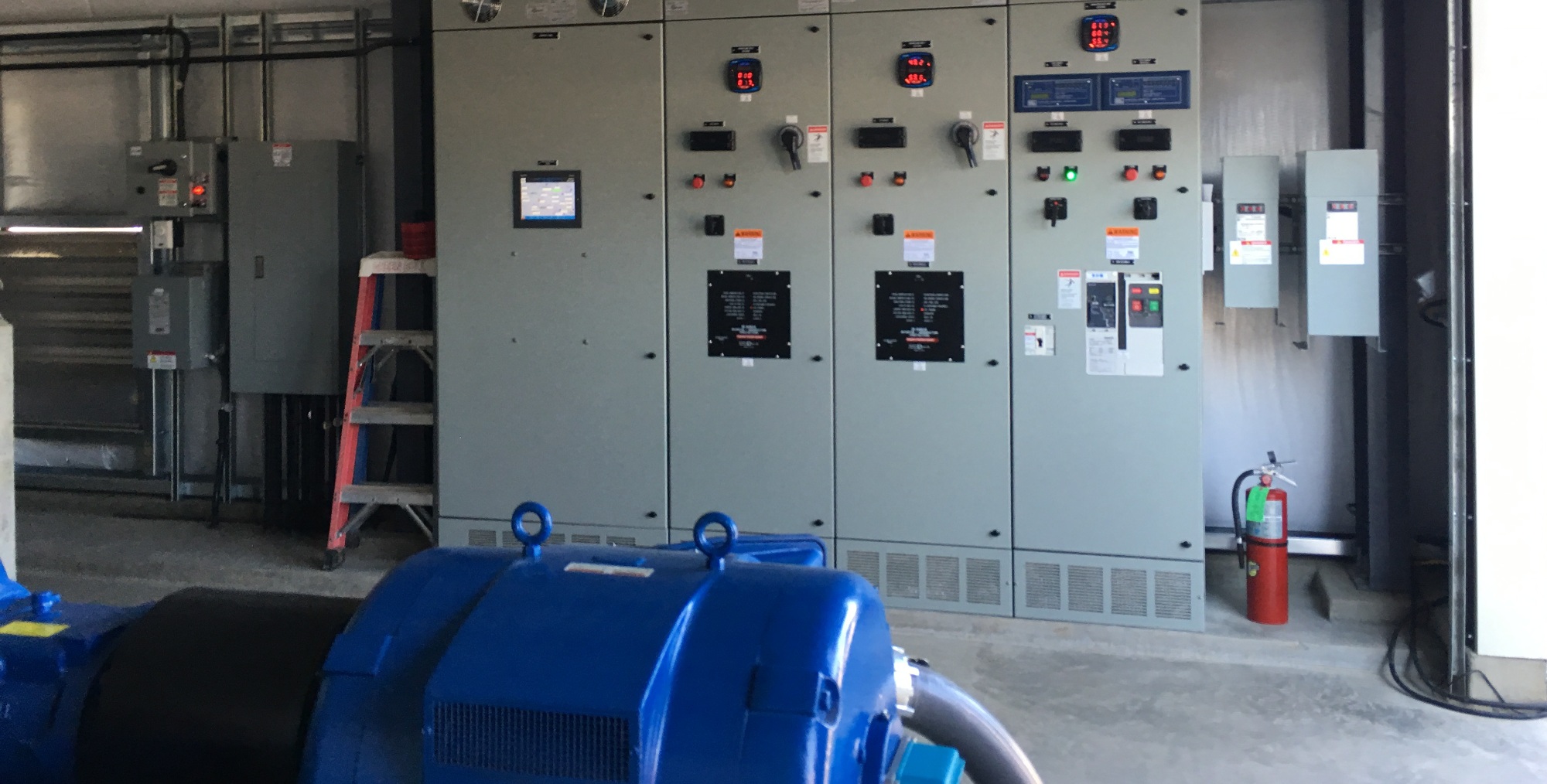
Pump-as-turbine units present a control logic challenge that is easy to underestimate. A standard pump is driven by a motor: the motor starts, the pump follows. The control permissives, the logical conditions that must be satisfied before a start command is allowed to proceed, are written around that sequence. A PaT unit operates in the opposite direction. The water drives the turbine, which drives the generator. The permissive logic must reflect that reversed relationship.
The system integrator had written the startup and shutdown permissive blocks as though the units were motor-driven pumps. The logic was effectively inverted: conditions that should have permitted operation were blocking it, and conditions that should have blocked operation were permitting it. The generators were fighting their own control system every time a start was attempted.
Engineering Solution
Systematic Diagnosis in the Field
EETS approached the problem methodically under significant time pressure. The first step was to rule out equipment issues by verifying that the generator protection relay was correctly configured. It was. With the hardware confirmed as properly set up, attention shifted to the PLC program itself.
EETS performed a complete review of the control code, working through it systematically against the equipment supplier’s submittals to identify every instance where the permissive logic did not correctly reflect the behavior of a generator-driven system. Once all offending permissive blocks were identified, the system integrator modified the program to correct the logic, reversing the inverted conditions to properly govern startup and shutdown for a turbine-generator configuration.
With the core logic corrected and the generators starting and running reliably, EETS then spent additional time on site dialing in setpoints and tuning sequencing parameters to produce a clean, consistent startup and stop cycle. The difference between a corrected system and a well-tuned system matters in long-term operations: a rough startup sequence puts mechanical stress on the equipment over time and can produce nuisance trips that erode operator confidence in the system. The additional tuning work ensured the facility was not just functional but operationally sound.
The entire diagnosis and resolution was completed within days of EETS arriving on site.
Key Technical Elements
Parameter | Detail |
Generating Technology | Two pump-as-turbine (PaT) units with induction generators |
Unit 1 Rating | 120 kW, 480V three-phase, 0.845 power factor |
Unit 2 Rating | 57 kW, 480V three-phase, 0.83 power factor |
Total Installed Capacity | 177 kW |
Utility Interconnection | PG&E, net energy metering, metered at 480V three-phase |
Energy Recovery Concept | Pressure differential across existing PRS harvested in lieu of throttling and dissipating as heat |
Control System | PLC-based operating logic with SCADA communication to AWA headquarters |
Protection | Dedicated generator protection relay, verified correct during commissioning |
Commissioning Issue | PLC startup and shutdown permissive logic inverted for motor-driven pump rather than turbine-generator configuration |
Resolution Timeline | Diagnosed and corrected within days of EETS arriving on site |
Project Outcome
Both generating units are now operating successfully in parallel with PG&E under net energy metering. The Tanner Hydroelectric Station is recovering energy that was previously wasted across the pressure reducing station and returning it as a financial asset for AWA. The facility operates automatically under PLC control with remote monitoring from AWA headquarters.
Value Delivered by EETS
This project illustrates two distinct dimensions of engineering value: the design work that created the facility, and the field judgment that made it actually work.
Designing for Energy Recovery
The fundamental engineering insight of this project was recognizing that the pressure differential across the Tanner PRS represented harvestable energy, not just an operational necessity to be throttled away. EETS designed the electrical infrastructure to capture that energy reliably, including the protection scheme, the utility interconnection, and the PLC control architecture, providing AWA with a net energy metering facility that had not previously existed at the site.
Field Diagnosis Under Pressure
Commissioning failures with all stakeholders on site and a schedule already running weeks late are high-stakes situations. The instinct is often to start replacing hardware, which is expensive and time-consuming. EETS took the opposite approach: systematic verification, starting with what was known to be correct and working methodically toward what was not. The result was a root cause identified and corrected within days, not weeks.
Understanding the PaT Control Challenge
The programming error in this project was not random. It reflected a genuine conceptual gap in how pump-as-turbine units differ from the motor-driven pumps that most control system integrators are more familiar with. EETS understood that difference, which is what allowed the diagnosis to be made quickly and confidently. Knowing what to look for is often what separates a fast resolution from a prolonged investigation.
Tuning for Long-Term Reliability
Correcting the permissive logic resolved the immediate problem. Taking the additional time to tune startup and stop sequences ensured the facility was handed over in a condition that would serve AWA well over its operational life, not just well enough to pass commissioning. That distinction matters when the equipment will run unattended and the next person to interact with it may be doing so years later.