
EETS INC

Russell Substation Expansion and Wind Farm Electrical Design

Sacramento Municipal Utility District | Solano Wind Farm Phase III | Montezuma Hills, California
Project Overview

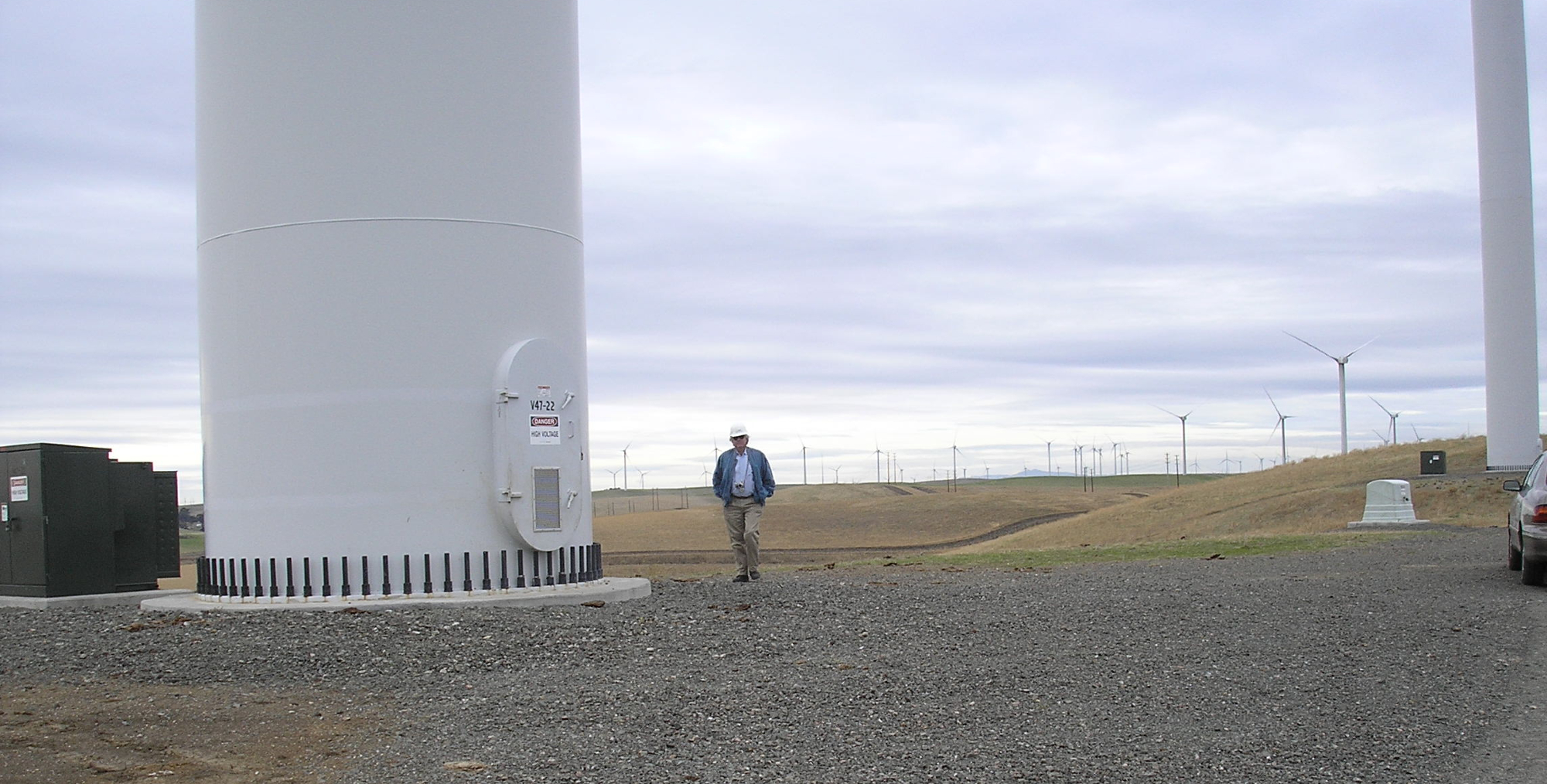
Sacramento Municipal Utility District (SMUD) operates a wind farm in the Montezuma Hills near Rio Vista, California, developed across three phases. EETS’s involvement with the project began in 2009, when SMUD engaged EETS to analyze voltage regulation and power factor issues that had emerged with the Phase II addition of 102 MW. EETS modeled the 52 wind turbines, the four-circuit 21 kV underground collection system, and the 230:21 kV Russell Substation connection to the grid. The analysis identified adjustments to VAR generation at the double-wound induction turbines that stabilized voltage and improved power factor across the full operating range. EETS also designed a 21 kV, 21.6 MVAR switched capacitor bank at Russell Substation to further improve power factor control and performed annual load profile and system loss analysis for the collection system.
With the Phase II issues resolved and SMUD planning a Phase III addition of 128 MW, EETS was engaged to provide the engineering necessary to expand Russell Substation and connect the new generation to the grid. EETS served as lead electrical engineer, working in conjunction with AECOM (providing civil and structural services), and acted as Engineer of Record for the substation expansion and wind farm electrical design. EETS also provided a System Impact Study for the expansion of the 230 kV Russell Substation and its connection to PG&E’s 230 kV Birds Landing Switchyard, and prepared purchase specifications for the 230 kV SF6 breakers required for that connection.
Construction of the Phase III expansion was completed in spring 2012.

The Phase III Expansion

The Phase III addition consisted of 80 turbines rated at 1.6 MW each, all double-wound induction generators, for a total added capacity of 128 MW. Connecting this generation required expanding the Russell Substation footprint into uneven, hilly terrain and extending the 230 kV bus, adding a 200 MVA 230:34.5 kV main power transformer (the third transformer at the site), new 230 kV and 34.5 kV circuit breakers and disconnect switches, revenue metering, and a new control building housing protective relaying, battery systems, and controls. The turbines were served by four new 34.5 kV underground collection circuits routed from the substation to the generating units across the project site.
EETS modeled the Phase III 34.5 kV collection system and performed load flow, power factor analysis, and collection system loss evaluation across multiple operating levels. This analysis informed both the collection system design and the protection scheme, ensuring the system would perform correctly across the full range of wind generation output.

Project Challenge

Expanding into Difficult Terrain on a Compressed Schedule

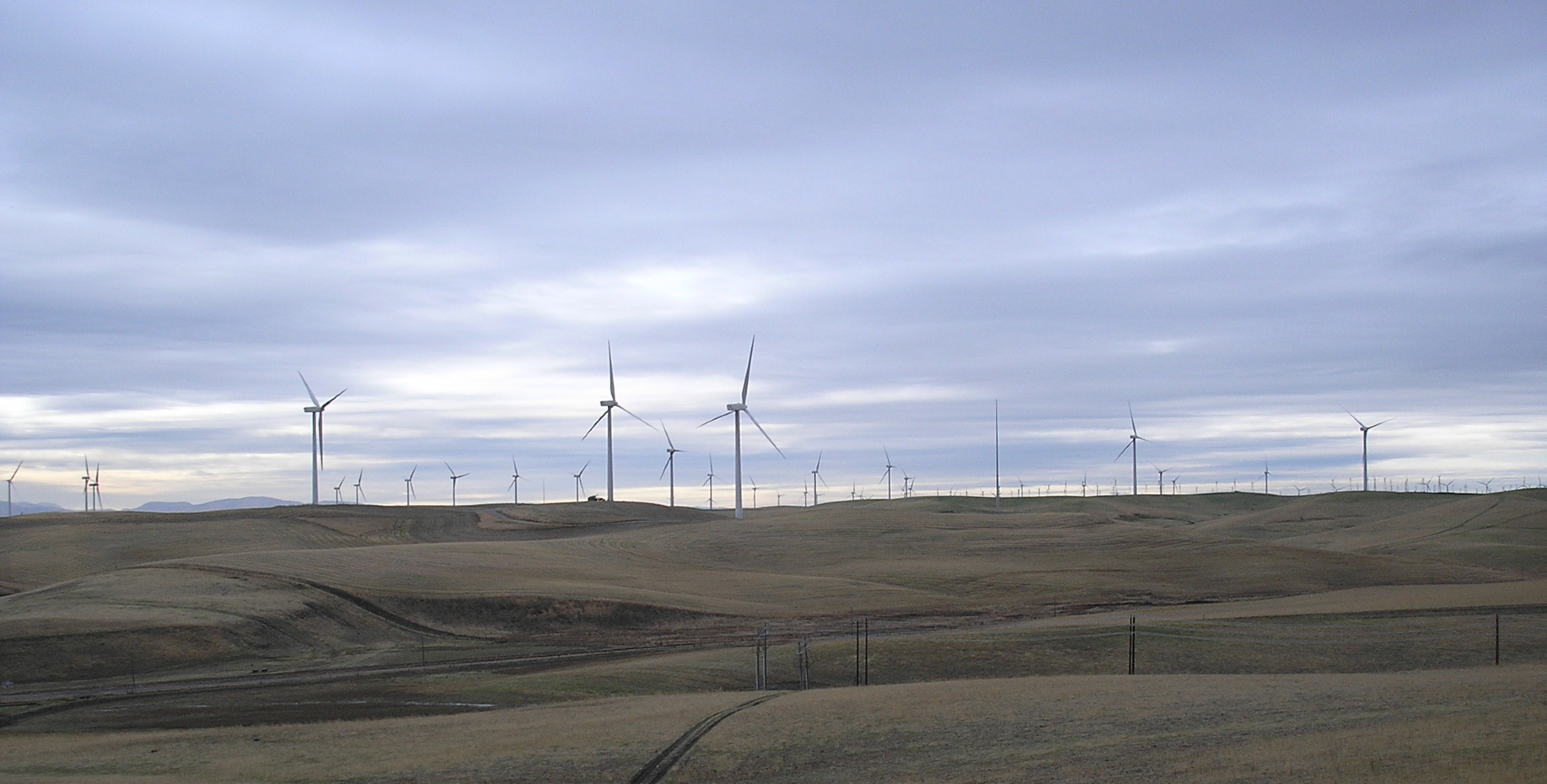
The existing Russell Substation was sited in the Montezuma Hills, an area of rolling, uneven terrain. Expanding the substation footprint to accommodate Phase III required new access roads, retaining walls, and civil site work before electrical construction could proceed. The civil and electrical scopes were tightly interdependent, and the overall project schedule left limited room for sequential execution.
The substation equipment also included items with long procurement lead times. A 200 MVA power transformer and 230 kV circuit breakers cannot be ordered and delivered on short notice. If procurement waited for design completion, delivery would fall on the critical path and compress the construction window further. Getting equipment ordered early required producing specifications before the full design was finalized.

Coordinating a Multi-Discipline, Multi-Package Delivery
As lead electrical engineer and Engineer of Record, EETS was responsible for the technical integrity of a design that spanned civil site preparation, 230 kV substation expansion, 34.5 kV collection system, protection and control, and PG&E interconnection requirements. The design had to be coherent across all of these areas while also being divisible into construction packages that could be bid and executed in a sequence that kept the overall schedule on track.

Client

Sacramento Municipal Utility District

Sector

Public / Municipal Utility

Location

Montezuma Hills, Northern California

Services

Services Electrical Engineering Design │ Power System Analysis │ Substation Engineering │ Protection and Control │ EPC Contract Documents │ Engineer of Record

Drink

As part of this expansion, AWA identified an opportunity to recover energy that was previously being wasted. 

Client

Sacramento Municipal Utility District

Sector

Public / Municipal Utility

Location

Montezuma Hills, Northern California

Services

Services Electrical Engineering Design │ Power System Analysis │ Substation Engineering │ Protection and Control │ EPC Contract Documents │ Engineer of Record

Drink

As part of this expansion, AWA identified an opportunity to recover energy that was previously being wasted. 

Project Overview

Sacramento Municipal Utility District (SMUD) operates a wind farm in the Montezuma Hills near Rio Vista, California, developed across three phases. EETS’s involvement with the project began in 2009, when SMUD engaged EETS to analyze voltage regulation and power factor issues that had emerged with the Phase II addition of 102 MW. EETS modeled the 52 wind turbines, the four-circuit 21 kV underground collection system, and the 230:21 kV Russell Substation connection to the grid. The analysis identified adjustments to VAR generation at the double-wound induction turbines that stabilized voltage and improved power factor across the full operating range. EETS also designed a 21 kV, 21.6 MVAR switched capacitor bank at Russell Substation to further improve power factor control and performed annual load profile and system loss analysis for the collection system.
With the Phase II issues resolved and SMUD planning a Phase III addition of 128 MW, EETS was engaged to provide the engineering necessary to expand Russell Substation and connect the new generation to the grid. EETS served as lead electrical engineer, working in conjunction with AECOM (providing civil and structural services), and acted as Engineer of Record for the substation expansion and wind farm electrical design. EETS also provided a System Impact Study for the expansion of the 230 kV Russell Substation and its connection to PG&E’s 230 kV Birds Landing Switchyard, and prepared purchase specifications for the 230 kV SF6 breakers required for that connection.
Construction of the Phase III expansion was completed in spring 2012.

The Phase III Expansion

The Phase III addition consisted of 80 turbines rated at 1.6 MW each, all double-wound induction generators, for a total added capacity of 128 MW. Connecting this generation required expanding the Russell Substation footprint into uneven, hilly terrain and extending the 230 kV bus, adding a 200 MVA 230:34.5 kV main power transformer (the third transformer at the site), new 230 kV and 34.5 kV circuit breakers and disconnect switches, revenue metering, and a new control building housing protective relaying, battery systems, and controls. The turbines were served by four new 34.5 kV underground collection circuits routed from the substation to the generating units across the project site.
EETS modeled the Phase III 34.5 kV collection system and performed load flow, power factor analysis, and collection system loss evaluation across multiple operating levels. This analysis informed both the collection system design and the protection scheme, ensuring the system would perform correctly across the full range of wind generation output.

Project Challenge

Expanding into Difficult Terrain on a Compressed Schedule

The existing Russell Substation was sited in the Montezuma Hills, an area of rolling, uneven terrain. Expanding the substation footprint to accommodate Phase III required new access roads, retaining walls, and civil site work before electrical construction could proceed. The civil and electrical scopes were tightly interdependent, and the overall project schedule left limited room for sequential execution.
The substation equipment also included items with long procurement lead times. A 200 MVA power transformer and 230 kV circuit breakers cannot be ordered and delivered on short notice. If procurement waited for design completion, delivery would fall on the critical path and compress the construction window further. Getting equipment ordered early required producing specifications before the full design was finalized.

Coordinating a Multi-Discipline, Multi-Package Delivery

As lead electrical engineer and Engineer of Record, EETS was responsible for the technical integrity of a design that spanned civil site preparation, 230 kV substation expansion, 34.5 kV collection system, protection and control, and PG&E interconnection requirements. The design had to be coherent across all of these areas while also being divisible into construction packages that could be bid and executed in a sequence that kept the overall schedule on track.

Engineering Solution

Early Procurement and Phased Construction Packages

EETS prepared procurement specifications for the long lead time equipment early in the design process, allowing the 200 MVA power transformer and 230 kV breaker to be purchased and placed in the manufacturing queue before construction documents were finalized. This removed the transformer and breaker from the critical path and preserved the downstream construction schedule.
The construction bid documents were structured as three sequential packages: civil and underground work first, followed by above-ground structure installation, with electrical equipment installation, connection, and startup as the final package. This sequencing allowed civil earthwork and underground conduit to proceed while structural fabrication continued in parallel, and deferred energized electrical work until the physical infrastructure was in place. The result was a compressed but executable construction schedule that kept all three phases of work advancing simultaneously where possible.
The full EPC design package produced by EETS covered the complete substation expansion: control and relaying one-lines, plans, elevations, arrangements, details and schedules, technical specifications for the 200 MVA 230:34.5 kV transformer, 2000A 230 kV power circuit breaker, disconnect switches, cabling and bussing, control building layout, and the protective relaying and revenue metering systems. Engineering calculations covered insulation coordination, CT saturation, battery sizing, protection system design, and ground grid design, all prepared and sealed by EETS as Engineer of Record.

Key Technical Elements

Parameter

Detail

Phase III Capacity

128 MW; 80 turbines rated at 1.6 MW each, double-wound induction generators

Substation Expansion

200 MVA 230:34.5 kV main power transformer; 2000A 230 kV power circuit breaker; 230 kV and 34.5 kV disconnect switches and feeder breakers

Collection System

Four 34.5 kV underground circuits serving 80 generating units

Grid Connection

PG&E 230 kV Birds Landing Switchyard; System Impact Study and SF6 breaker specifications provided

Protection and Control

Complete protective relaying, revenue metering, RTU, battery system, and controls in new control building

Engineering Calculations

Insulation coordination, CT saturation, battery sizing, ground grid design

EETS Role

Lead electrical engineer and Engineer of Record; EPC contract documents prepared in conjunction with AECOM (civil and structural)

Schedule Strategy

Early procurement specifications for long lead time equipment; three-package construction bid to enable parallel civil, structural, and electrical execution

Phase II Background

Power factor and voltage analysis; 21 kV 21.6 MVAR switched capacitor bank design; annual load profile and system loss study

Project Outcome

The Phase III expansion of Russell Substation was completed on schedule in spring 2012, adding 128 MW of wind generation capacity to SMUD’s portfolio. The substation now operates with a 200 MVA transformer, full 230 kV and 34.5 kV protection and switching capability, and a new control building with modern protective relaying and metering. The four underground collection circuits serve all 80 Phase III turbines and are integrated into the overall wind farm electrical system alongside the Phase I and II installations.

Value Delivered by EETS

EETS brought continuity, technical breadth, and schedule discipline to a project that required all three.

Continuity Across Phases

EETS’s engagement with the Solano Wind Farm began years before Phase III construction, with the Phase II analysis that resolved the voltage and power factor issues following that expansion. That prior work gave EETS a detailed understanding of the existing system at Russell Substation before Phase III design began: how the collection system performed under load, how the substation interfaced with the PG&E transmission system, and where the existing protection scheme would need to be extended. Engineers who already know a facility design more efficiently and with fewer hidden assumptions than those starting from scratch.

Full-Scope Electrical Engineering and Engineer of Record

The Phase III scope required electrical engineering across a wide range: power system modeling and analysis, 230 kV substation design, 34.5 kV collection system design, protection and control, utility interconnection coordination, and the full EPC drawing and specification package. EETS provided all of it as lead electrical engineer, and sealed the design as Engineer of Record. Holding the EOR role means accepting professional responsibility for the technical correctness of the work. It also means a single point of accountability for the electrical design, which simplifies coordination with the owner, the civil team, and the contractor.

Schedule Discipline Through Procurement and Package Strategy

The decision to prepare early procurement specifications for the transformer and 230 kV breaker, and to structure the construction documents as three sequential bid packages, reflected a clear-eyed understanding of where schedule risk lived on this project. Heavy electrical equipment has long lead times that cannot be compressed. Civil and underground work does not require energized electrical equipment to be on site. Identifying those dependencies and structuring the delivery accordingly was the design decision that made a compressed construction schedule achievable.

Drink

As part of this expansion, AWA identified an opportunity to recover energy that was previously being wasted.