
69 kV Breaker Addition and Three-Substation Rehabilitation
Beale Air Force Base | Grass Valley, B Street & Doolittle Substations | Beale AFB, Northern California

Project Overview
Beale Air Force Base occupies nearly 23,000 acres in Northern California. All power to the base is delivered by three Pacific Gas & Electric (PG&E) transmission lines to two metering points, and is distributed through three substations – Doolittle, B Street, and Grass Valley. B Street and Grass Valley each have two transformers, either of which can carry its substation’s full load on its own, and many areas of the base are served by redundant transmission lines. That redundancy is essential to keeping a mission-critical installation energized.
EETS was engaged as the design engineer for a rehabilitation spanning all three substations. The headline scope was at Grass Valley: the addition of two 69 kV circuit breakers, one at each of the two 69 kV points of interconnection between Beale AFB and PG&E, together with the associated line protection, metering, and 12 kV modifications. The project also delivered 12 kV metal-clad switchgear additions and capacitor banks at the B Street and Doolittle substations, and an arc flash study across the work.
EETS provided the full electrical design – breakers and switches, protection and controls, metering and power monitoring, remote operation, and site work – along with a construction sequence that let the work proceed while keeping the base energized.
Scope Across Three Substations
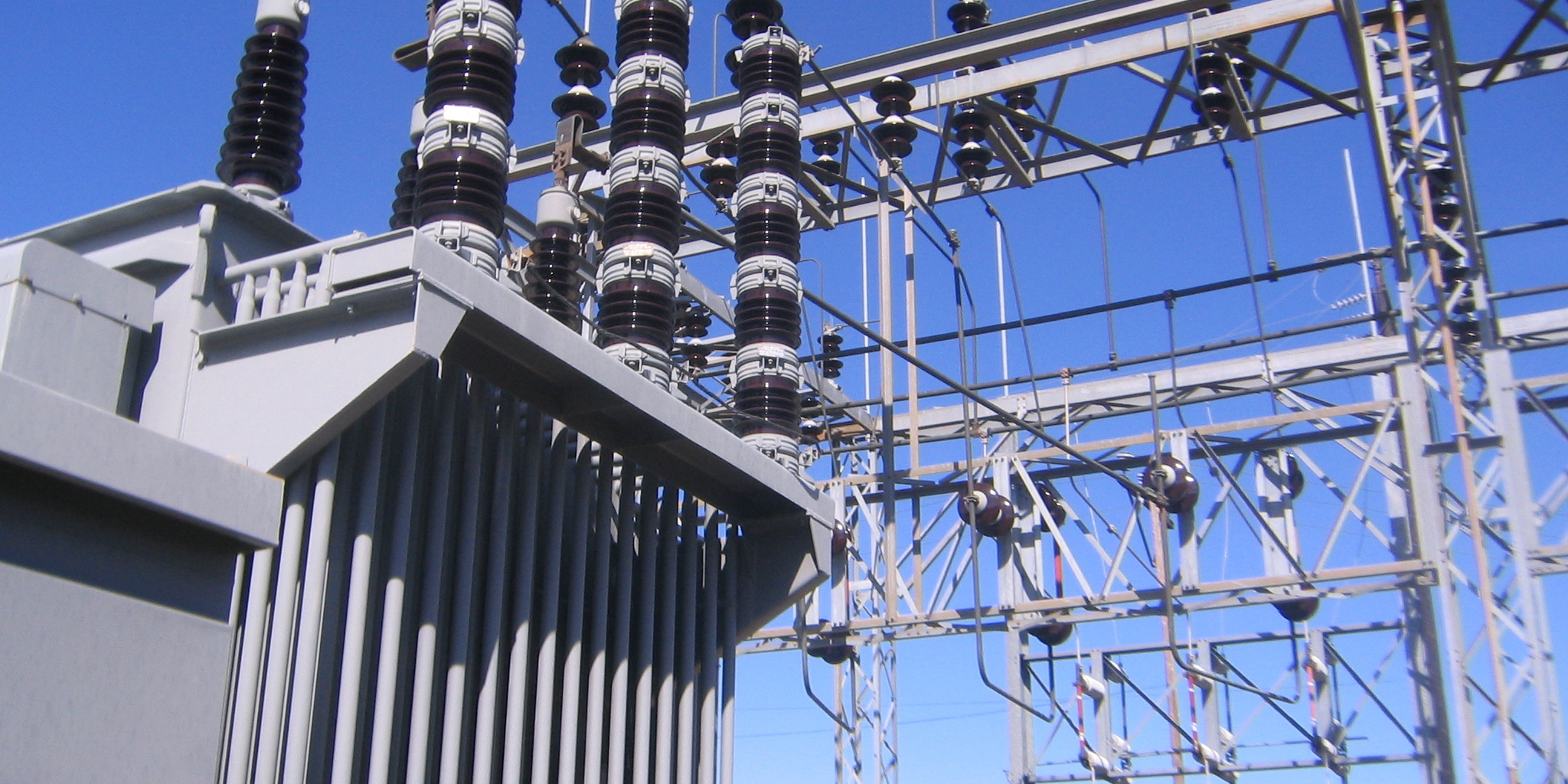
At Grass Valley, the two new breakers were placed at the existing 69 kV points of interconnection with PG&E. Delivering them meant demolishing footings and slabs that stood in the way, constructing new footings and fabricated steel support structures for the breakers, relocated metering sets, and new potential transformers, and extending the substation fence and ground grid to take in the new equipment. New disconnect switches, a control panel with primary and backup relaying, power monitors, remote switching, and site lighting completed the position. Exterior to the substation, existing wood poles along the 69 kV line were replaced and a new air disconnect switch installed.
At B Street and Doolittle, the scope was distribution-side: 12 kV metal-clad switchgear additions at the two 69:12 kV substations, along with 12 kV capacitor banks and their controls. An arc flash analysis was carried out across the substations, and EETS generated complete wiring diagrams for all system protection and full panel schedules.
Project Challenge
Rebuilding Live Interconnections Without Dropping the Base
The two new breakers had to be installed at the points where the base takes power from PG&E – the least forgiving place to work, because an uncontrolled loss of an interconnection is a loss of supply to a mission-critical installation. The existing metering and structures at those positions had to be demolished and rebuilt while the base continued to run. The engineering had to sequence demolition, new construction, and cut-in so that outages were rare, short, and planned, and so that the base’s transformer and line redundancy could carry load whenever a position was taken out of service.
Coordinating a Cutover Across PG&E, Base Operations, and Metering
Energizing the new breakers was not a single switching event but a coordinated handoff among several parties. PG&E controls the line switches feeding each position and had to review and approve the circuit breaker and protection test results before cut-in. Base operations would perform the on-site switching. Revenue metering at the incoming lines had to be relocated to a new metering structure during a line outage. Each of these steps had to happen in the right order, at the right position, with clear ownership of every switching action.
Client
Sector
Location
Services

Drink
As part of this expansion, AWA identified an opportunity to recover energy that was previously being wasted.
Client
Sector
Location
Services
Drink
As part of this expansion, AWA identified an opportunity to recover energy that was previously being wasted.
Project Overview
Beale Air Force Base occupies nearly 23,000 acres in Northern California. All power to the base is delivered by three Pacific Gas & Electric (PG&E) transmission lines to two metering points, and is distributed through three substations – Doolittle, B Street, and Grass Valley. B Street and Grass Valley each have two transformers, either of which can carry its substation’s full load on its own, and many areas of the base are served by redundant transmission lines. That redundancy is essential to keeping a mission-critical installation energized.
EETS was engaged as the design engineer for a rehabilitation spanning all three substations. The headline scope was at Grass Valley: the addition of two 69 kV circuit breakers, one at each of the two 69 kV points of interconnection between Beale AFB and PG&E, together with the associated line protection, metering, and 12 kV modifications. The project also delivered 12 kV metal-clad switchgear additions and capacitor banks at the B Street and Doolittle substations, and an arc flash study across the work.
EETS provided the full electrical design – breakers and switches, protection and controls, metering and power monitoring, remote operation, and site work – along with a construction sequence that let the work proceed while keeping the base energized.
Scope Across Three Substations
At Grass Valley, the two new breakers were placed at the existing 69 kV points of interconnection with PG&E. Delivering them meant demolishing footings and slabs that stood in the way, constructing new footings and fabricated steel support structures for the breakers, relocated metering sets, and new potential transformers, and extending the substation fence and ground grid to take in the new equipment. New disconnect switches, a control panel with primary and backup relaying, power monitors, remote switching, and site lighting completed the position. Exterior to the substation, existing wood poles along the 69 kV line were replaced and a new air disconnect switch installed.
At B Street and Doolittle, the scope was distribution-side: 12 kV metal-clad switchgear additions at the two 69:12 kV substations, along with 12 kV capacitor banks and their controls. An arc flash analysis was carried out across the substations, and EETS generated complete wiring diagrams for all system protection and full panel schedules.
Project Challenge
Rebuilding Live Interconnections Without Dropping the Base
The two new breakers had to be installed at the points where the base takes power from PG&E – the least forgiving place to work, because an uncontrolled loss of an interconnection is a loss of supply to a mission-critical installation. The existing metering and structures at those positions had to be demolished and rebuilt while the base continued to run. The engineering had to sequence demolition, new construction, and cut-in so that outages were rare, short, and planned, and so that the base’s transformer and line redundancy could carry load whenever a position was taken out of service.
Coordinating a Cutover Across PG&E, Base Operations, and Metering
Energizing the new breakers was not a single switching event but a coordinated handoff among several parties. PG&E controls the line switches feeding each position and had to review and approve the circuit breaker and protection test results before cut-in. Base operations would perform the on-site switching. Revenue metering at the incoming lines had to be relocated to a new metering structure during a line outage. Each of these steps had to happen in the right order, at the right position, with clear ownership of every switching action.
Engineering Solution
Breaker, Protection, and Monitoring Design
EETS specified two 72.5 kV, 1200 A continuous, 20 kAIC dead-tank SF6, three-pole circuit breakers, one at each 69 kV interconnection, set on concrete pads structurally designed for the equipment. A new control panel provided primary and backup relaying for both breakers, and EETS produced complete wiring diagrams for all system protection along with full panel schedules. New 34.5 kV:115 V potential transformers were provided for line-to-ground connection, and two Square D Power Logic power monitors were integrated onto the base’s existing Modbus communications network. Remote I/O and remote switching capability were built in so the positions could be operated and observed without a technician at the breaker. New pole-mount air disconnect switches were sized for the 5 MVA transformers at 69 kV, and metal-halide, corrosion-resistant site lighting was added to illuminate the switches, breakers, and 12 kV switchgear. All electrical work followed NEC and NFPA.
A Cutover Sequence Built Around Minimal Outages
EETS structured the construction so that the large majority of the work required no outage at all. Fence and ground-grid extension, new footings, breaker and potential-transformer installation, station conduit, lighting, protection, controls, remote switching panels, and the testing and commissioning of every device were all completed with the base energized. Outages were reserved for two narrow purposes: a planned line outage at each incoming line to erect the new metering structure and reterminate the line – during which the existing revenue PTs and CTs were relocated – and a short switching outage at each position for the actual cut-in.
The cut-in itself followed a defined, single-position switching sequence coordinated with PG&E: PG&E opens the line switches feeding the position; base operations opens the bypass switch at the breaker structure and closes the isolating switches on both sides of the breaker; PG&E recloses the line switches to restore the line to the breaker; and base operations closes the circuit breaker. Circuit breaker and protection test results were submitted to PG&E for review and approval before any cut-in, and in-service meter reads confirmed correct operation afterward.
Key Technical Elements
Parameter | Detail |
Circuit Breakers | Two 72.5 kV, 1200 A continuous, 20 kAIC dead-tank SF6, three-pole breakers – one at each 69 kV point of interconnection |
Points of Interconnection | Two 69 kV interconnections between Beale AFB and PG&E at Grass Valley Substation |
Protection and Control | New control panel with primary and backup relaying for both breakers; complete system-protection wiring diagrams and panel schedules |
Metering and Monitoring | Revenue metering sets relocated to a new metering structure; two Square D Power Logic (series 800+) power monitors on the existing Modbus network |
Potential Transformers | 34.5 kV:115 V PTs for line-to-ground connection, set on new footings |
Structures and Site Work | Fabricated steel support structures on new concrete footings; extended fence and ground grid; replaced wood poles and new KPF-type air disconnect switch |
Remote Operation | Remote I/O and remote switching capability at the new positions |
Site Lighting | Metal-halide, corrosion-resistant fixtures for 69 kV switches and breakers, 12 kV switchgear, and site area |
B Street & Doolittle | 12 kV metal-clad switchgear additions at two 69:12 kV substations; 12 kV capacitor banks and controls |
Safety Analysis | Arc flash analysis / study across the rehabilitated substations |
Cutover Strategy | Phased sequence – majority of work with no outage; brief planned outages only for metering re-termination and coordinated cut-in with PG&E |
Project Outcome
The rehabilitation gave Beale AFB two new 69 kV breakers at its PG&E interconnections, modernized protection, metering, and remote-switching at Grass Valley, and added 12 kV switchgear and capacitor banks at B Street and Doolittle – all without disrupting power to a mission-critical base. Nearly all of the construction was completed with the base energized; the only outages were short, planned, and confined to metering re-termination and the coordinated cut-in of each breaker with PG&E. With primary and backup relaying, remote operation, integrated power monitoring, and an arc flash study in place, the base gained both improved reliability at its points of supply and better visibility and safety across its substations.
Value Delivered by EETS
EETS delivered a full substation design and a cutover plan built around a single non-negotiable requirement: the base stays energized.
Engineered to Keep a Mission-Critical Base Powered
The defining constraint at Beale was continuity of supply. EETS answered it in the design itself – sequencing the work so that footings, structures, breakers, controls, and commissioning were all done live, and reserving outages for only the two steps that genuinely required them. Leaning on the base’s existing transformer and line redundancy, and defining an exact switching sequence for each cut-in, turned a rebuild of live interconnections into a series of short, controlled, planned events.
One Design Engineer Across Three Substations
The program touched Grass Valley, B Street, and Doolittle, and ranged from 69 kV breaker positions and transmission-line switch replacement down to 12 kV metal-clad switchgear and capacitor banks. EETS designed all of it – breakers and switches, protection and controls, metering, power monitoring, remote operation, arc flash, and site work – as the single design engineer. One point of accountability across the three substations kept the protection scheme, the drawings, and the field work coherent.
A Cutover Coordinated Across Every Party That Touched the Line
Energizing new breakers at a utility interconnection depends on everyone doing their part in the right order. EETS built the sequence around that reality: PG&E’s control of the line switches and its review and approval of test results, base operations’ on-site switching, and the relocation of revenue metering during a planned line outage. A clearly defined, position-by-position cut-in sequence with unambiguous ownership of each switching action let the base bring the new equipment into service smoothly and verify it with in-service meter reads.
Drink
As part of this expansion, AWA identified an opportunity to recover energy that was previously being wasted.